
The band in a salt mine
Performance style, rock look: you sing at the bottom of a mine lit by head lamps, and each chorus brings more light down the tunnel.
Heavy songs are hard to cut. A doom riff wants a shot to sit through its whole four-second bar, a blast beat at 210 BPM turns a cut on every bar into flicker, and the breakdown has to land like a door slamming. Upload the finished song and Muvora finds its tempo, downbeats, sections and drops, plans every cut around them, and has its AI director write a storyboard set in the world you describe. Rework any shot for free, then pay only for the seconds you render.
Free to start · 5 storyboards a month · No card needed
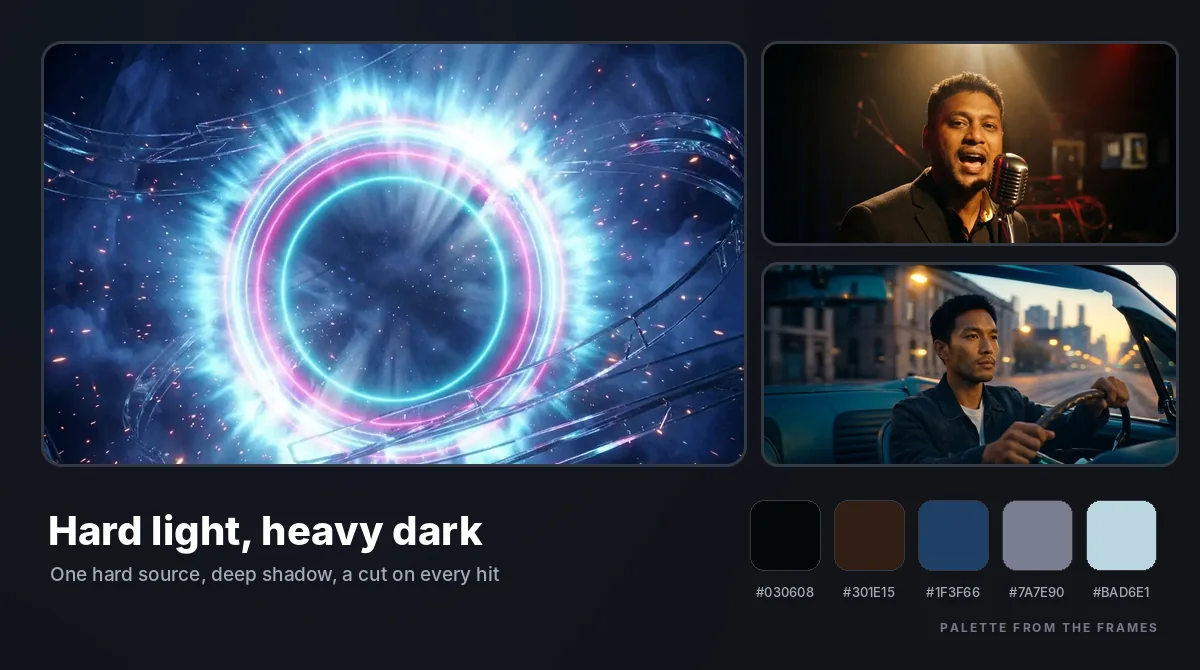
There's no metal genre look, and rock is the nearest: it trims every shot by about a fifth against the default pace, while the cuts still follow the downbeats, the section changes and the drops. Tempo does the rest. Once a bar is shorter than 1.6 seconds (over 150 BPM in 4/4), the shot planner counts bars in pairs, so on a typical arrangement a thrash chorus at 180 BPM cuts every two bars, about 2.7 seconds, and a blast section at 210 about every 2.3, leaving the speed to the riff and to the motion inside each shot. At the slow end, a doom song at 60 BPM has a four-second bar: quiet passages hold a whole bar, and in the loud riffs a cut may fall on the half bar or a beat, so the picture changes every 2 to 3 seconds without leaving the grid. A breakdown that crashes in after a stop or a quiet bridge, its energy jumping and staying up, can read as a drop, which always gets a hard cut and a two-frame white flash, and at most tempos the stretch right after it is split into two quick shots. Tempo changes are normal in metal, so play the storyboard against the song and drag any cut that sits wrong: it snaps back to the beat.
See your song as a storyboard first
Upload the track and the AI director plans every shot on the beat in minutes. Edit anything for free; you only pay if you render.
Put the world in the idea box, which takes up to 600 characters, and give each part of the song its own job. The intro shows one place under one source of light, held long: a salt mine lit by head lamps, a lighthouse lamp turning over a black sea. The verses stay close and dark, the light catching only edges: knuckles on a fretboard, wet hair, half a face. Each chorus opens wide and brings the element in, whether sparks, hail, floodlights or fire. The breakdown gets a new picture rather than the chorus shot again with more shake: the mine's ceiling giving way in dust, a wave breaking over the lighthouse rocks. The last chorus throws everything in at once, and the outro ends on one held picture while the feedback rings out. Name where each light comes from (a caged work lamp, a road flare, lightning, a burning barrel) and leave most of the frame black. Dark imagery is fine, from ruins and masks to a creature in the fog, but gore and graphic injury are never drawn, and neither is lettering, so a band logo goes on in your editor after you download. The metal music video ideas guide has sixteen concepts built this way.
Choose Performance to put your vocalist on screen from one clear, front-facing photo with the consent box ticked. Muvora separates the vocal from the guitars and lip-syncs the shots it carries. Screams and growls count as vocals, though a low growl barely moves a real singer's lips, so check those shots on the review page and re-roll any that miss. A singing shot opens into a full scream only when its prompt asks for one, so write it into the shots where you want it. Paste your lyrics with the upload, since transcription struggles with harsh vocals: your text sets the karaoke captions and where the mouth moves. The rest of the band joins as characters described in words (a drummer with a shaved head and a sleeveless shirt, a bassist in a patched denim vest), and the character sheet keeps two of them steady. Story suits a dark tale, and Abstract an instrumental or a deep cut with no cast at all. One 16:9 render gives the YouTube video, a vertical cut for clips, a square post and an 8-second Canvas. The rock music video page covers the look itself, and music videos for bands the whole line-up.
Each card opens the upload with a style, the rock look and an idea already in the box. Change the place, the light and the band to your own before the storyboard is written; the cuts come from your song's own riffs.
Performance style, rock look: you sing at the bottom of a mine lit by head lamps, and each chorus brings more light down the tunnel.

Story style, rock look: a keeper fights to keep the lamp turning through a storm that grows every chorus.
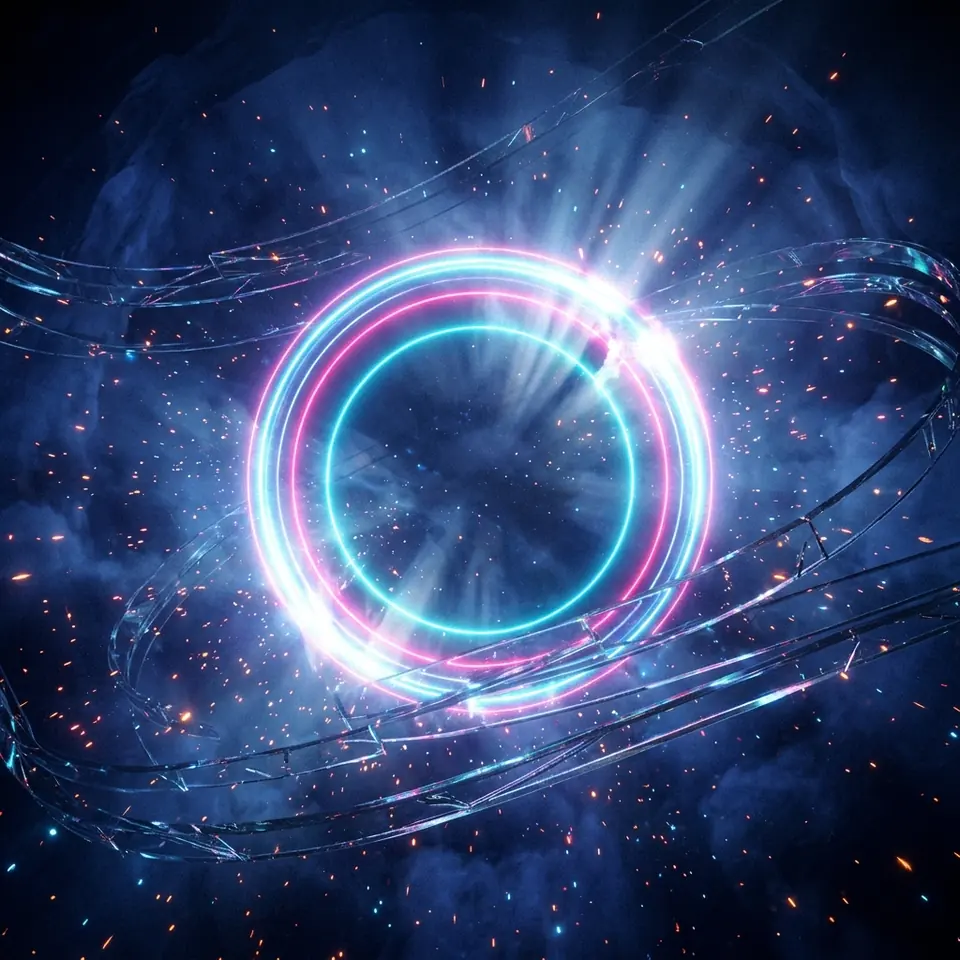
Abstract style, rock look: no cast, only black water rising through a stone church by candlelight, held long for a slow song.

Story style, rock look, 9:16: a black-metal winter rite in a forest clearing, framed tall for clips.
Drop in an MP3, WAV, M4A or FLAC up to 8 minutes. Muvora finds the tempo, the beats, the downbeats and the sections of your song, like intro, verse and chorus.
An AI director writes a shot-by-shot plan timed to your downbeats. Rewrite any prompt, drag a cut (it snaps to the beat) or ask AI to redo a shot. None of it costs anything.
See the final price, then render. Pick Visualizer, Standard or Cinematic quality. If a shot fails, its credits come straight back.
Free storyboard in minutes. No card needed.
Can't find what you need? Start a free storyboard and see for yourself.
Yes. Upload the finished mix (MP3, WAV, M4A, AAC or FLAC, up to 8 minutes) and the analysis finds the tempo, the downbeats, the sections and any drops. Pick a style, describe the place and the light in the idea box, and the AI director writes a shot for every slot. Reading and editing the storyboard costs nothing; you spend credits only on the seconds you render.
In half time. Above 150 BPM a bar lasts under 1.6 seconds, so the planner counts bars in pairs and a loud passage cuts about every two bars instead of strobing. If a part should hit harder, drag a cut onto it (cuts snap to the beat), or merge two shots so one long push rides over the riff.
No. The five looks are hip-hop, pop, EDM, rock and lo-fi, and rock is the closest: it gives the cuts a driving pace. Everything that makes the video metal, the place, the light, the wardrobe and the weather, comes from what you write in the idea box.
Yes, where you ask for it. Screamed and growled parts are vocals, so the shots they carry are lip-synced, but a singing shot's face follows the song's mood and opens into a full scream only when that shot's prompt says so. Write it into the shots you want, then check them on the review page and re-roll any that look wrong.
Not the logo: no lettering or logos are drawn into the pictures, so add yours in an editor afterwards. Dark and violent themes are allowed when the song calls for them, but gore and graphic injury are not drawn. And no real people appear: the only real face is your vocalist's, from a photo used with their consent.
The storyboard is free, and the free plan makes 5 new storyboards a month. A 3-minute song is 6,840 credits in Visualizer, 10,800 in Standard and 19,800 in Cinematic, with lip-synced seconds at 75 each instead of the quality's rate. The total for your exact song is shown before you press Generate, and a shot that fails costs nothing.
16 concepts for metal, metalcore and doom: hard-lit performances, dark myths, fire and machines, with pacing for double kicks and breakdowns.
Read the guideStage lights, raw energy and a live-show feel on the downbeat.
Learn more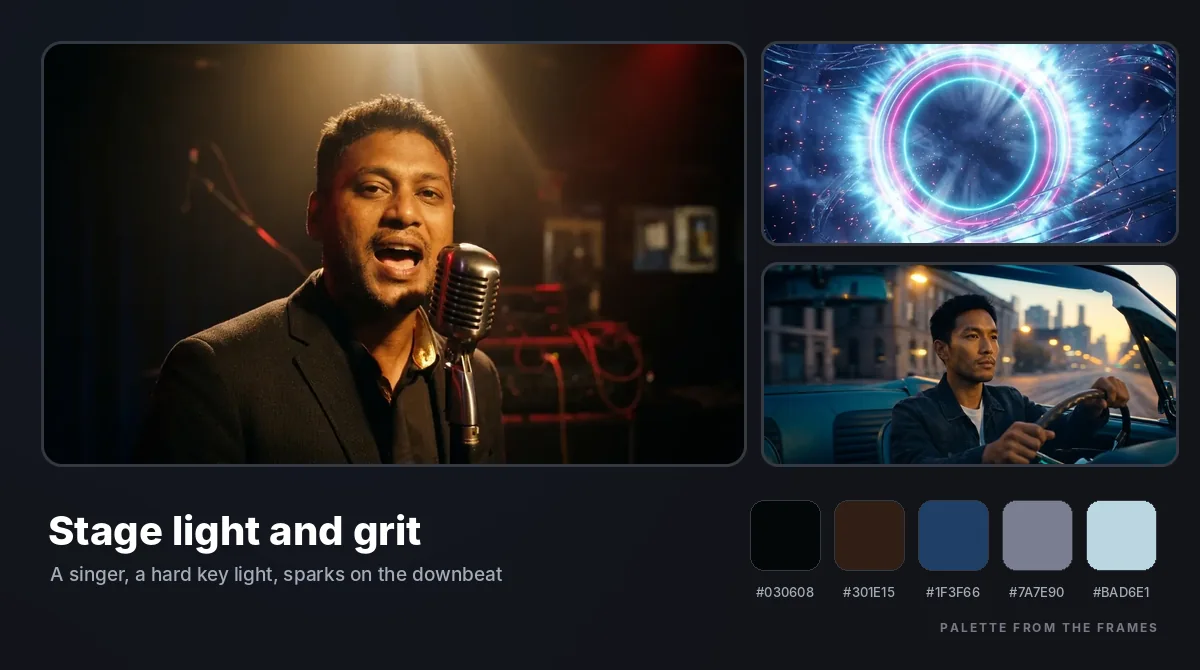
The singer lip-synced from one photo, the rest of the band written into the story, every release format.
Learn more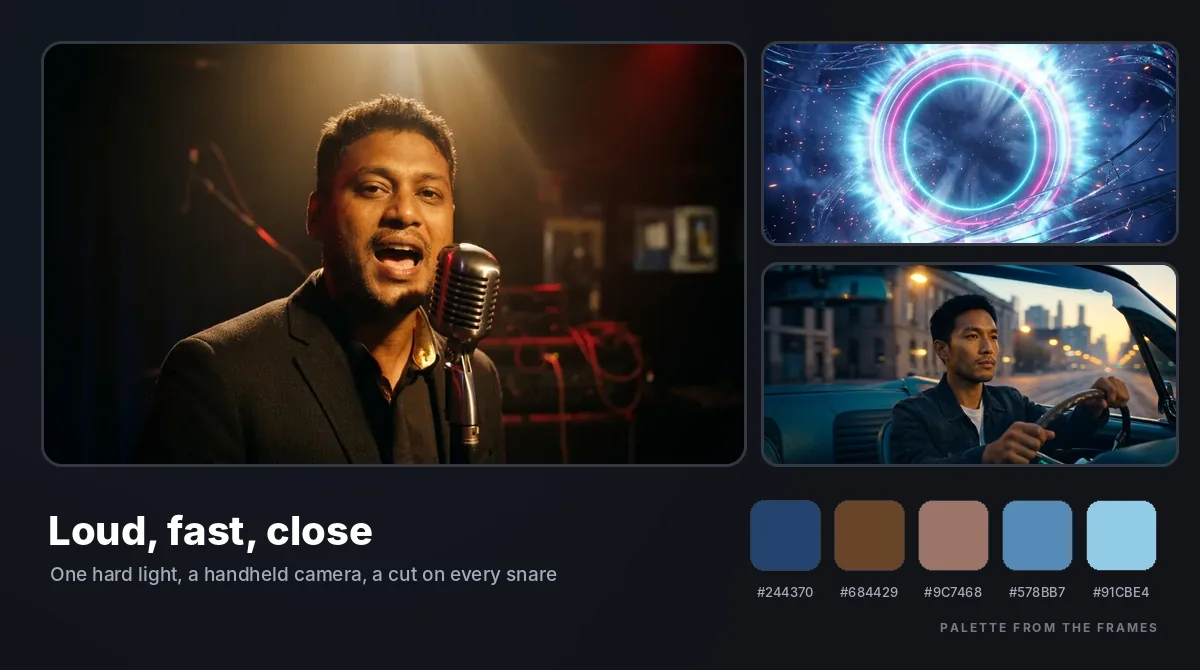
13 DIY concepts for punk, pop-punk, hardcore, garage and emo: basements, skate spots, small stages and road trips, cut fast and lit raw.
Read the guideTap along to any song to find its BPM, with half and double time and how steady you are.
Open the tool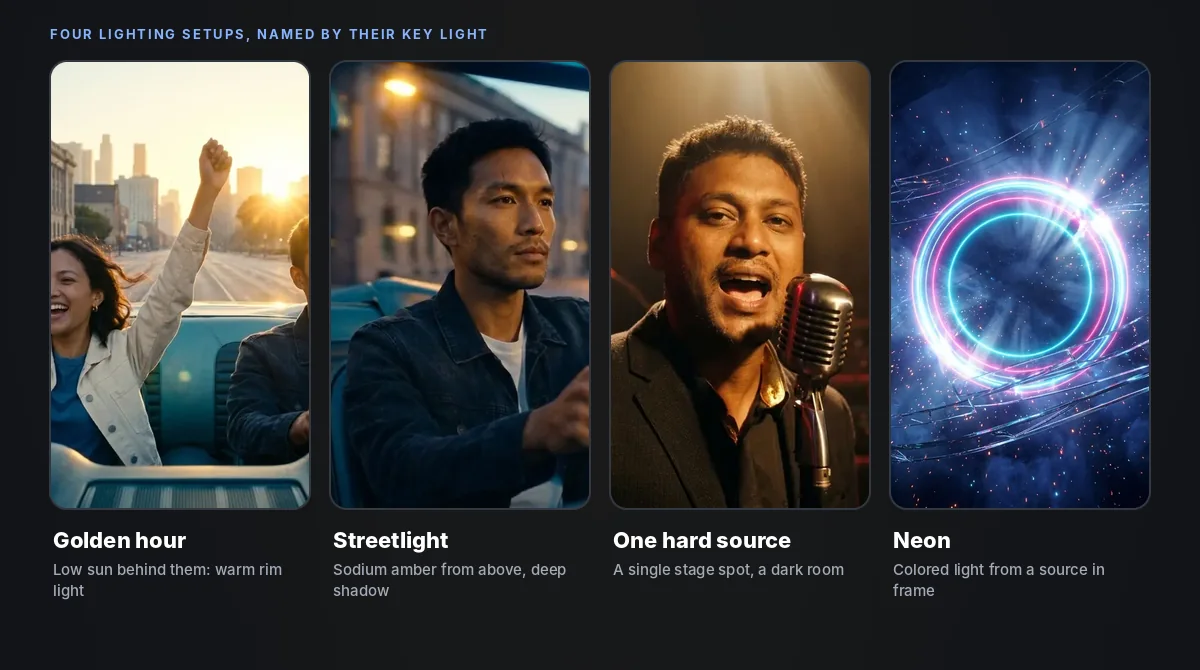
Lighting setups and ideas for music videos: key, fill and back light, practicals, golden hour, neon, haze and one-light looks.
Read the guide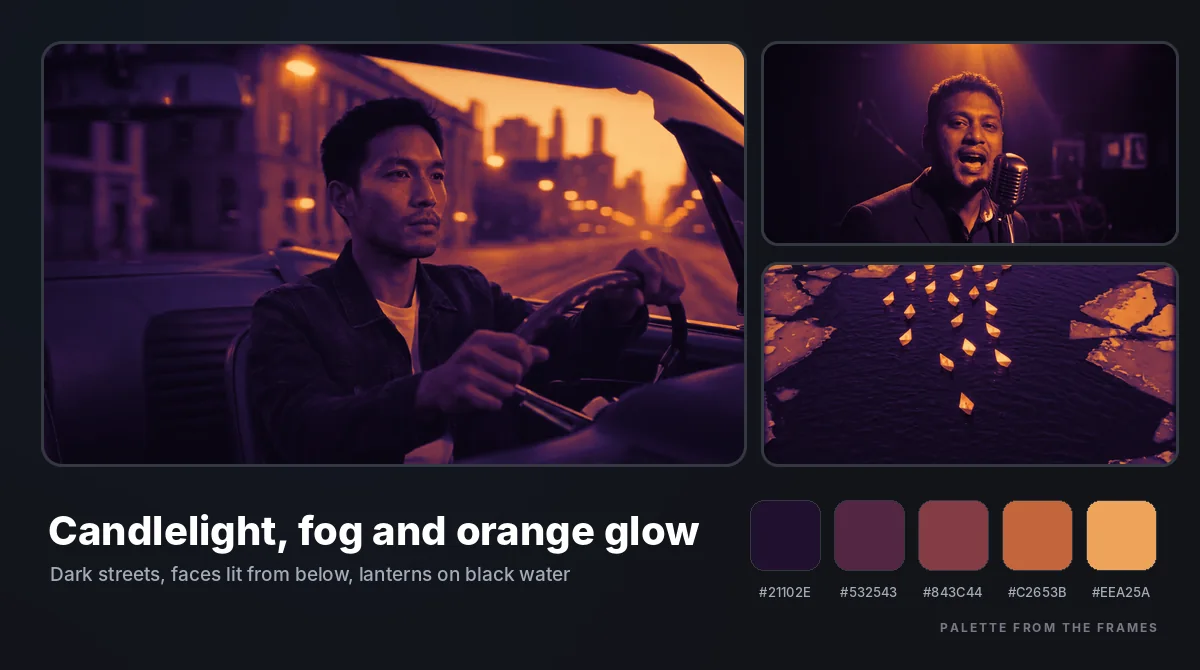
15 Halloween concepts from spooky fun to candlelit gothic: a scare actor's first night, a ghost train, a séance, a creature feature and a field of pumpkins, all without gore.
Read the guide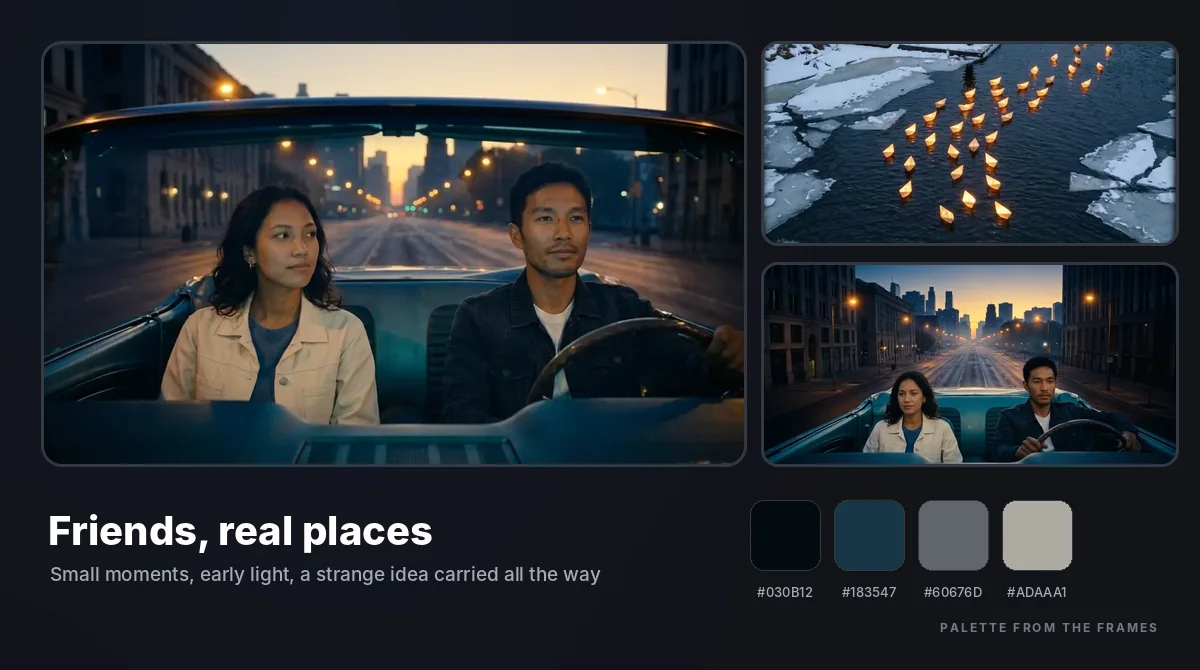
Indie rock, indie pop and bedroom pop videos set in real places and soft light, with shots that hold while your song builds.
Learn more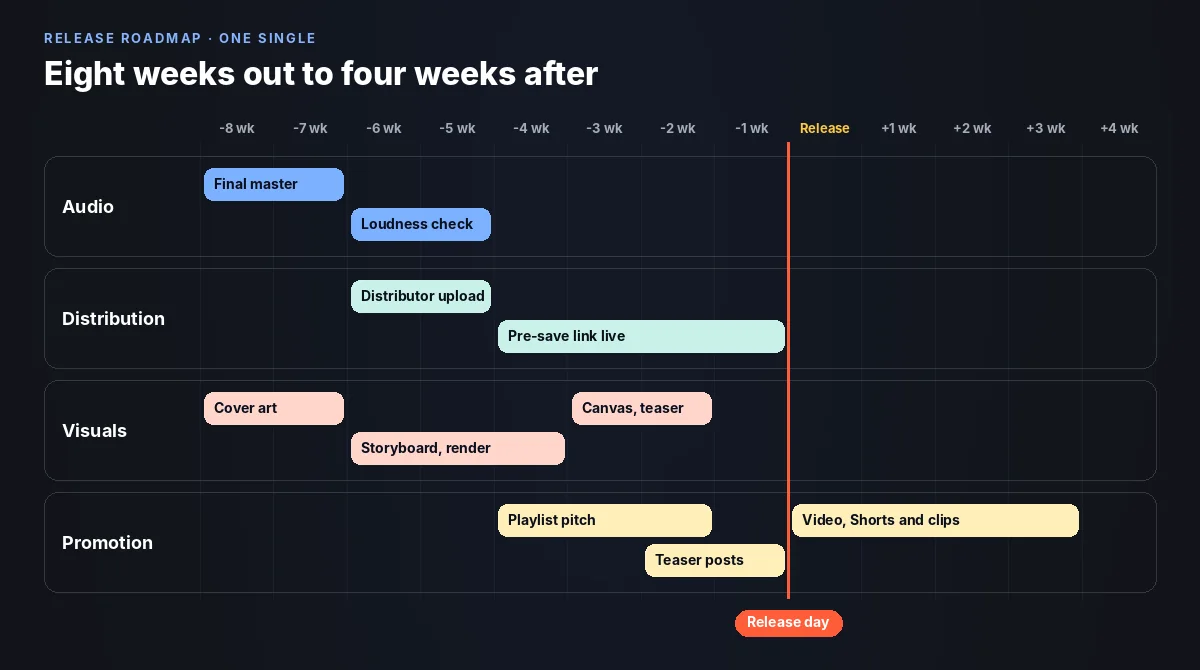
A storyboard and an exact price for every release on the schedule, every format from one render, and Studio sized for a roster.
Learn morePunk, pop-punk and hardcore cut on the rock look and counted in half time past 150 BPM, with raw light, a crowd at arm's length and a video as short as the song.
Learn moreUpload a track and get a free beat-synced storyboard in minutes. Render it when you are ready.
No card needed to start.



