
The laundromat show
Performance, rock look: your band plays a laundromat after closing, the machines spinning and the crowd sitting on the dryers.
A punk song is over in two minutes and doesn't wait for anyone, which is the whole problem with filming one: by the time a crew has lit the room, the band has played it three times. Upload the finished track and Muvora finds its tempo, counting anything fast enough in pairs of bars, maps the verses, the choruses and any breakdown, and writes a storyboard set in the room and the crowd you describe. Change any shot for free, and because rendering is priced by the second, a short song makes a cheap video.
Free to start · 5 storyboards a month · No card needed
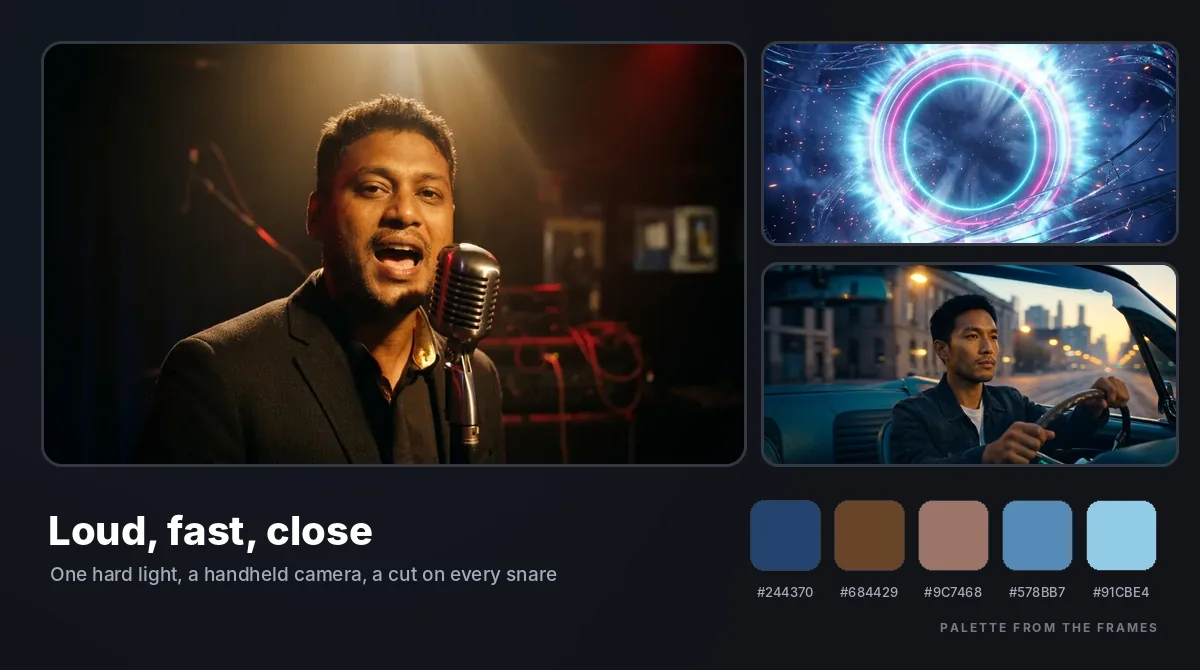
Type punk, pop-punk, post-punk or emo in the song's genre field and the vibe step starts on the rock look, which trims every shot by about a fifth; hardcore typed on its own picks no look, so choose rock yourself. Tempo decides the rest. Once a bar is shorter than 1.6 seconds, which in 4/4 means faster than 150 BPM, the shot planner counts bars in pairs, so a faster song can hold its shots longer than a slower one. On a typical verse-and-chorus song at 145 BPM, the rock look cuts the chorus every bar (1.7 seconds) and the verse every two (3.3). At 165 BPM it changes the chorus picture every two bars (2.9 seconds) and the verse every four (5.8), and at 200 BPM those are 2.4 and 4.8 seconds. Where a chorus should hit on every bar, split its shots in the editor: each split lands on a downbeat, and a single bar at 200 BPM still lasts 1.2 seconds, above the one-second floor every shot keeps. A breakdown that crashes in after a stop or a quiet bridge, and stays louder for the next two bars, can read as a drop: a hard cut, a two-frame white flash and two one-bar shots before the two-bar pace comes back. The video ends exactly where the file does, so a song that stops dead on the last hit ends the picture on it too, while a file that runs on in silence keeps the last shot going; trim that tail with the silence remover. Tap tempo shows both readings of a fast song, and the shot list generator lays out every shot from your song's form.
See your song as a storyboard first
Upload the track and the AI director plans every shot on the beat in minutes. Edit anything for free; you only pay if you render.
Punk videos look best when they look borrowed, so write the idea box (up to 600 characters) around one real kind of place and the one light it has: a laundromat after closing under buzzing tubes, a church basement youth club with stacked plastic chairs, the back room of a pizza place with a single red bulb, a drained backyard pool with skaters circling its walls, a parking garage roof at dusk with a car's hazard lights blinking. Keep the crowd small and close, ten or twenty people pressed against the band rather than a festival field, and give every shot an action: someone climbing onto a washing machine, the bassist backing into the front row, a kid grabbing the mic for the last line. A packed pit is hard for AI video, where limbs can tangle, so a few people a shot hold together better, and any shot that comes out wrong can be re-rolled. Mature themes are allowed when the song calls for them, from cheap beer to cigarettes, but gore isn't drawn, so a split lip or a bloody nose won't appear. Neither is lettering: patches, shirts, flyers and the name on the kick drum stay as shapes and colors, and your band's name goes on the thumbnail, the description and the poster, which the gig poster maker sets for print and social. The punk music video ideas guide has thirteen DIY concepts, and the emo music video ideas take the quieter, rainier end.
Choose Performance to put your singer on screen from one clear, front-facing photo with the consent box ticked: the vocal is separated from the guitars, and the shots where it's sung through are lip-synced to it, framed chest or waist up. Shouted lines lip-sync like sung ones, but a fast verse packs a lot of syllables into a shot, so give the photo even light and the whole mouth in view, and re-roll any shot that blurs. Gang vocals show as one voice: only the singer in the photo sings, and the rest of the band and the crowd are characters you describe in words, such as the drummer's bleached crop or the guitarist's pinned denim jacket, with the character sheet holding two of them steady from shot to shot. Paste the lyrics with the upload, since transcription struggles with shouting, and the karaoke captions keep your spelling. Story suits a song with a plot and Abstract a short instrumental. A song of 1:45 costs a little over half of what a 3-minute one does, and one 16:9 render gives the YouTube video, a 9:16 cut for clips, a square post and an 8-second Canvas from the loudest chorus. The rock music video page covers the look, music videos for bands the whole line-up, and the metal music video maker the heavier end.
Each card opens the upload on the rock look with a style and an idea already written. Rename the room, the crowd and the clothes to match your band; the Performance card asks for your singer's photo on the vibe step.
Performance, rock look: your band plays a laundromat after closing, the machines spinning and the crowd sitting on the dryers.

Story style, rock look: four friends empty a backyard pool for one last skate session before the house is sold.
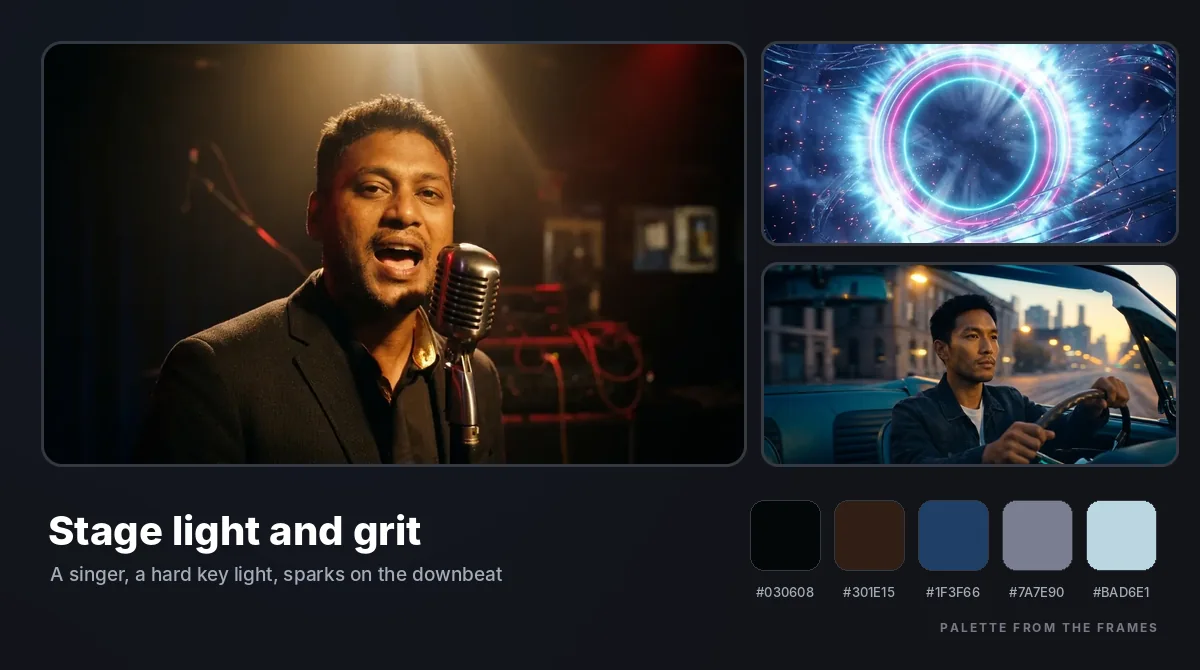
Story style, rock look: a teenage band's first show in a church basement youth club, from the soundcheck to the last hit.

Story style, rock look, 9:16: one rainy night at a bus shelter that slowly fills with a crowd, framed tall for clips.
Drop in an MP3, WAV, M4A or FLAC up to 8 minutes. Muvora finds the tempo, the beats, the downbeats and the sections of your song, like intro, verse and chorus.
An AI director writes a shot-by-shot plan timed to your downbeats. Rewrite any prompt, drag a cut (it snaps to the beat) or ask AI to redo a shot. None of it costs anything.
See the final price, then render. Pick Visualizer, Standard or Cinematic quality. If a shot fails, its credits come straight back.
Free storyboard in minutes. No card needed.
Can't find what you need? Start a free storyboard and see for yourself.
Yes. Upload the finished song (MP3, WAV, M4A, AAC or FLAC, up to 8 minutes) and the analysis finds its tempo, its downbeats, its sections and any breakdown that reads as a drop. Pick a style, describe the room and the crowd in the idea box, and the AI director writes a shot for every slot. The storyboard is free to read and change; you spend credits only on the seconds you render.
No: a beat at 190 BPM lasts under a third of a second, shorter than any shot may be. Above 150 BPM the planner counts bars in pairs, so on the rock look a chorus changes picture every two bars and a verse every four. Split any shot in the editor for a chorus that should cut every bar.
Rock. Typing punk, pop-punk, post-punk or emo in the genre field picks it, and it shortens every shot by about a fifth against the default pace. Hardcore typed on its own picks no look, so choose rock yourself. The look sets the pace; the rooms, the light and the clothes come from the idea box.
Not inside the pictures: Muvora draws no lettering or logos, so a shirt, a flyer or a kick drum head shows shapes and colors instead. Add a title card or your logo in an editor after you download, and put the name on the thumbnail, the description and the poster.
As characters you describe, yes. Write each member's look in a few words and keep it for the whole video. Only the singer in the photo is lip-synced, so the others play and react rather than sing, and their instruments look best in medium and wide shots, since the model draws a guitar but doesn't play your riff.
Writing and changing the storyboard costs nothing, and the free plan makes 5 new ones a month. Rendering is priced per finished second (38 credits in Visualizer, 60 in Standard, 110 in Cinematic and 75 for lip-synced seconds), so a two-minute song costs two-thirds of what a three-minute one does. The exact total shows before you press Generate.
13 DIY concepts for punk, pop-punk, hardcore, garage and emo: basements, skate spots, small stages and road trips, cut fast and lit raw.
Read the guideStage lights, raw energy and a live-show feel on the downbeat.
Learn more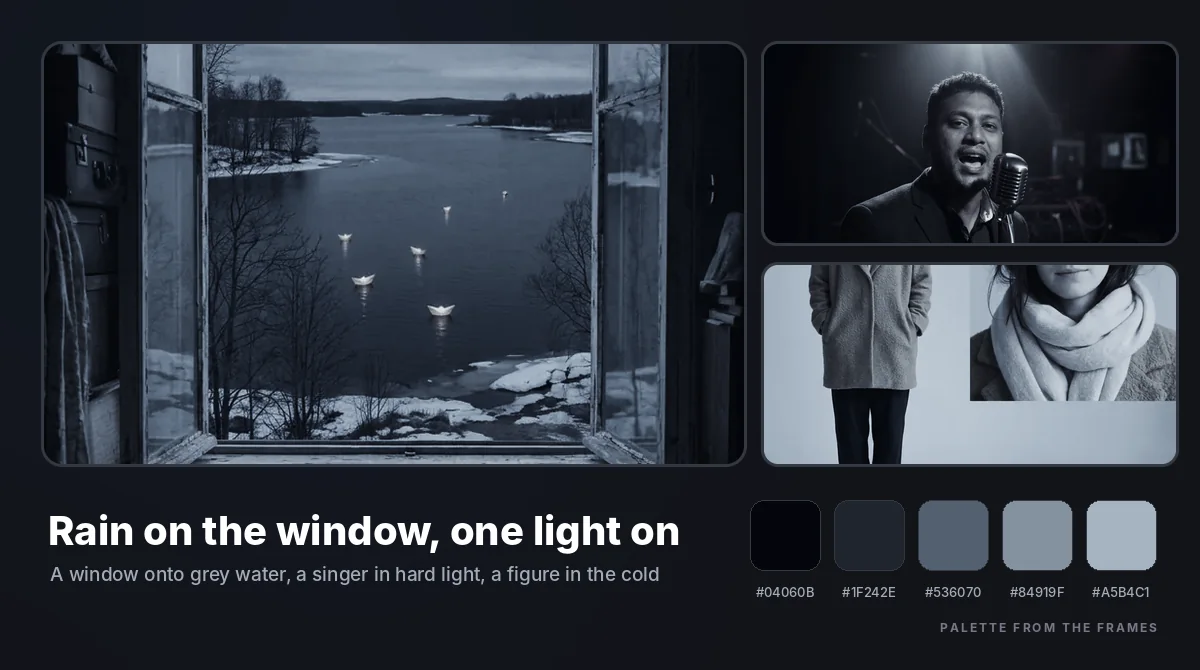
14 emo concepts for bedrooms, rain and house shows: a burned CD left in a mailbox, a bedroom slowly flooding and a basement show heard through the kitchen floor.
Read the guide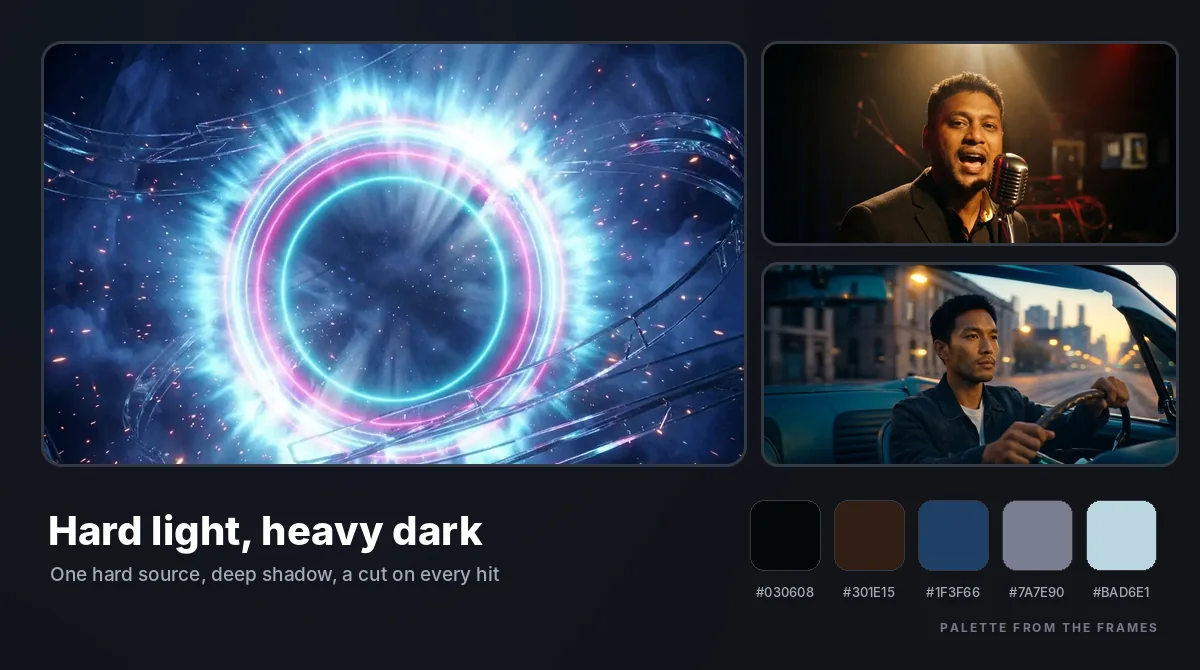
Doom, thrash and metalcore videos under one hard light, with blast beats cut in half time and a breakdown that gets its own picture.
Learn more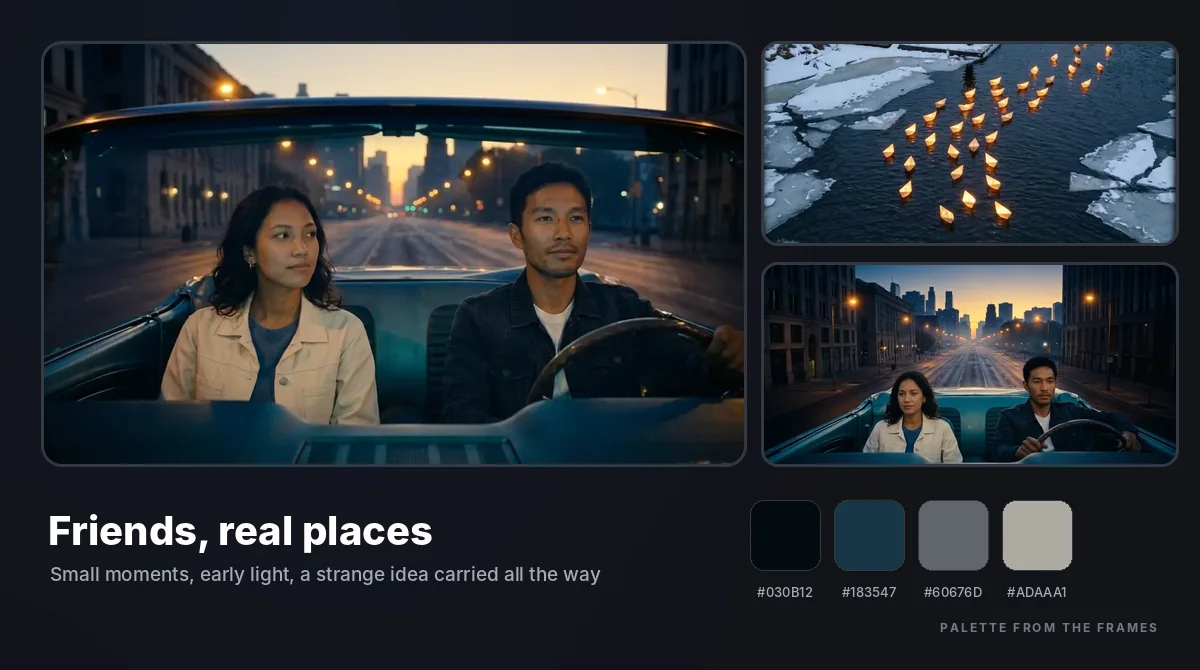
Indie rock, indie pop and bedroom pop videos set in real places and soft light, with shots that hold while your song builds.
Learn moreThe singer lip-synced from one photo, the rest of the band written into the story, every release format.
Learn moreMake a show poster from your photo, a video frame or a color: act, date, venue and tickets laid out for print and Instagram, with a QR code.
Open the tool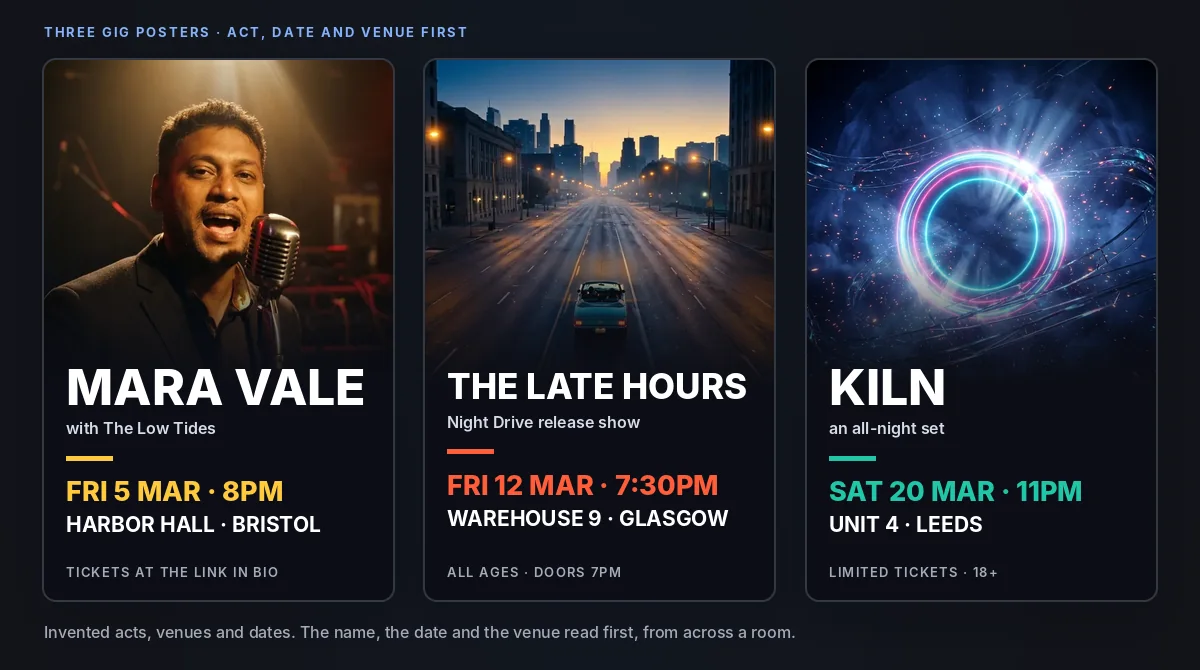
What goes on a gig poster and in what order, print and Instagram sizes, type that reads across a room, a QR code that scans, printing and getting it seen.
Read the guideTap along to any song to find its BPM, with half and double time and how steady you are.
Open the toolType a song's tempo and sections and get a beat-timed shot list, made by Muvora's own planner.
Open the tool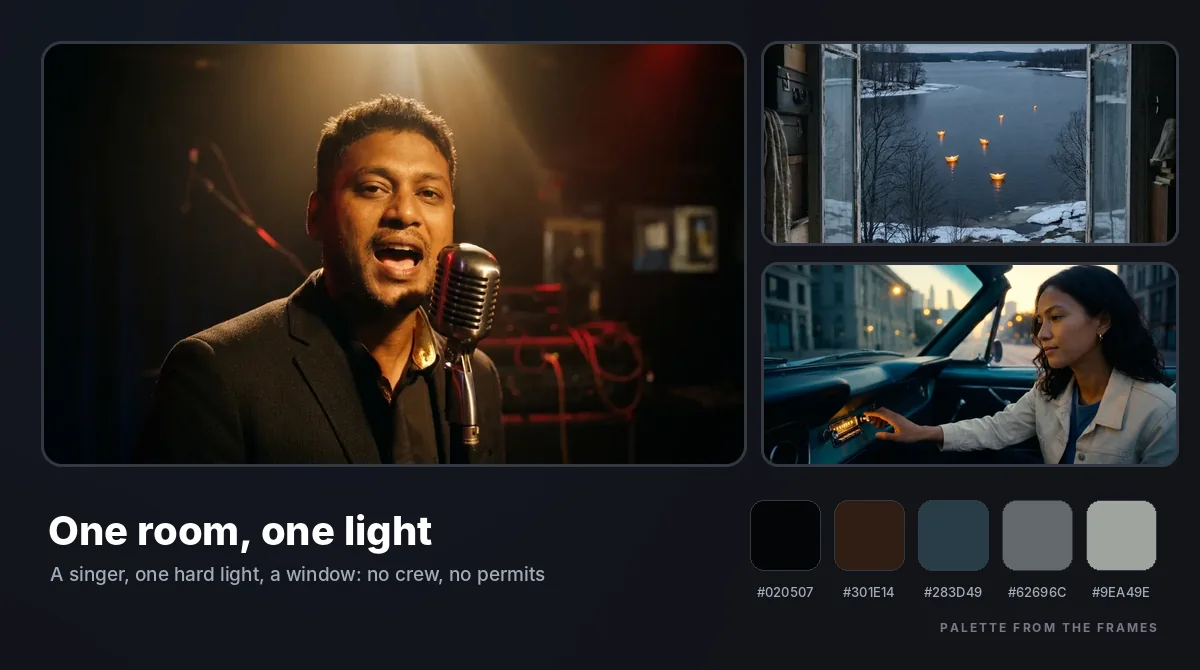
17 cheap concepts for one room, one free location or no cast at all, and where a shoot's money usually goes.
Read the guideA printable setlist in large type: the songs in order with keys, tempos and lengths, sets and an encore, and each set's running time.
Open the toolTrim the silence from the start and end of a song file, with every cut shown on its levels, and save a WAV at the file's own rate.
Open the toolUpload a track and get a free beat-synced storyboard in minutes. Render it when you are ready.
No card needed to start.




