Find your vocal range and voice type with your microphone
Press Start, allow the microphone and sing: slide down to the lowest note you can hold clearly, then up to the highest. The test counts a note only once you hold it steadily, shows your range in note names (E2 to G4, say) with its span in semitones and octaves on a keyboard, and names the voice types whose typical ranges it fits best. Play a reference note to sing back if you like. Your voice is analyzed in your browser and never recorded or sent.
Free, no sign-up. Runs in your browser: nothing is uploaded.
–
Listens from C2 to C7
Press Start, then sing a note and hold it.
Your range
Not measured yet
Slide down to the lowest note you can sing clearly and hold it, then up to the highest. Each note counts once you hold it steady for a moment.
- Bass: typically E2 to E4
- Baritone: typically A2 to A4
- Tenor: typically C3 to C5
- Countertenor: typically E3 to E5
- Alto: typically F3 to F5
- Mezzo-soprano: typically A3 to A5
- Soprano: typically C4 to C6
Play a note, then sing it back. Listening pauses while the note plays, so the speaker never counts as your voice.
The microphone is on only between Start and Stop, and goes off when you leave the page. Your voice is analyzed in your browser and never recorded, stored or sent.
Song finished? Upload it and Muvora plans the whole video on its beats. The storyboard is free.
Make the videoUpload a new songHow to use the vocal range test
- 01
Warm up and find a quiet spot
Hum and slide gently through your voice for a few minutes, then sit or stand an arm's length from your phone or laptop, away from fans, music and other voices.
- 02
Press Start and hold an easy note
Allow the microphone when the browser asks, then sing a comfortable note on "ah" and hold it. Its name appears at once, and the bar under it fills until the note is counted.
- 03
Step down, then up, holding each note
Go lower a note or two at a time, holding each one for a moment, until your voice turns to a growl or a whisper. Then climb the same way until it strains or cracks.
- 04
Read your range and voice types
Your lowest and highest held notes are your range, marked on the keyboard above the typical ranges of seven voice types. Remove a note that slipped in by mistake, copy the result or press Reset to start again.
How the test decides a note counts
Twenty times a second the test takes the latest 4,096 samples from the microphone, under a tenth of a second of sound, and finds their pitch with the YIN method, which compares the sound with delayed copies of itself to measure the length of one vibration. A note joins your range only when the readings hold within 50 cents, half a semitone, of one pitch for 300 milliseconds, so a voice crack, a breath, a quick slide or one reading taken an octave off can't set your range. It listens from C2, about 65 Hz, to C7, about 2,093 Hz, and while a reference note plays it stops listening, so the speaker never counts as your voice.
- Held for 300 ms within 50 cents
- C2 to C7, about 65 to 2,093 Hz
- Cracks, breaths and slides left out
The seven voice types and their typical ranges
Music references give each of the seven voice types they list a typical range of about two octaves: bass E2 to E4, baritone A2 to A4, tenor C3 to C5, countertenor E3 to E5, alto F3 to F5, mezzo-soprano A3 to A5 and soprano C4 to C6, give or take a note depending on the source. The numbers are octaves in scientific pitch notation, where every octave starts on C and middle C is C4. Range is one clue among several: a teacher also listens for where your voice sits comfortably (its tessitura), where it changes gear (the passaggio) and its color, which is why two singers with the same lowest and highest notes can be different voice types.
- Bass E2 to E4, soprano C4 to C6
- Middle C is C4
- Comfort and color count as much as reach
Getting a reading you can trust
A cold voice often loses a few notes at each end, so warm up for five minutes first with hums, lip trills and gentle slides. Sing on an open vowel such as "ah" at about the volume you'd use to talk across a table, in a room without music or a fan running. Count only the notes you can sing clearly, not every squeak at the top or rattle at the bottom, and never push through strain or pain: stop, rest and come back another day. Ranges drift with sleep, colds and how much you've sung that day, so test on a few different days and keep the result that comes up most.
- Five minutes of warm-up first
- An open vowel at talking volume
- Stop at strain, never push through

Know your range? Put your own voice in the music video
Record the song in a key that suits your range, upload it and pick the Performance style with one clear, front-facing photo of yourself or a drawn character, ticking the consent box. Muvora separates your vocal from the mix, finds where it's sung and makes those shots lip-sync to your own voice, then plans story shots around them with every cut on the beat. The storyboard is free to read and change, and the price is shown before you render.
Questions, answered
Can't find what you need? Start a free storyboard and see for yourself.
How do I find my vocal range?
Warm up, then sing the lowest note you can hold clearly and climb a note at a time to the highest note you can hold without straining. Those two notes are your range, written like E2 to G4. This test listens through your microphone and names each note once you hold it steadily, so you don't need a piano or a teacher to get a first reading.
What is my voice type?
The test names the voice types whose typical ranges overlap yours the most, such as baritone or mezzo-soprano. Take that as a first guess rather than a verdict: a voice type also depends on where your voice is most comfortable, where it shifts between registers and its tone, which a singing teacher can judge by listening to you sing.
What do the letters and numbers in a range like E2 to G4 mean?
The letter is the note and the number is its octave in scientific pitch notation, where each octave starts on C and middle C is C4. E2 is the E nearly two octaves below middle C and G4 the G just above it, so E2 to G4 spans 27 semitones: two octaves and three semitones.
Is a small vocal range a problem?
No. Many well-loved songs stay within about an octave and a half, and singing the notes you have with good tone matters more than reaching extra ones. Voices often find a few more notes at each end with regular warm-ups, and choosing each song's key to suit you does more for a performance than a wider range.
Why isn't a note I sang being counted?
A note counts only after you hold it steadily for about a third of a second. Notes that drift by more than half a semitone, very breathy or quiet notes, slides, and anything below C2 or above C7 are left out. Hold the note a little longer, sing a bit louder on an open vowel and keep the microphone about an arm's length away.
Does the vocal range test record my voice?
No. The browser asks for the microphone only when you press Start, each fraction of a second of sound is measured on your device and then discarded, and nothing is recorded, saved or sent. Stop, switching to another tab or closing the page turns the microphone off, and the notes you held stay on screen until you reset.
Keep exploring
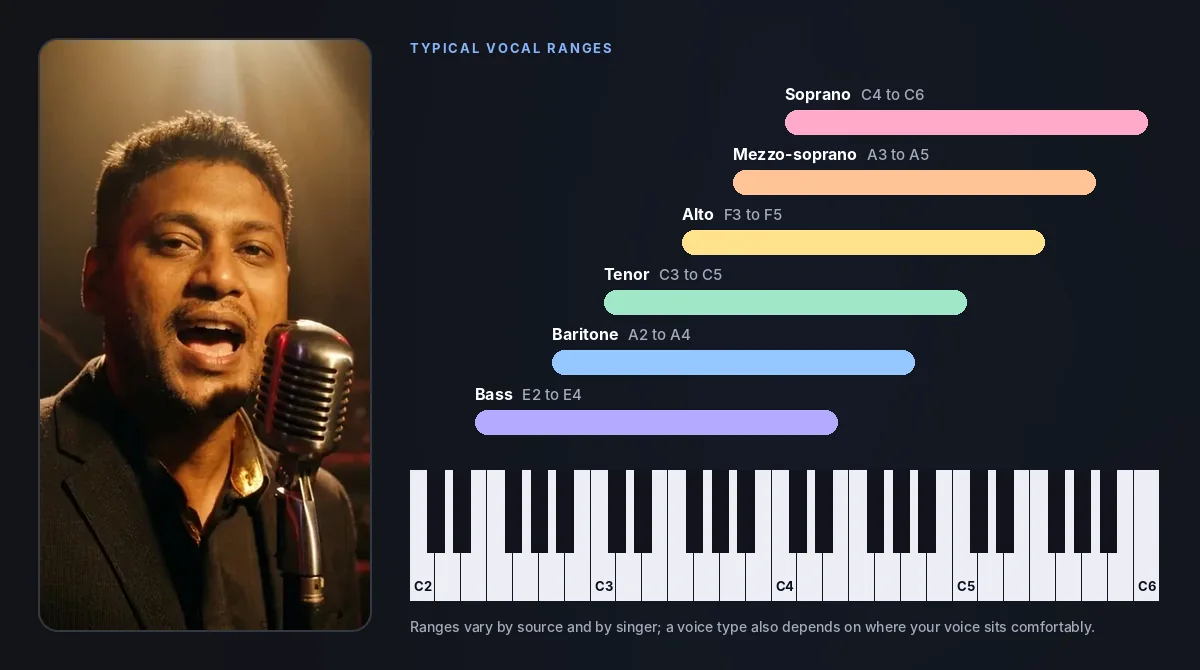
Find your vocal range
Find your lowest and highest clear notes, see where they sit among the voice types, pick song keys that suit you and put your voice in a video.
Read the guideGuitar tuner
Tune a guitar, bass or ukulele with your microphone: the note, the cents off and the nearest string, in standard or alternate tunings.
Open the toolPhoto to music video
One photo of the singer becomes lip-synced performance shots inside a full video.
Learn more
Lip-sync videos
A singer made from one photo, lip-syncing to your vocals where the song is sung.
Learn moreChord transposer
Paste a chord sheet and move it to any key, spelled for that key, with chords kept over the lyrics and the capo shapes to play.
Open the tool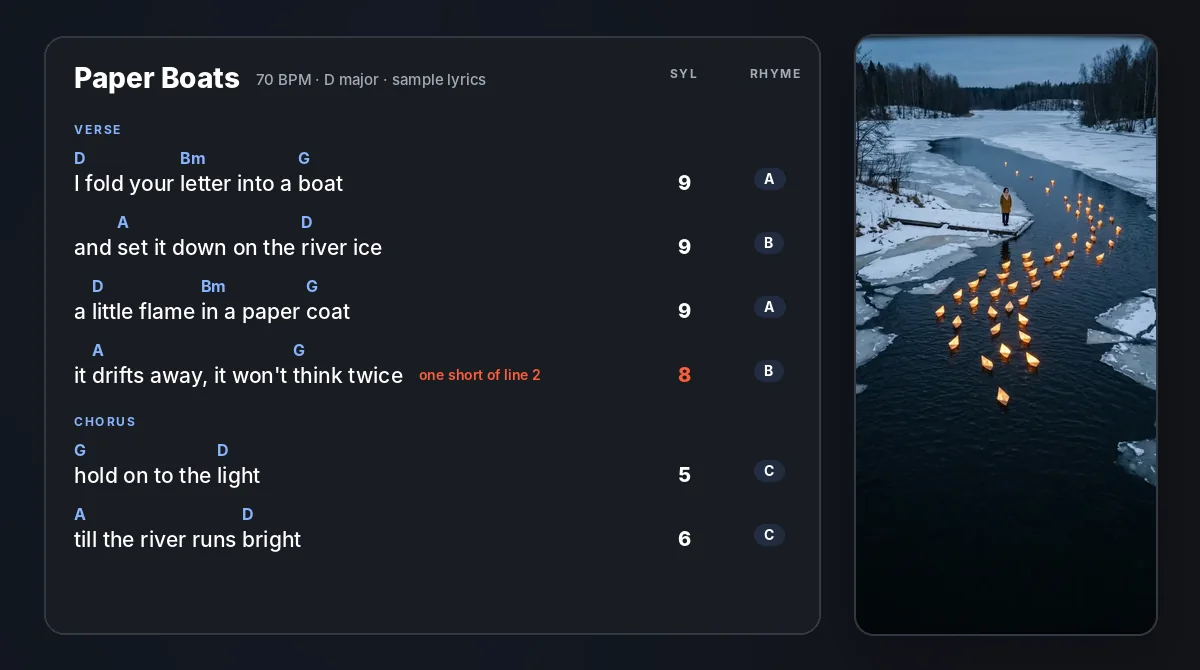
How to write a song
From a title or hook to a finished demo: the form, the chorus, chords, melody, lyrics that fit, rhyme, the bridge and splitting it with co-writers.
Read the guideNote frequency chart
Every note's frequency from C0 to C8 for any A4, with MIDI numbers and piano keys, and a converter from hertz to the nearest note.
Open the toolOnline piano
Play a piano in your browser with the mouse, touch or your computer keys, with a sustain pedal, octave shift and chords and scales lit on the keys.
Open the tool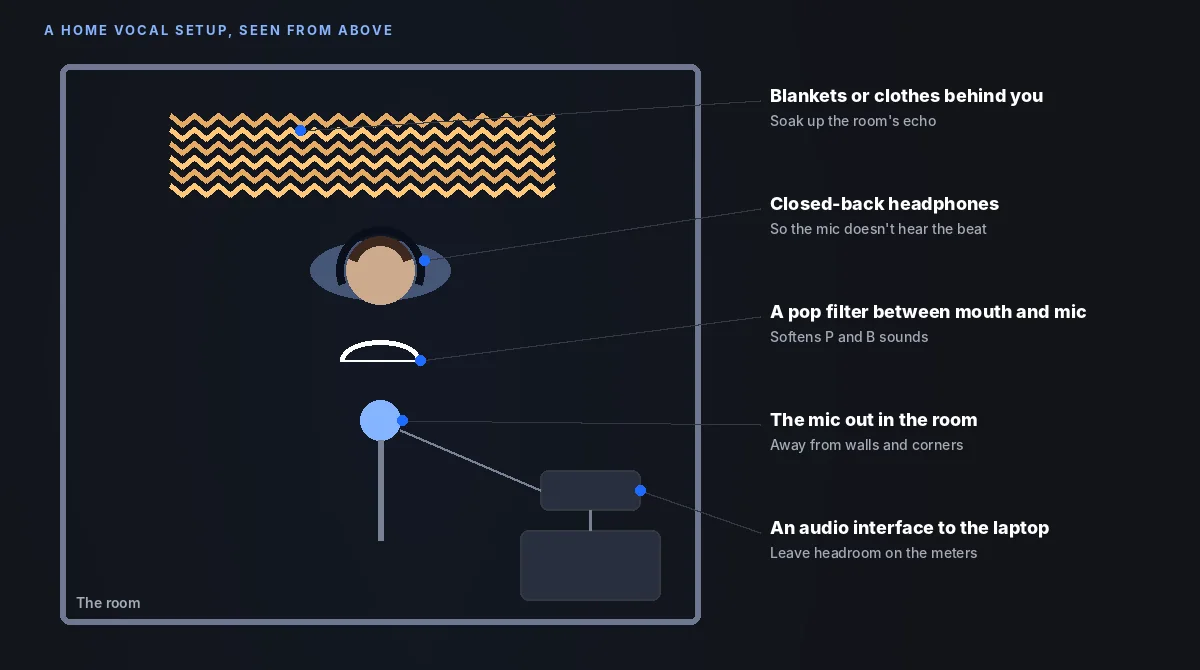
Record vocals at home
A quiet room, soft things behind the singer, the right distance from the mic, gain with headroom and a comped take: home vocal recording, step by step.
Read the guidePitch shifter
Move a song up or down by semitones and keep its tempo, or change its tempo and keep its key. Hear 15 seconds first, then save a WAV.
Open the toolScale finder
Any scale in any key on a keyboard and a guitar neck, played up and down, with its chords and related keys; or tick notes to find the scales that hold them.
Open the tool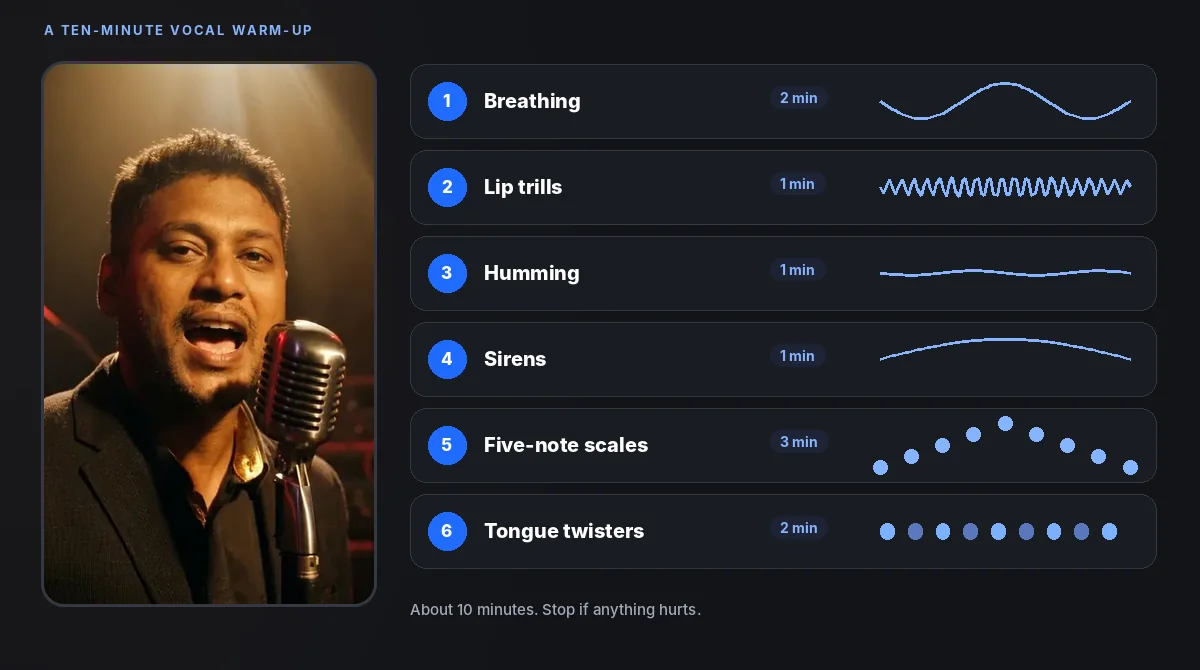
Vocal warm-ups
A timed 10-minute warm-up from breathing to tongue twisters, shorter and longer versions for gigs and sessions, a cool-down, and the signs that mean rest.
Read the guideEar training
Name intervals up, down and together, chords from major to diminished 7th, and the degrees of a key, over four levels with a running score.
Open the tool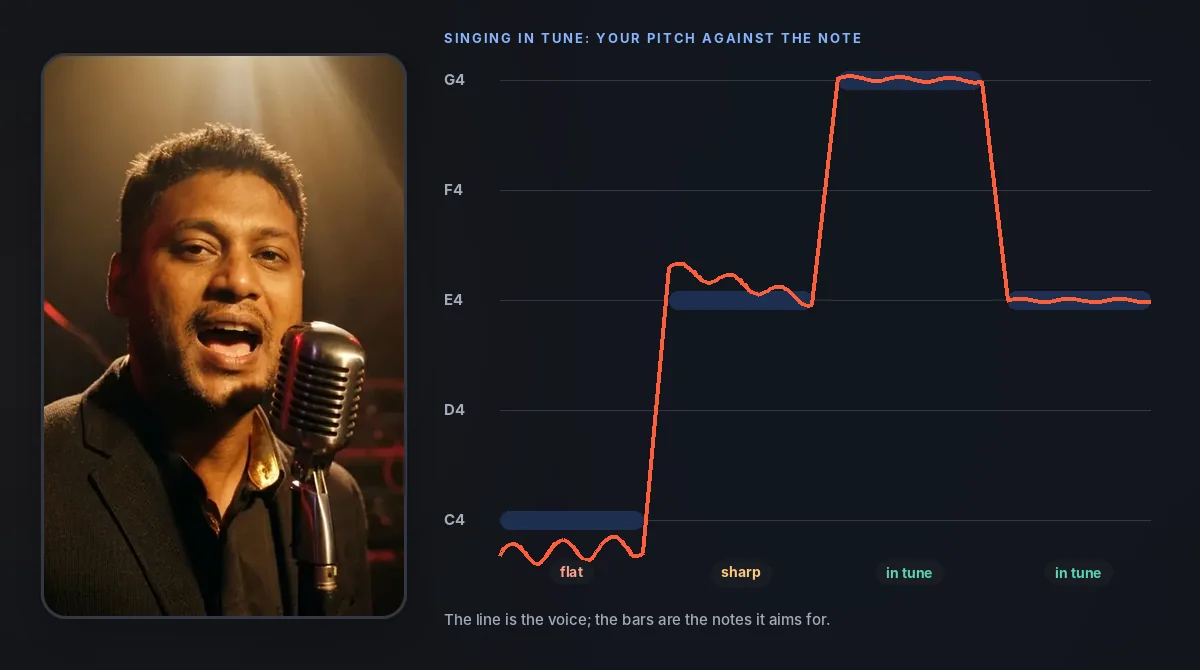
How to sing better
Posture and breath, singing in tune, tone and vowels, rhythm, recording yourself, a 20-minute daily routine, voice care and when to get help.
Read the guide
More free tools: beats, chords and voice
Play a piano, program a beat, name a chord, find a key on the circle of fifths, build a progression, change key, tune up and find your vocal range.
Your song deserves a music video
Upload a track and get a free beat-synced storyboard in minutes. Render it when you are ready.
No card needed to start.





