The pool on the last night of summer
Story style, pop look: a lifeguard locks up alone, and her friends climb the fence one chorus at a time.
Indie videos have turned small budgets into a style: one place, one idea played completely straight, light from whatever was already there, friends instead of extras. The songs often start with one instrument and end with everything, and the video should grow with them. Upload yours and Muvora measures where the song gets bigger, holds the shots in the sparse parts and quickens them as it builds, and writes a storyboard from the place and the people you describe. Change any of it for free and pay only for the seconds you render.
Free to start · 5 storyboards a month · No card needed
The shot planner ranks every beat against the rest of your song, not against other music, so a track that opens on one guitar and ends with the whole band gets a video that opens slow and ends quick. Every cut lands on a downbeat, and every section change and drop is a cut. At 110 BPM on the pop look, on a typical arrangement, a sparse verse holds each shot for two bars (about 4.4 seconds) and a chorus cuts every bar (about 2.2); if the last chorus crashes in hard enough to count as a drop, it gets a two-frame white flash and its first bar is split into two shots. Between two shots in the quietest third of the song, the cut softens into a crossfade of up to half a second, though never at a drop or beside a singing shot. There's no indie look, so choose by how the song moves: rock cuts about a fifth tighter for driving guitar songs, pop keeps the default pace for indie pop, lo-fi holds shots about a third longer for bedroom pop and dream pop, and No preset paces like pop. Find your tempo with tap tempo if you're unsure.
See your song as a storyboard first
Upload the track and the AI director plans every shot on the beat in minutes. Edit anything for free; you only pay if you render.
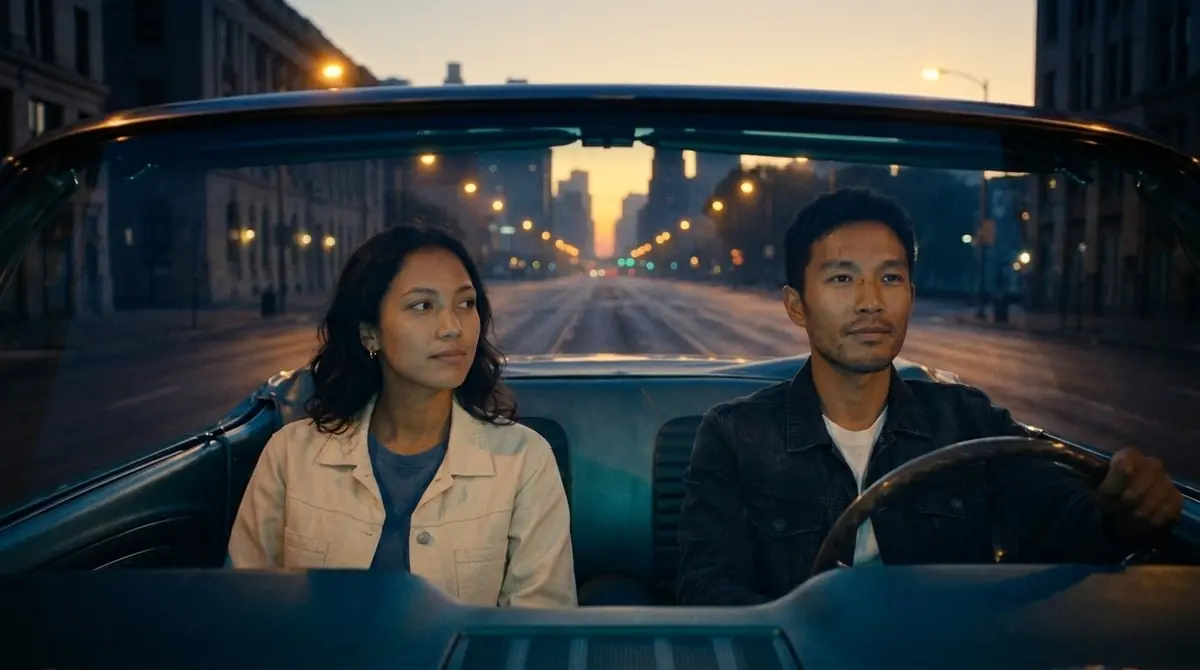
An indie video looks like it was shot one weekend with whatever was around, and the AI director can draw that if you name it. Pick a place you could have talked your way into: a town pool after closing time, a high school gym the morning after a dance, a church hall stacked with folding chairs, a ferry's top deck in the wind, a greenhouse at dusk. Light it with what's in it: overcast daylight, a window, a desk lamp, string lights, a projector, a television's blue. Then give each part of the song a job. The intro shows the place empty. Verse one follows one person doing one small task. In the chorus the friends turn up, or the task turns strange. The bridge gets the one picture nobody sees coming, and the last chorus brings everyone and everything at once before the outro returns to the empty place, changed. Ask for the look in words (“like faded film photos: soft contrast, warm highlights, a little grain”), and give each friend one detail you could spot in a wide shot, a yellow raincoat or bleached hair. The indie music video ideas guide has sixteen more concepts.
Story suits most indie songs. Performance puts your singer on screen from one clear, front-facing photo with the consent box ticked, lip-synced wherever the song is sung, and the same person can wander through the story shots in between, folding chairs or leaning on the ferry rail. Bandmates join as characters described in words, and the character sheet holds two of them steady from shot to shot. Lyric is for songs that live on the words: calm pictures with room for karaoke captions, a phrase at a time, each word lighting up as it's sung. Abstract gives an instrumental or a b-side weather, light and texture with no cast. If your records live in a drawn world (paper cut-outs, pencil, watercolor), the whole video can be drawn in it, performer included. From one 16:9 render you get the YouTube video, a 9:16 cut for Reels and TikTok, a square post and an 8-second Spotify Canvas. The rock, pop and lo-fi pages cover each look, the animated music video maker the drawn ones, and for heavier guitar songs there's the metal music video maker.
Each card opens the upload with a style, a look picked for that kind of indie and an idea in the box. Swap in your own place and friends before the storyboard is written; the pacing follows your song's own build.
Story style, pop look: a lifeguard locks up alone, and her friends climb the fence one chorus at a time.

Story style, rock look: a band plays the high school gym the morning after a dance, and the room wakes up around them.

Performance style, lo-fi look, 9:16: you sing at your desk at night, and the room changes a little every chorus.

Lyric style, pop look: a late ferry crossing with room for the words, for a song that lives on its lyrics.
Drop in an MP3, WAV, M4A or FLAC up to 8 minutes. Muvora finds the tempo, the beats, the downbeats and the sections of your song, like intro, verse and chorus.
An AI director writes a shot-by-shot plan timed to your downbeats. Rewrite any prompt, drag a cut (it snaps to the beat) or ask AI to redo a shot. None of it costs anything.
See the final price, then render. Pick Visualizer, Standard or Cinematic quality. If a shot fails, its credits come straight back.
Free storyboard in minutes. No card needed.
Can't find what you need? Start a free storyboard and see for yourself.
Yes. Upload the finished song (MP3, WAV, M4A, AAC or FLAC, up to 8 minutes) and the analysis finds the tempo, the downbeats, the sections and how the energy grows. Pick a style, describe a place and the people in it, and the AI director writes a storyboard with a shot for every slot. Reading and editing it is free; credits go only on the seconds you render.
There's no indie look, so pick the one that moves like your song: rock for driving guitar songs, pop for indie pop, lo-fi for bedroom pop, dream pop and slow folk, or No preset, which paces like pop. The look sets how long shots hold; the place, the light and the people come from your idea.
Yes. The planner ranks the energy of every beat within your own song, so the sparse opening gets the longest shots and the loudest part the quickest cuts, wherever they fall. Quiet neighboring shots can be joined by short crossfades, and you can drag or merge cuts in the editor if a build needs to hold even longer.
As characters, yes: describe each one in the idea box and the AI draws them from your words, matching clothes and hair rather than faces. Only one person, the singer, can come from a photo, in the Performance style and with their consent. Keep the friends in wide and medium shots and save the close-ups for the singer.
The pictures can be drawn that way if you ask in the idea box: faded color, soft contrast, grain, the warm cast of an old print. No filter is added afterwards, and no lettering is ever drawn, so a camcorder date stamp isn't possible in the picture; add one in your editor if you want it.
The storyboard is free, and the free plan makes 5 new ones a month. A 3-minute song is 6,840 credits in Visualizer, 10,800 in Standard and 19,800 in Cinematic; the exact total for your song is shown before you press Generate, and a shot that fails to render costs nothing.
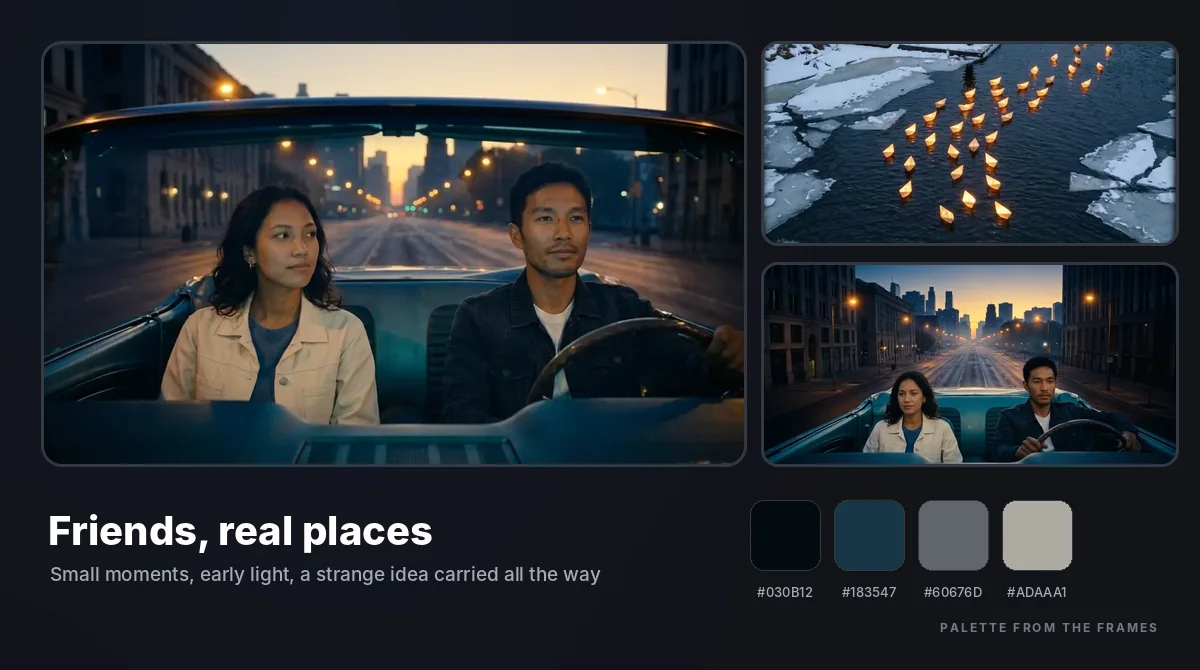
16 indie concepts for bands and bedroom artists: real places, friends in the frame and one strange idea carried all the way.
Read the guide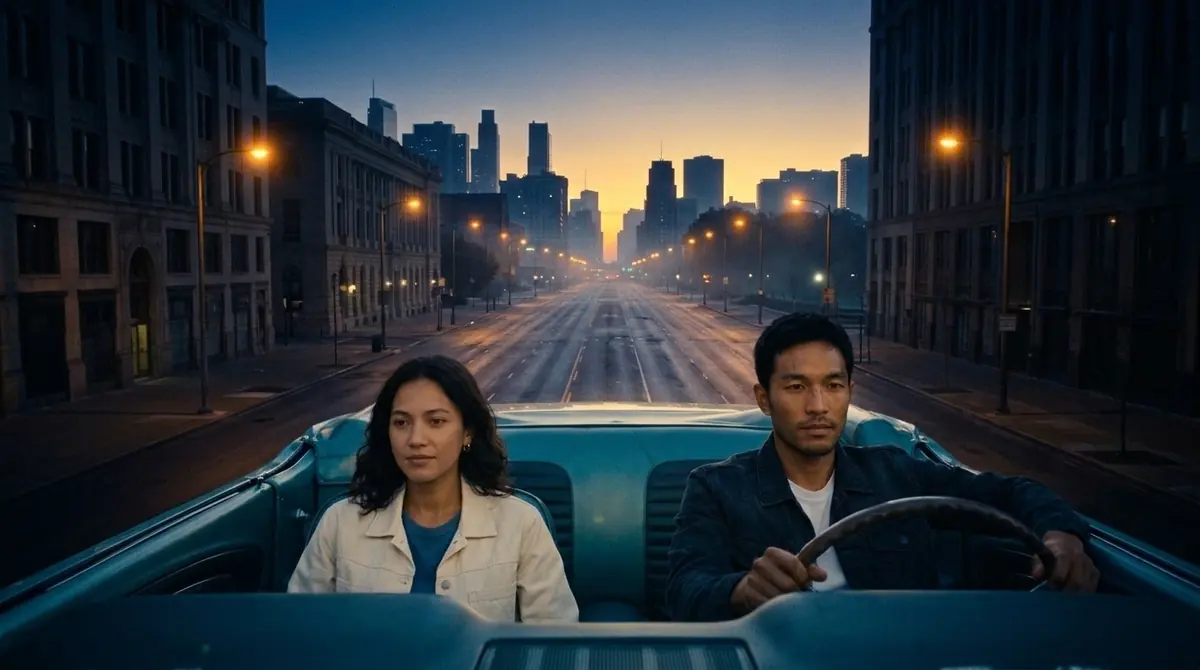
Bright, glossy and always moving, with a chorus that pays off.
Learn moreStage lights, raw energy and a live-show feel on the downbeat.
Learn moreSoft rain, warm lamps and slow shots for late-night calm.
Learn more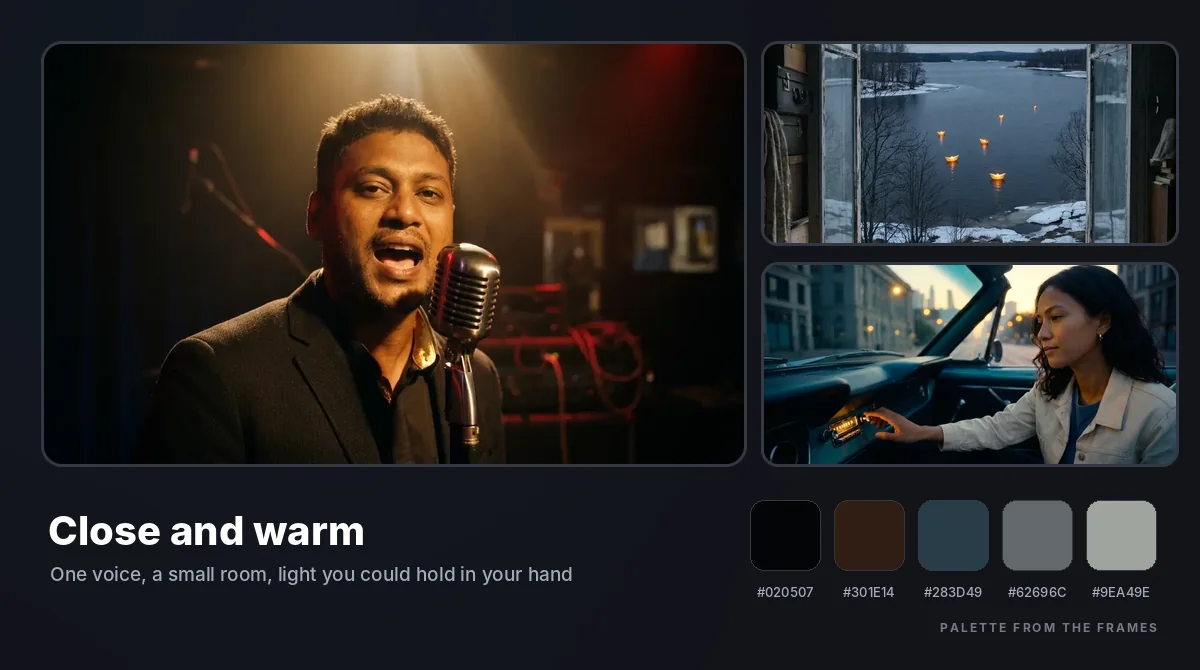
Acoustic and piano songs with the voice up front: you singing from one photo, the story in between, cuts that wait for the line.
Learn more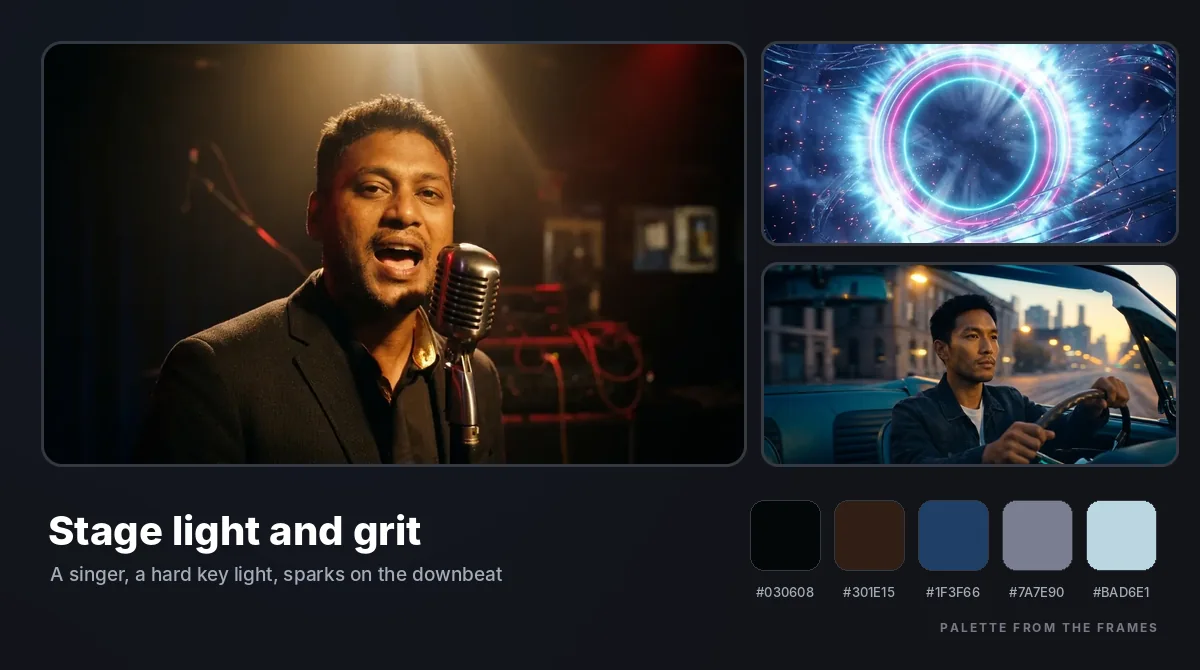
The singer lip-synced from one photo, the rest of the band written into the story, every release format.
Learn more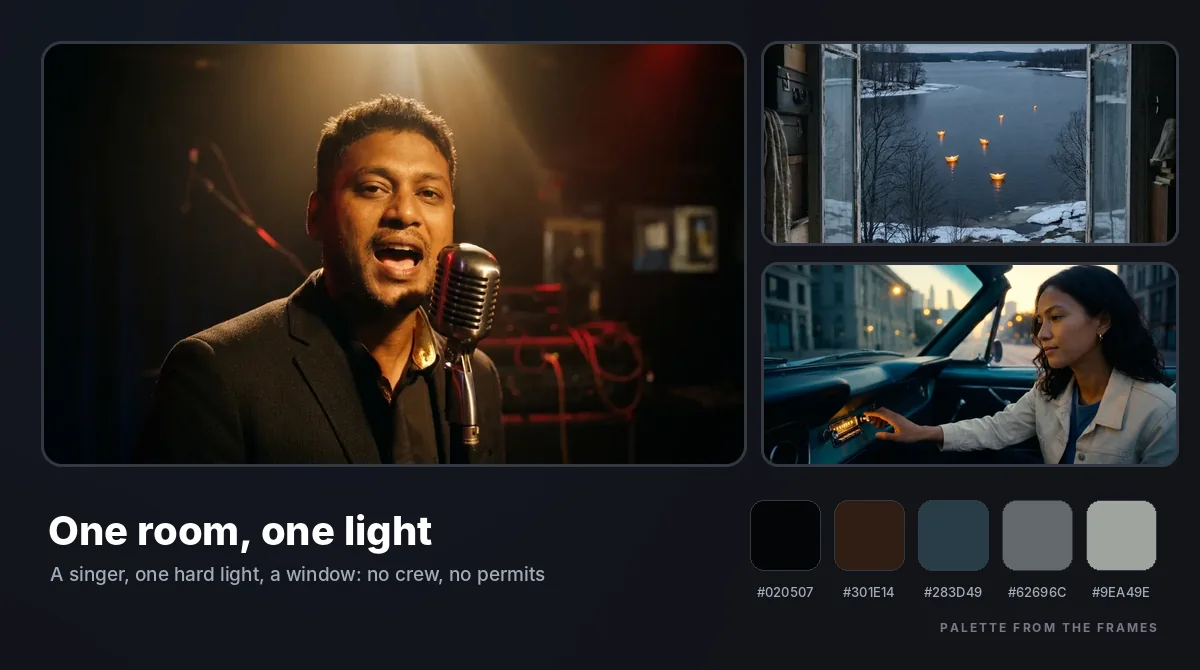
17 cheap concepts for one room, one free location or no cast at all, and where a shoot's money usually goes.
Read the guide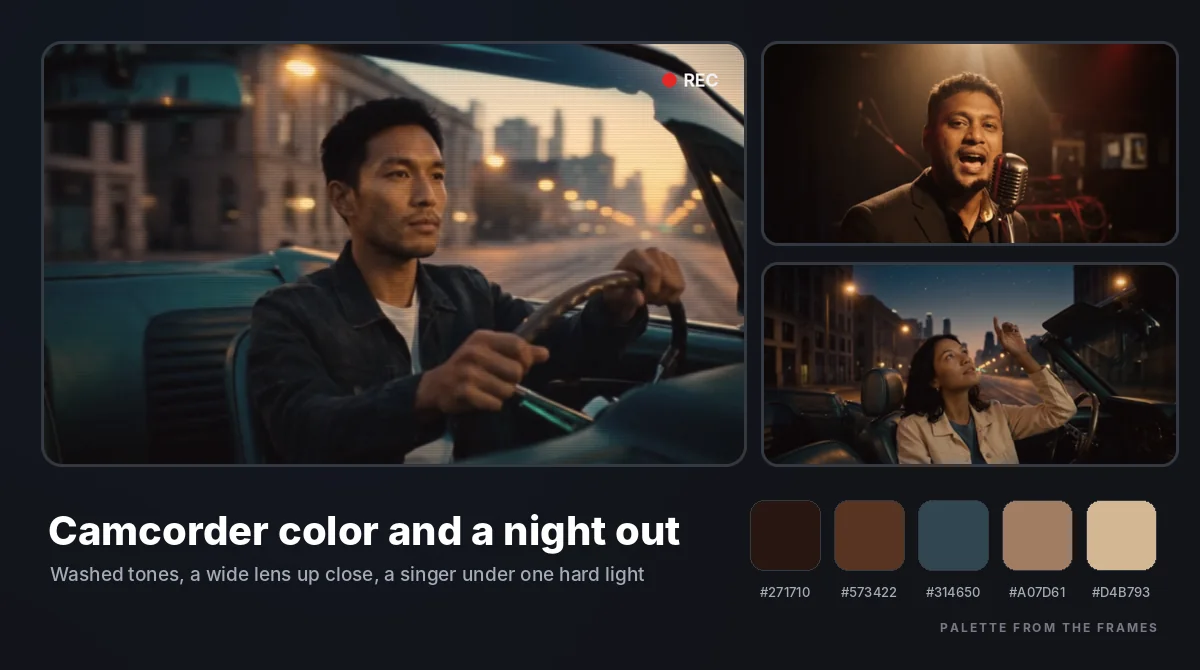
15 concepts in five 90s looks, from grunge flannel and skate tapes to fisheye rap, white R&B sets and a hunt for a field party, with the light and wardrobe of each.
Read the guide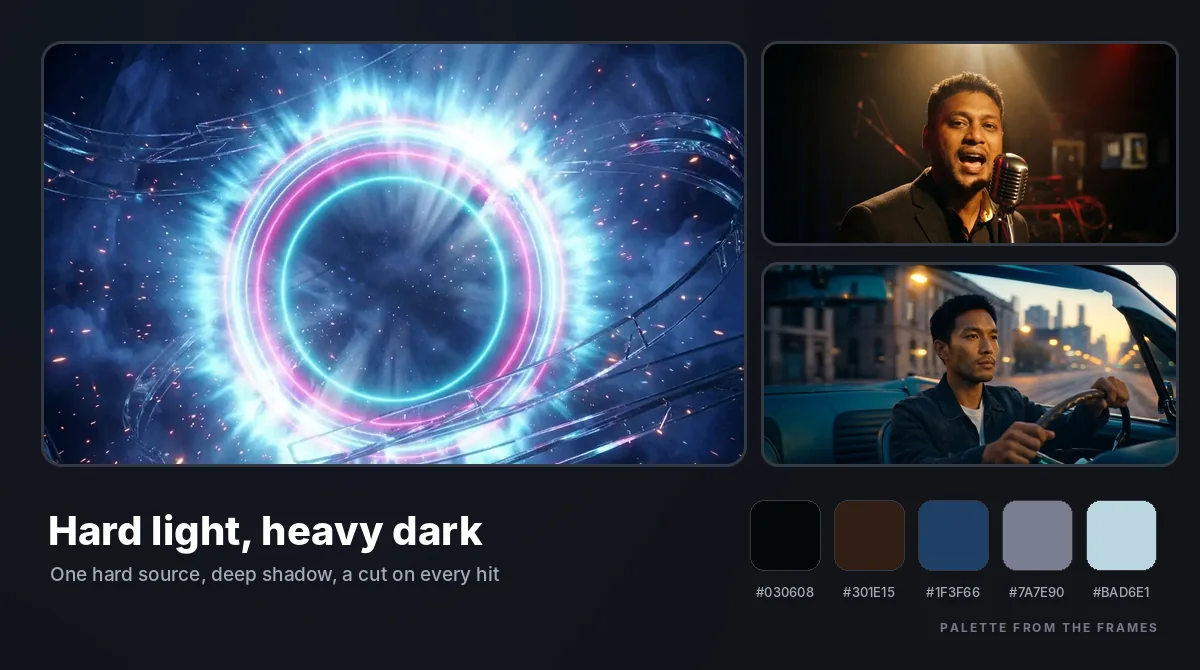
Doom, thrash and metalcore videos under one hard light, with blast beats cut in half time and a breakdown that gets its own picture.
Learn more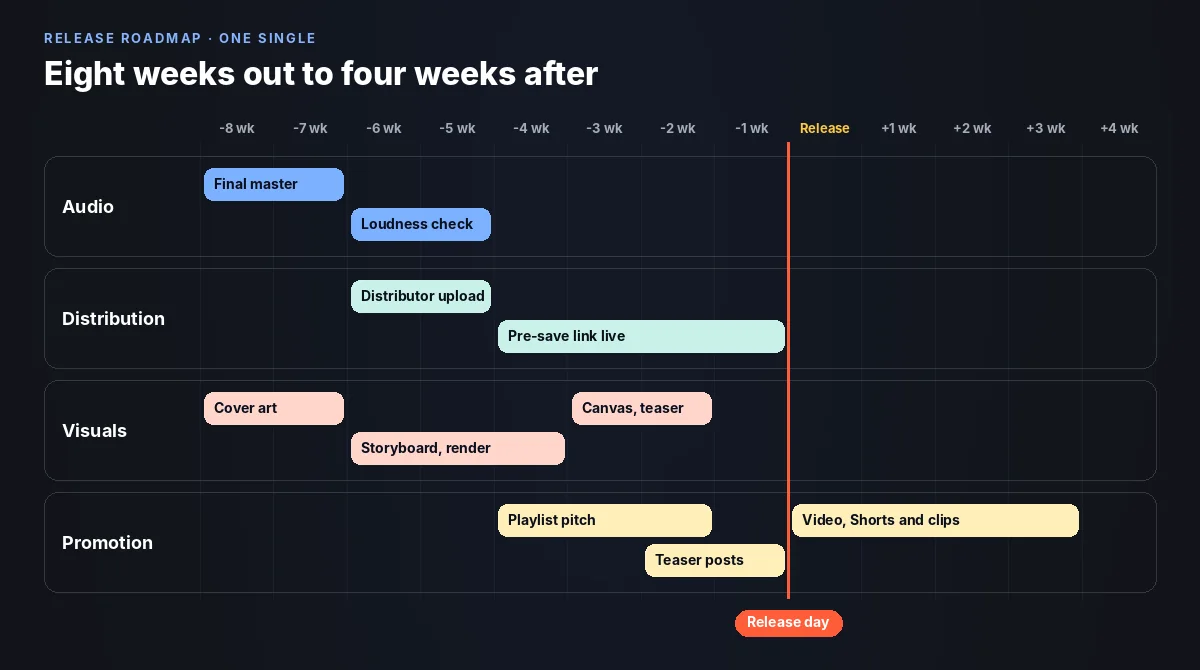
A storyboard and an exact price for every release on the schedule, every format from one render, and Studio sized for a roster.
Learn more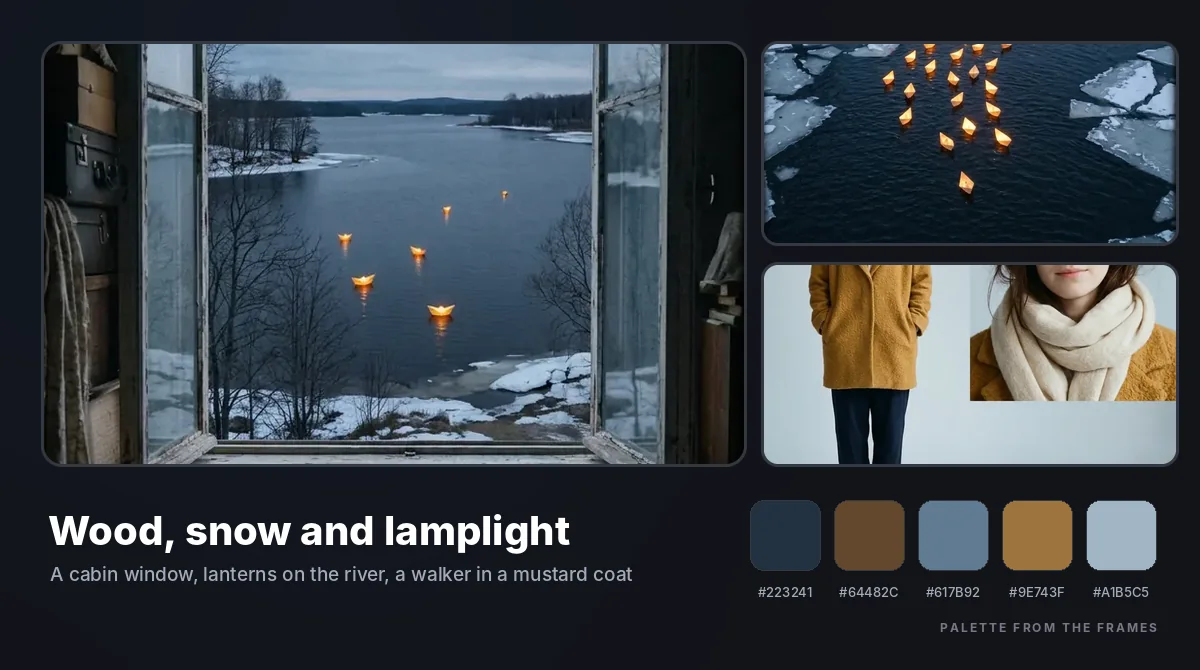
Folk songs set in places with a history: long holds through the verses, quicker cuts in the choruses and fast waltzes counted two bars at a time.
Learn more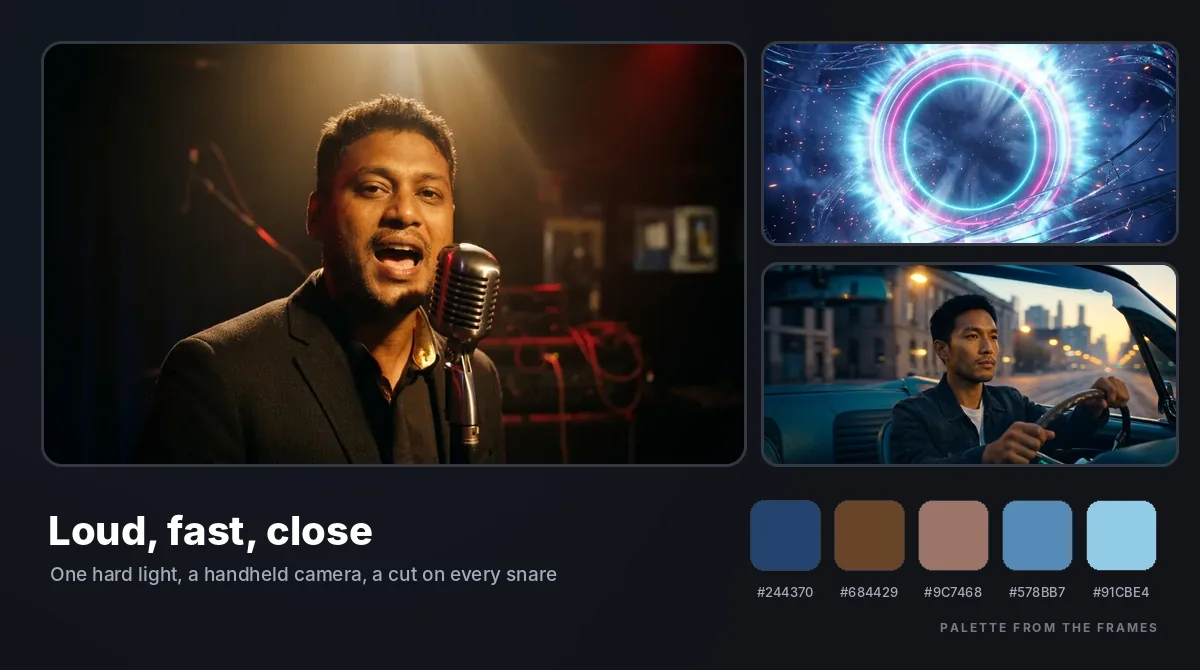
Punk, pop-punk and hardcore cut on the rock look and counted in half time past 150 BPM, with raw light, a crowd at arm's length and a video as short as the song.
Learn moreUpload a track and get a free beat-synced storyboard in minutes. Render it when you are ready.
No card needed to start.



