Launderette at 3 a.m.
Performance, hip-hop look: you rap among the dryers under flat tubes while the street outside goes on without you.
A drill beat asks the picture to stay still while everything under it moves: hi-hats that often roll in triplets, an 808 sliding from note to note, a snare that usually lands once a bar so the whole track feels half as fast as it counts. The video's job is to stay cold and steady and change on the beats that matter. Upload your track and Muvora finds those beats, plans the cuts at the hip-hop look's pace and writes a storyboard set in the night you describe, with you rapping from one photo or a masked character standing in. Every shot can be changed for free before you render.
Free to start · 5 storyboards a month · No card needed
Drill is often produced around 140 BPM and felt at 70, and beat tracking can land on either count. On a typical arrangement the hip-hop look plans it the same way both times: verse shots of about 3.4 seconds (two bars at 140, one at 70) and a hook that changes picture every 1.7 seconds, a bar at 140 or a half bar at 70. Every section change is a cut, and when the drums crash back in after a bare piano or choir intro, or after a beat-stop, the jump is often big and lasting enough for the analysis to mark a drop: that bar opens on a new shot with a two-frame white flash. No cut can chase a hi-hat roll, which runs far faster than any shot, so the rolls live inside the frame: the director writes each shot's camera move at the pace of its part of the song, slower in a verse and quicker in a hook, unless you've named a calm mood. To put a new picture on an 808 slide or a beat switch, drag a cut onto it in the editor; hold Alt and it snaps to any beat, not only a downbeat. Not sure how your beat counts? Tap it out with tap tempo.
See your song as a storyboard first
Upload the track and the AI director plans every shot on the beat in minutes. Edit anything for free; you only pay if you render.
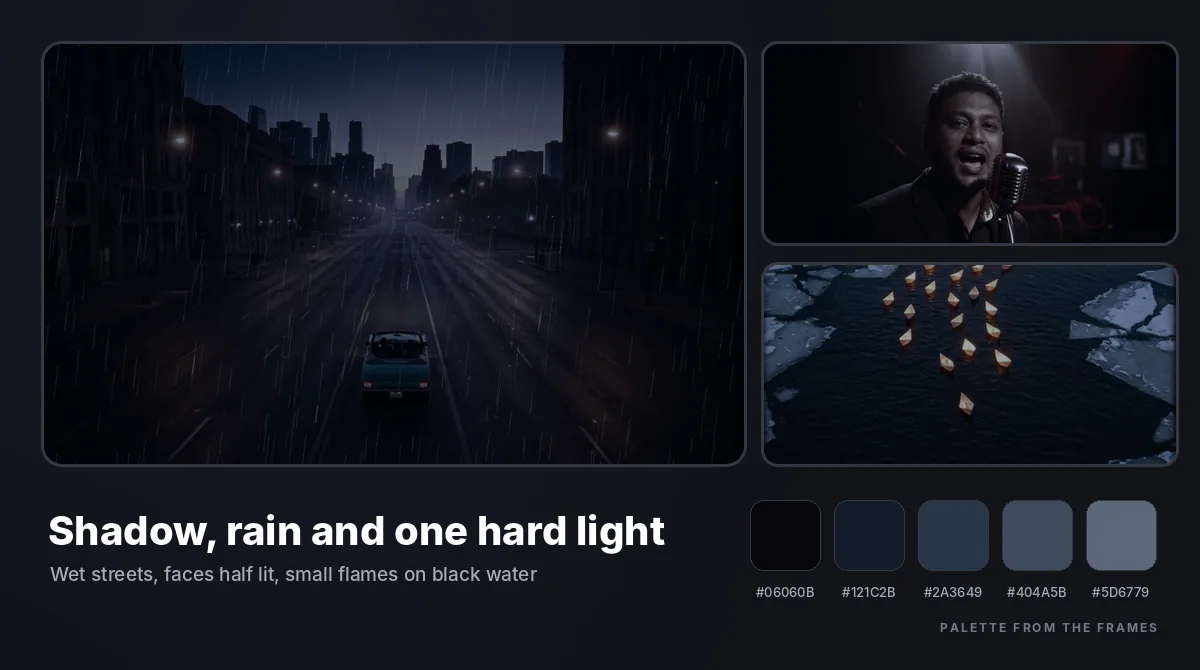
Drill's look comes from what's lit after dark, and the idea box (up to 600 characters) is where you build it. Name a place and its one light source: a launderette's flat tubes at 3 a.m., a footbridge over a ring road with headlights streaming underneath, a stairwell with a single caged bulb, a minicab office's lit window, a petrol station forecourt in the rain. Put the crew in the hooks and keep the verses on the lead and small details: gloved hands, breath in cold air, a phone's glow under a hood, rain beading on a puffer's shoulder. Write the mood plainly, because every face is drawn from it: “cold, calm and watchful” gives still faces looking down the lens rather than snarls. Describe clothes by cut and color (a black puffer, a grey tracksuit, white trainers) rather than by brand. Mature themes your lyrics carry are allowed in the pictures; gore, nudity and sexual content aren't. Real people are never drawn, so the video can't show a named rapper, a rival or anyone from your area, and lettering is left out, so postcodes, crew names and tags stay off the walls: let the architecture, the weather and the light say where you are. The drill music video ideas guide has fifteen concepts across UK, Chicago and Brooklyn drill, and dark music video ideas has more nights to build on.
With Performance you add one clear, front-facing photo of yourself, tick the consent box, and the shots your vocal fills are lip-synced to your bars: the hook's, and those in the second half of each verse, so a verse opens on the story and builds to you. The photo has to show your mouth, so a balaclava, a mask, a scarf pulled up or a hand on the mic can get it refused. If you keep your face covered in your videos, choose Story instead and describe a masked lead in the idea box (a black balaclava, a grey tracksuit, white trainers). That character is drawn from a character sheet so it looks the same from shot to shot, carries the song from place to place, and never lip-syncs, so the mask stays on. A drawing of yourself can stand in for a photo too, as long as its mouth is in view; the whole video is then drawn in its style. Paste your lyrics with the upload so captions spell your slang your way, and render them on or off. Start in 16:9 and the same render hands you a vertical cut for clips, a square post and an 8-second Canvas as well. For brighter, bigger hooks see the trap music video maker, music videos for rappers goes further into lip sync from a photo, and how to write rap lyrics helps with the verses themselves.
Each card opens the upload on the hip-hop look with a style and a night already written into the idea box. Change the city, the crew and the clothes to yours before the storyboard is written; the two Performance cards ask for your photo on the vibe step.
Performance, hip-hop look: you rap among the dryers under flat tubes while the street outside goes on without you.

Story style, hip-hop look: a lead in a balaclava crosses the city one winter night and never shows his face.

Performance, hip-hop look, 9:16: rain on the roof, one strip light, and the crew squeezing in out of the weather.
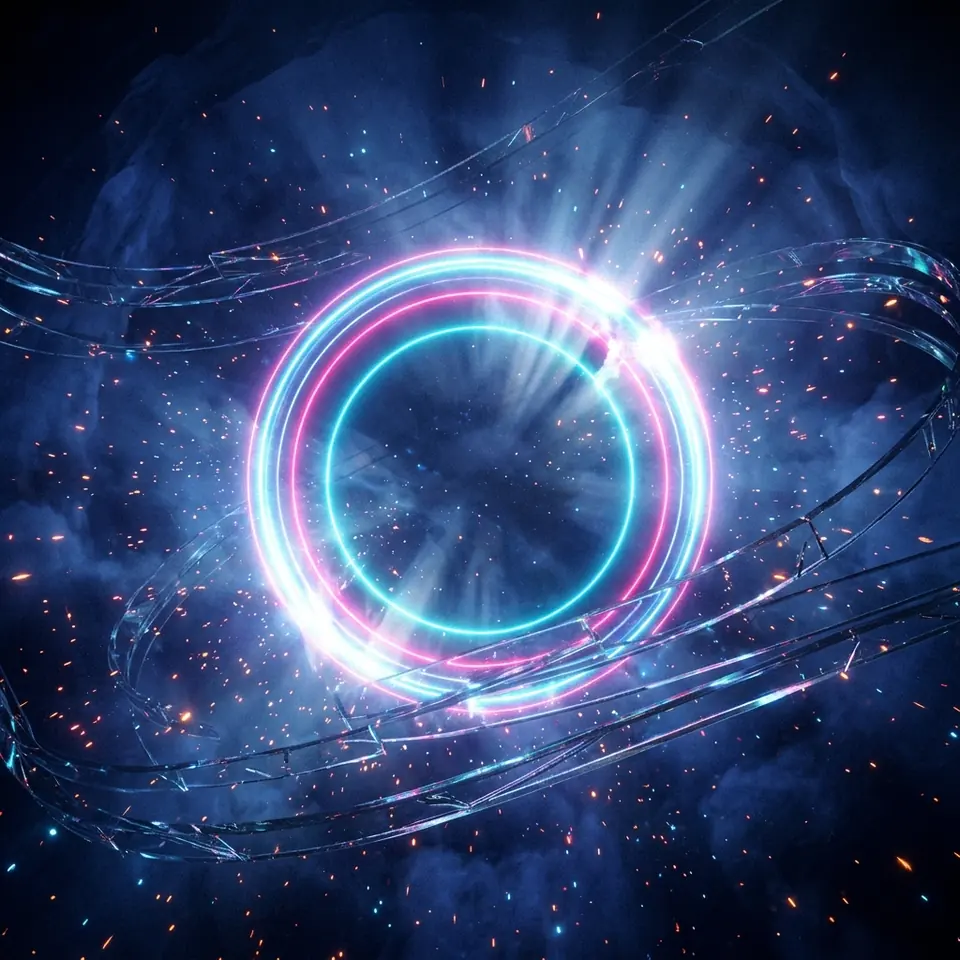
Abstract style, hip-hop look: for a drill instrumental, a freight train's lights and steel at night.
Drop in an MP3, WAV, M4A or FLAC up to 8 minutes. Muvora finds the tempo, the beats, the downbeats and the sections of your song, like intro, verse and chorus.
An AI director writes a shot-by-shot plan timed to your downbeats. Rewrite any prompt, drag a cut (it snaps to the beat) or ask AI to redo a shot. None of it costs anything.
See the final price, then render. Pick Visualizer, Standard or Cinematic quality. If a shot fails, its credits come straight back.
Free storyboard in minutes. No card needed.
Can't find what you need? Start a free storyboard and see for yourself.
Yes, from the finished mix. Muvora reads the track's tempo, downbeats, sections and drops and times your words from the vocal; you choose a style and describe the night you want in the idea box, and the AI director turns that into a shot-by-shot storyboard cut to the beat. Changing it is free, and you pay credits only for the seconds you render.
Not by name. The five looks are hip-hop, pop, EDM, rock and lo-fi, and hip-hop is drill's starting point: its driving pace keeps the hook changing picture about every 1.7 seconds. Type drill as the song's genre when you upload and the hip-hop look is picked for you, unless you've already chosen one; the places, light and wardrobe come from your idea.
Not by themselves. Cuts land on downbeats, at every section change and on every drop, which on a typical drill beat means a new picture about every bar in the hook. A slide or a beat switch that falls between downbeats gets its own cut only if you drag one there; hold Alt in the editor and the cut snaps to that beat.
In a Story video, yes: describe a masked lead and the character keeps the mask on in every shot. Lip sync is different. The Performance style needs a clear, front-facing photo with your mouth in view, so a photo with a balaclava or a scarf over your face is refused. A drawing of yourself can stand in for the photo if its mouth is visible.
Real people, so no named rapper, rival or neighbor is ever drawn; gore, nudity and sexual content; and lettering, so no postcodes, crew names or tags. Mature themes your lyrics carry are allowed, though the AI models' own filters may still refuse a shot, and a refused shot costs nothing.
Writing and editing the storyboard costs nothing, with 5 new storyboards a month on the free plan. Credits are spent only on rendering, per finished second: a 3-minute track is 6,840 credits in Visualizer, 10,800 in Standard and 19,800 in Cinematic, with lip-synced seconds at 75 in place of the quality's rate. The total for your track is shown before you press Generate.
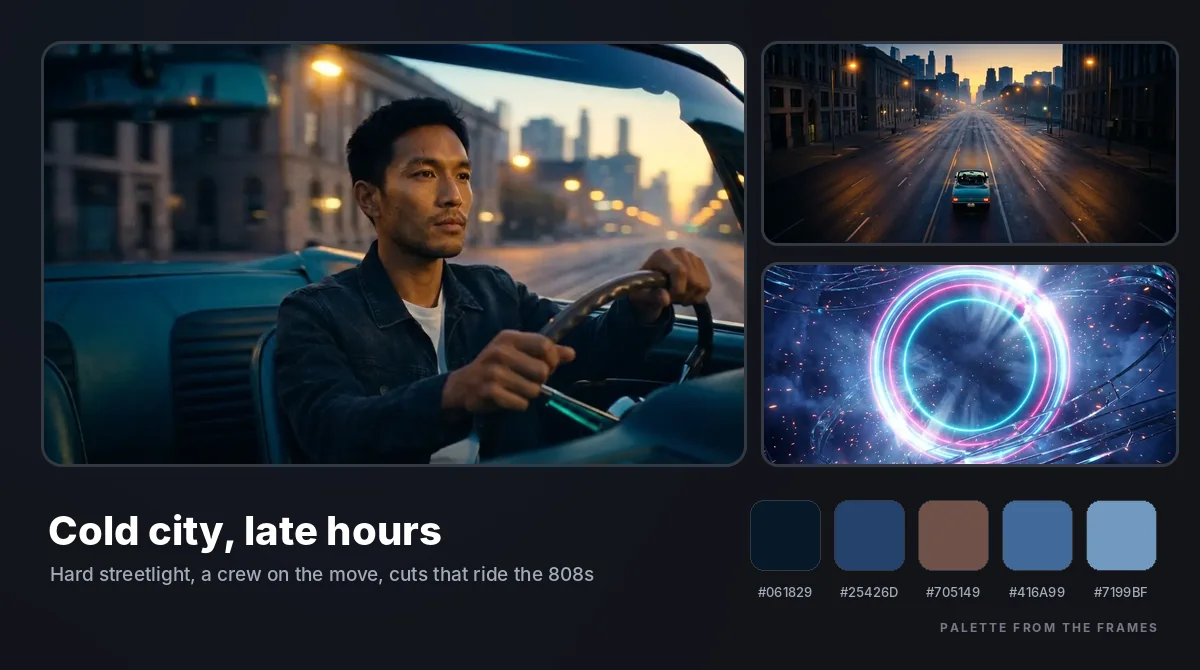
15 drill concepts in the UK, Chicago and Brooklyn styles: the city at night, the crew, wordplay as pictures and cuts that ride the slide.
Read the guide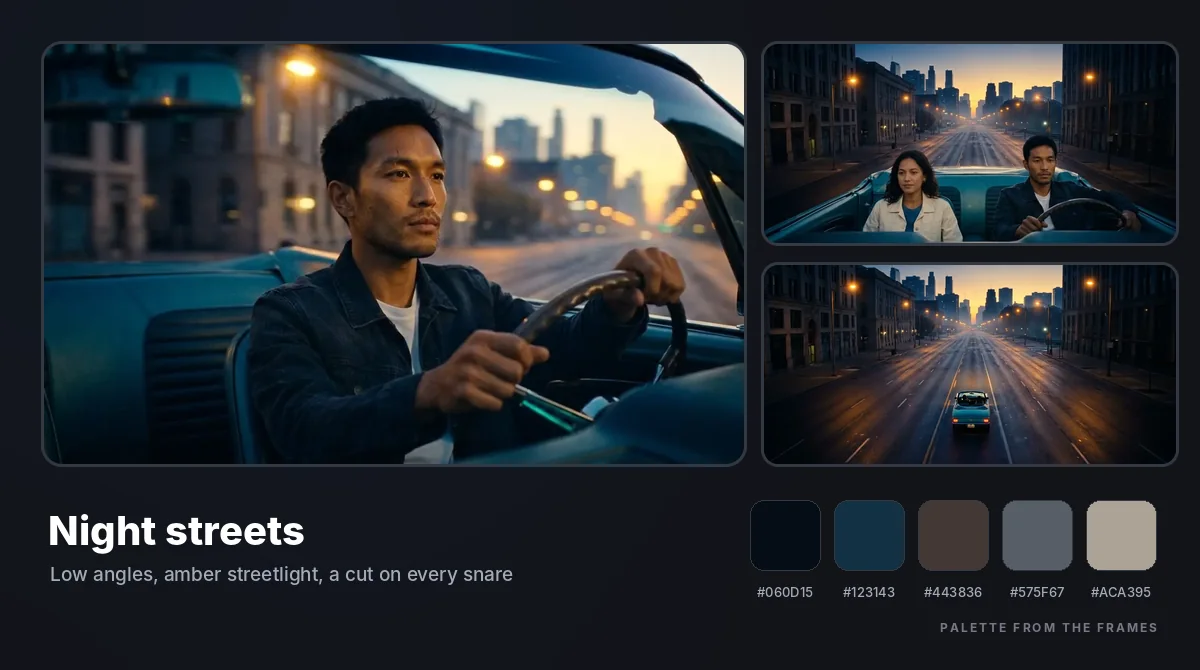
Trap videos with the hook cut on every bar, a flash on the drop, night places you describe and your verses lip-synced from one photo.
Learn more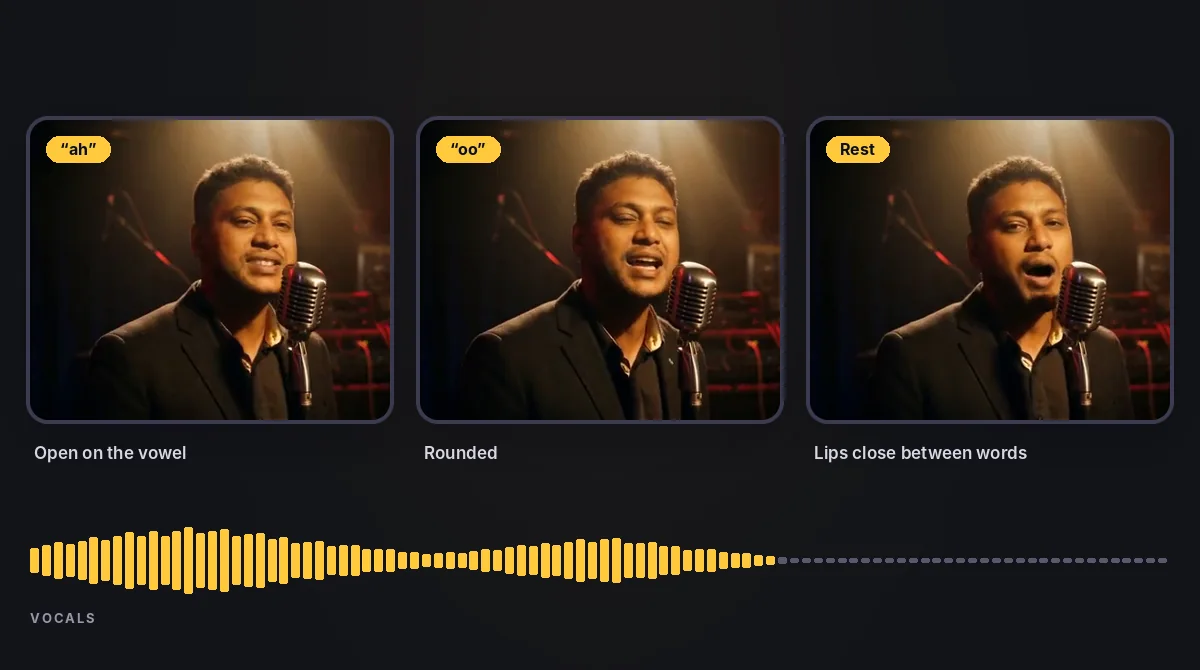
Fast cuts on your beat, your bars lip-synced from one photo, story shots in the verses and a vertical cut for clips.
Learn moreNight streets, low angles and cuts that hit with the snare.
Learn more15 hip-hop concepts with real places, wardrobe and camera moves, and how to pace the verses and the hook.
Read the guide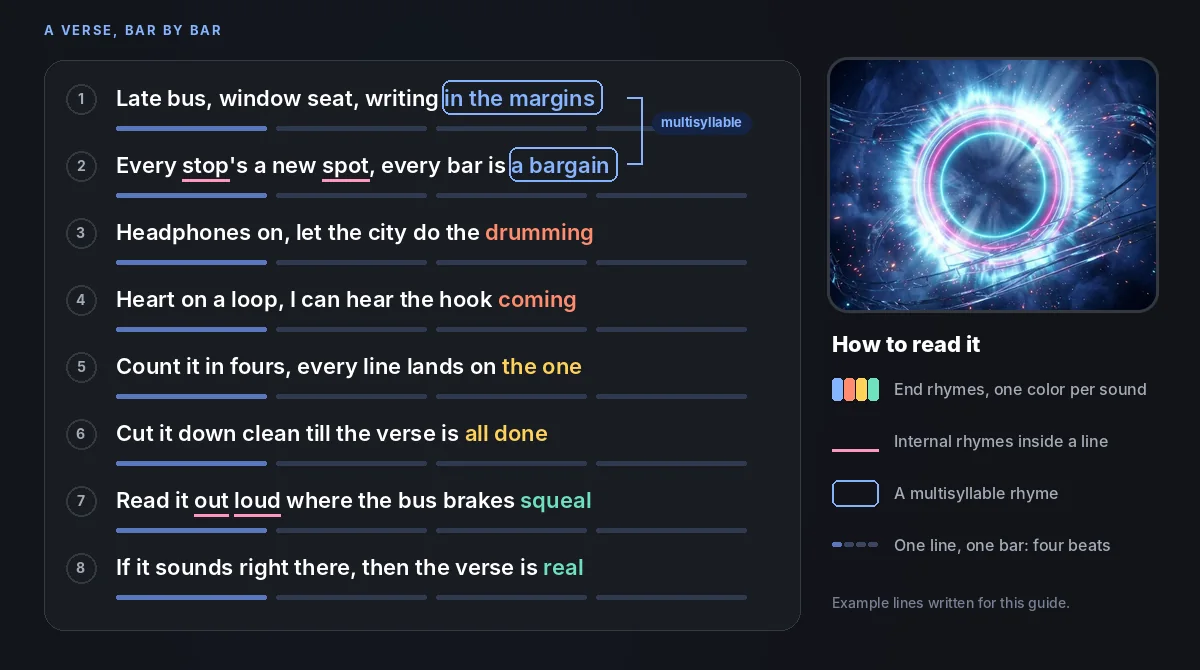
Bars counted over the beat, the 16-bar verse, flow and cadence, end, internal and multisyllable rhymes, punchlines, a story that moves and the edit.
Read the guide15 dark concepts in noir, gothic and lonely-night moods: a hotel night porter, a reflection one beat behind, lights that switch off behind you, all without gore.
Read the guide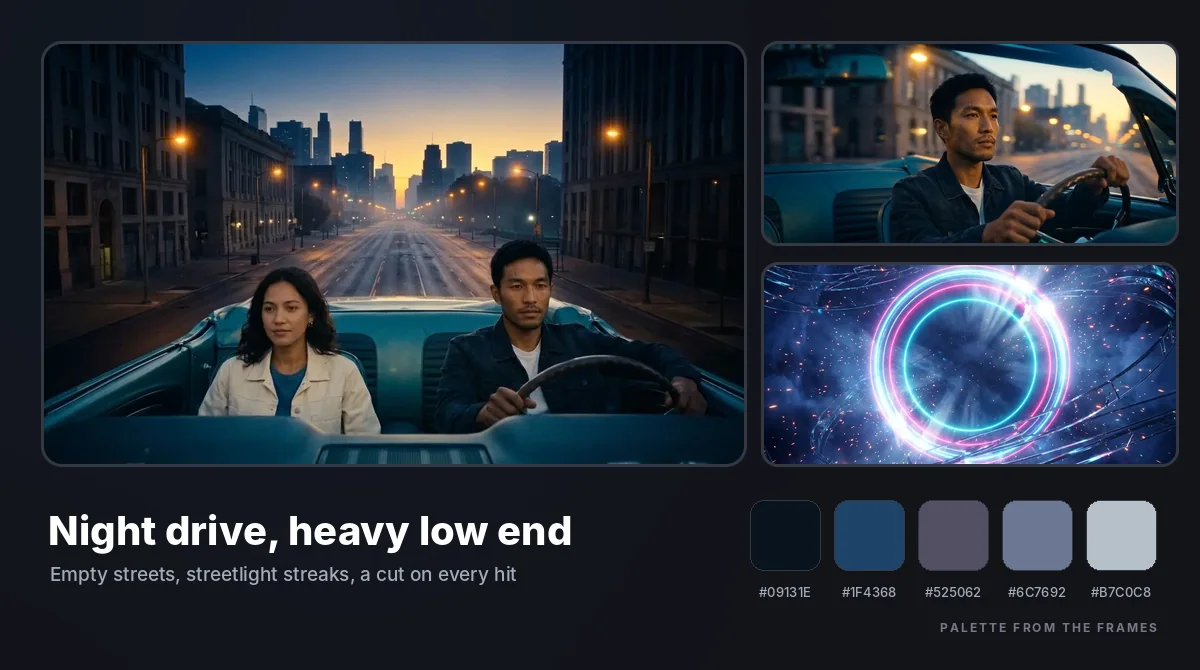
Drift and Brazilian phonk videos with night roads, dashboard glow and hard cuts on your track's downbeats.
Learn moreVisuals for the beats you sell or share, cut on the kick and ready for YouTube.
Learn moreTap along to any song to find its BPM, with half and double time and how steady you are.
Open the toolUpload a track and get a free beat-synced storyboard in minutes. Render it when you are ready.
No card needed to start.





