The short answer
Strong rap music video ideas pair a specific place with an attitude and give the hook one image that returns bigger each time: a barbershop that becomes a studio after hours, a block party around an open hydrant, a press conference with flashbulbs on the snare. Hold verse shots for a bar or two, cut the hook every bar, and match the faces to the beat's mood.
- Choose a place with a story: in rap the setting is half the character.
- Give the verses room with one- to two-bar shots and punch the hook on every bar.
- Dress the lead in one signature piece and repeat it in every shot.
- Match the attitude to the beat: a laid-back track wants calm, sure faces.
- One location and one strong motif beat a dozen half-planned places.
On this page (7 sections)ShowHide
What makes a rap music video work
Rap is the most place-specific genre there is. A verse about the block needs a block, and viewers can tell a real-feeling street from a generic backdrop within two seconds. Before you pick a concept, decide where the song lives: a neighborhood, a room, a car, a job. Then build the video out from there with five decisions.
- Place. One to three locations with a reason to be in the song: a barbershop, a stairwell, a car park, a kitchen. Name the light in each, such as orange sodium streetlights, an open fridge door or a shop's fluorescent tubes.
- Attitude. Confidence reads as stillness. Most great rap performances are calm on the face, with the energy in the delivery and the edit rather than in shouting at the lens. Save the snarl for tracks that are genuinely aggressive.
- Camera. A low angle makes the artist bigger, a slow push-in on a verse pulls the viewer into the bars, and a camera planted on the pavement while the artist walks toward it beats a shaky follow shot.
- Wardrobe. One signature piece (a vintage varsity jacket, a white durag, a thin gold chain) worn in every shot, so the artist is recognizable at a glance in a vertical clip.
- The hook. Give it an image the verses don't have: a new place, people who appear, a light that switches on. Each time the hook comes back, that image should be a little bigger.
Pace is the last piece. Most rap sits between 70 and 100 BPM (trap at 140 is usually felt in half time), so a bar lasts about 2.4 to 3.4 seconds: long enough for a verse shot to hold a bar or two, short enough that a one-bar cut on the hook lands like a punch. Not sure of your tempo? Tap it out with the free tap tempo tool.

Story ideas: a place, a lead and a change
These five concepts give the verses something to do. Each has a lead, one or two places and a turn by the last hook. They suit tracks with a narrative or a strong sense of where the artist comes from, and they need a cast of one or two plus a few faces in the background.
- Story · daytime
Park chess hustler
The lead plays speed chess for cash at a row of stone tables in a city park, slapping the clock on every snare. Each verse brings a new opponent: a retired bus driver, a twelve-year-old prodigy, a man in a suit on his lunch break. The hook pulls wide on the whole row under the trees; in the final hook the lead finally loses, and laughs.
Use this idea on my songUse this idea on my song - Story · twist ending
The job
A crew of four plans a job around a kitchen table with a hand-drawn floor plan and walkie-talkies. Verse two is the night itself: gloves, a back stairwell, a flashlight sweeping a dark hallway. On the last hook they ease open the final door and the lights snap on: it's their grandmother's surprise birthday party, and she wants to know why they're late.
Use this idea on my songUse this idea on my song - Story · summer
Saturday car wash
A hand car wash on a hot Saturday, run by the lead and three friends in rolled-down coveralls. Verses follow the routine up close: foam cannons, chamois cloths, water beading on a black hood. Each hook the hoses arc through the sun on the downbeat and the line of cars grows; the last car through is the battered sedan the lead's father used to drive.
Use this idea on my songUse this idea on my song - Story · one building
Moving day
The lead and a friend carry boxes up five flights into a first apartment. Verse one is the climb, verse two the unpacking: an old trophy, a pair of first sneakers, a framed photo. Every hook happens on the bare floor under one bulb, the room fuller each time, until the last hook is a full house of friends eating takeout off the boxes.
Use this idea on my songUse this idea on my song - Story · family
One kitchen, three ages
The same kitchen across three decades. In verse one the lead is a kid doing homework at the table; in verse two a teenager sneaking out past it at night; in the last verse an adult walking in with groceries for their mother. Wallpaper, fridge and light change with each era, but every hook lands on the same pot steaming on the stove.
Use this idea on my songUse this idea on my song
Try a concept on your own track
Upload your song, paste the idea you like into the idea box and read the storyboard the AI director writes for it, every shot timed to your beat. Editing is free, and the free plan gives you 5 new storyboards a month to compare concepts.
Performance-led ideas: rapping to the lens
Sometimes the bars are the point and a plot would get in the way. A performance-led video keeps the artist on screen and in the viewer's face, so the place, the wardrobe and the camera have to supply the variety. These concepts give one rapper five very different frames to own.
- Performance · crew
Stairwell climb
The lead raps up the concrete stairwell of a tower block, one landing per bar, while friends lean on the rails of each landing and nod along. Strip lights change color floor by floor: green, then amber, then white. The camera waits on each landing as the lead climbs toward it, and the final hook bursts through the roof door into a gold sunset over the city.
Use this idea on my songUse this idea on my song - Performance · one room
Press conference
The lead raps the verses from a podium in a wood-paneled briefing room to rows of reporters, flashbulbs popping on every snare. Close-ups stay cool and unbothered while hands shoot up with questions. Each hook the reporters lower their notebooks and nod along, and the last hook ends with the lead stepping down and walking out through the side door.
Use this idea on my songUse this idea on my song - Performance · one apartment
Getting ready
Getting ready for the biggest night of the year: the lead irons a white shirt, laces fresh sneakers and picks between two chains, rapping each verse straight to the lens in a small apartment lit by a window and one desk lamp. Each hook jumps ahead to the street outside, and the final hook is the lead stepping out of a cab into a wall of camera flashes.
Use this idea on my songUse this idea on my song - Performance · daytime block
Hydrant summer
A heat wave on a brick block. Someone opens the fire hydrant and the street becomes a party: kids running through the spray, a speaker riding in a shopping cart, a dozen neighbors on the stoops. The lead raps from a stoop in the verses; each hook the spray catches the sun on the downbeat and a few more neighbors join in.
Use this idea on my songUse this idea on my song - Performance · night car
Outside the old house
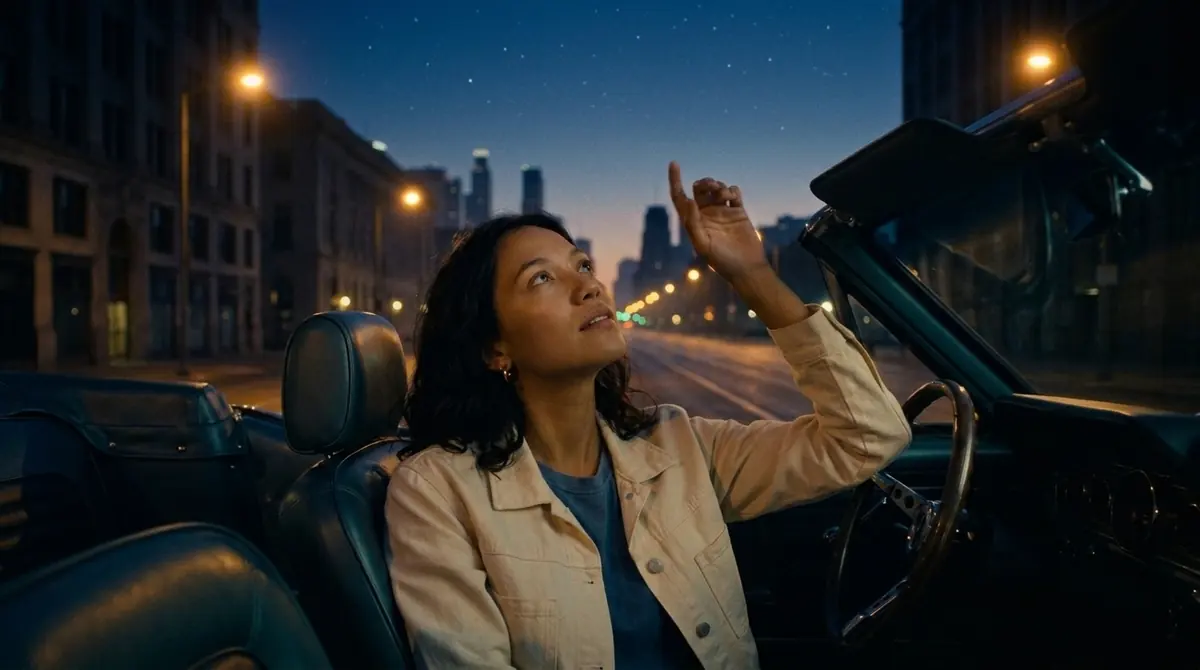
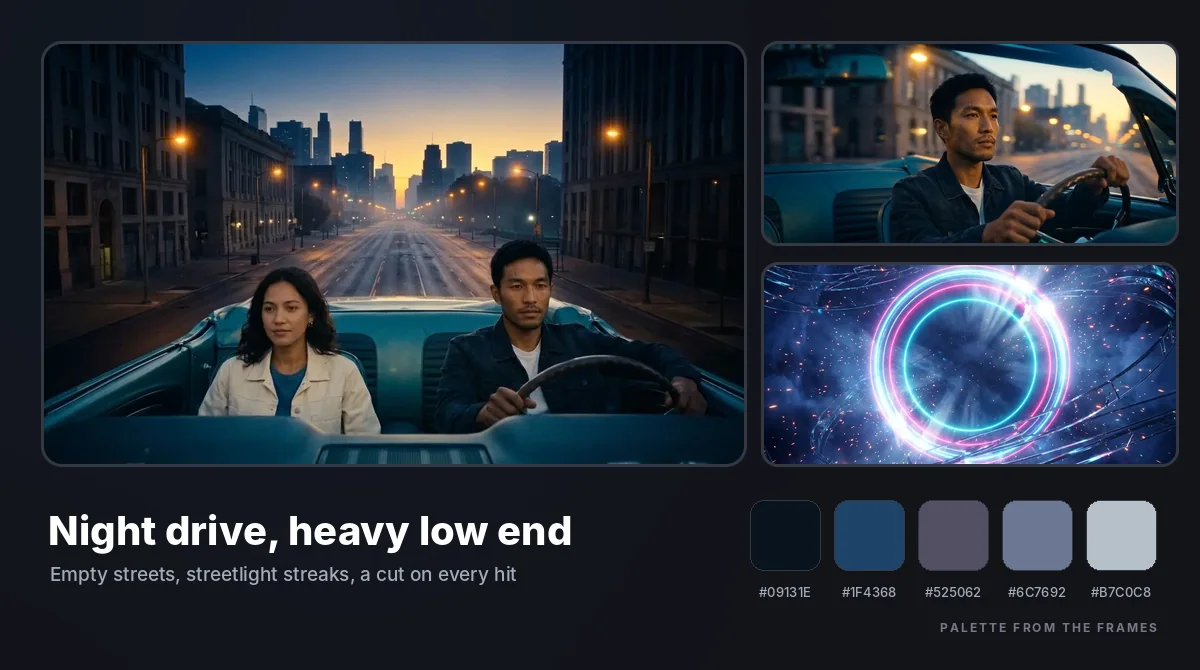
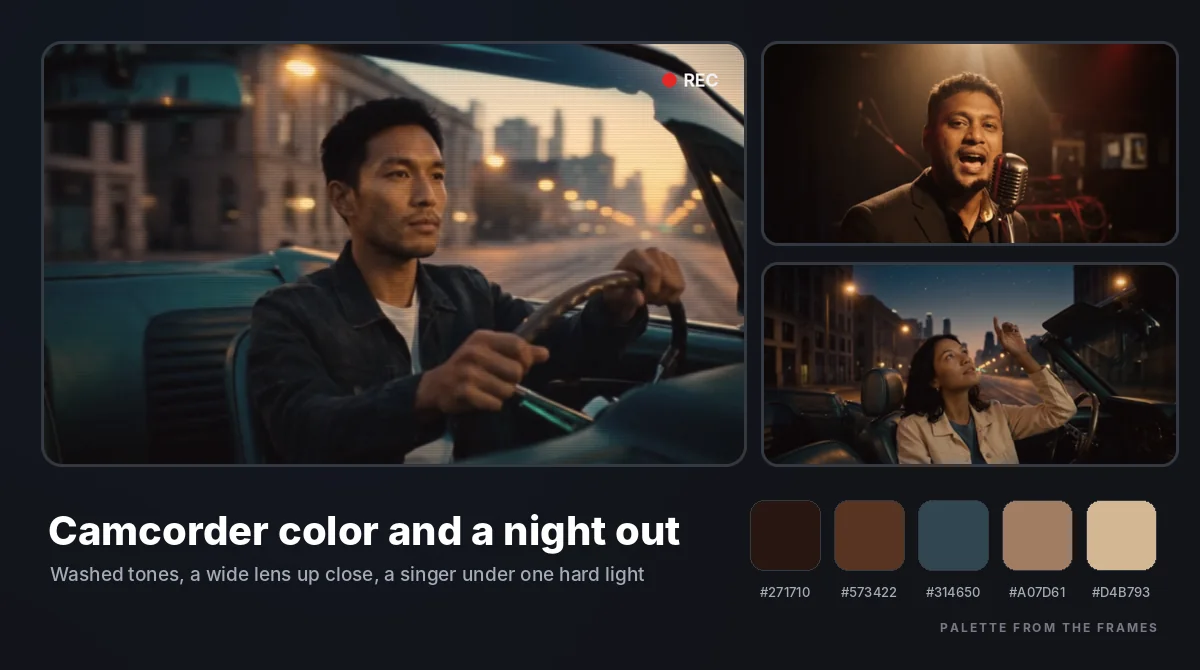
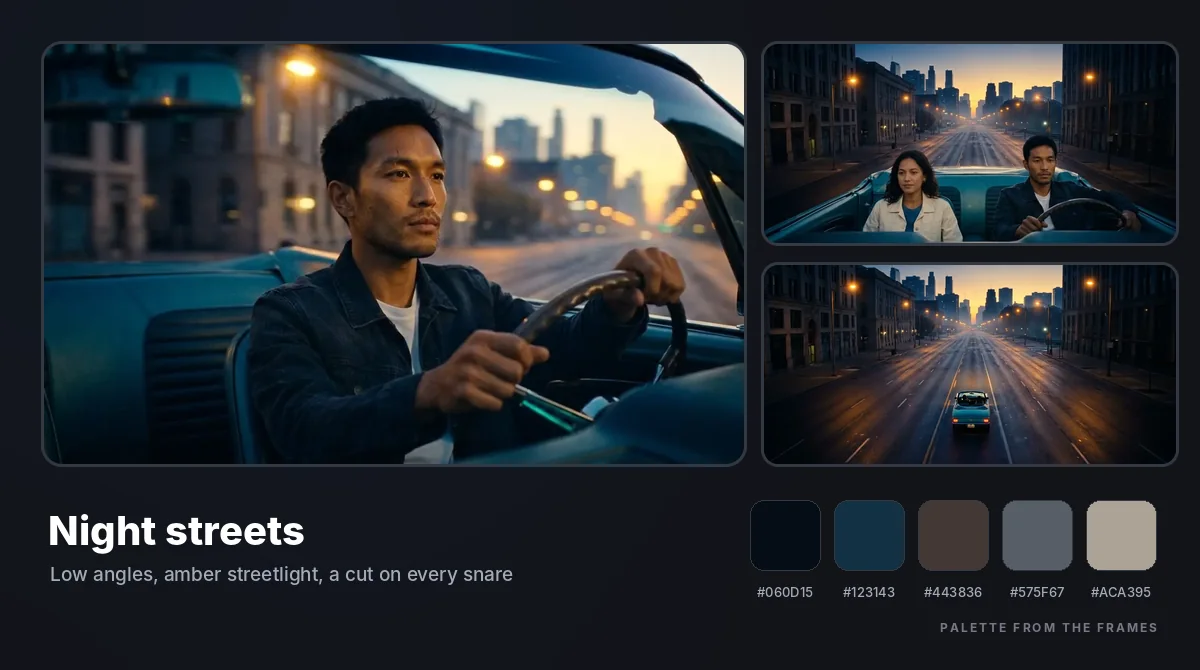
The lead sits parked outside the house they grew up in, engine off, rapping from the driver's seat with the dashboard glow on their face. Verses stay inside the car in close-ups and over-the-shoulder shots of the dark windows. On each hook another window of the house lights up, and on the last one the porch light comes on and the front door opens.
Use this idea on my songUse this idea on my song
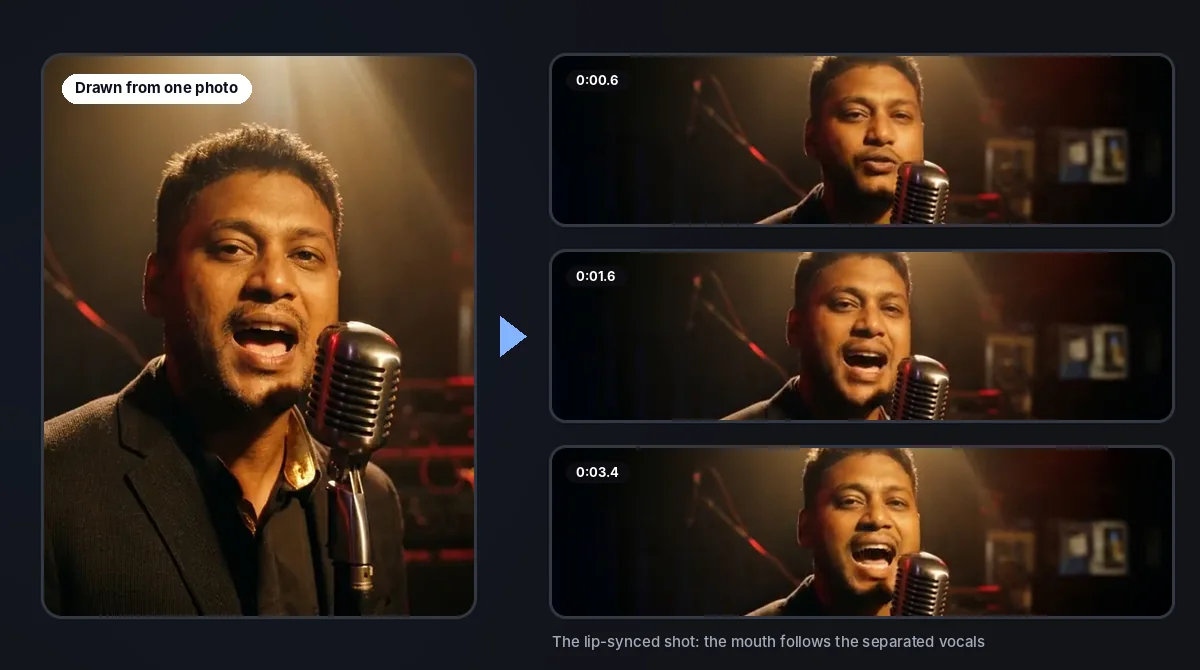
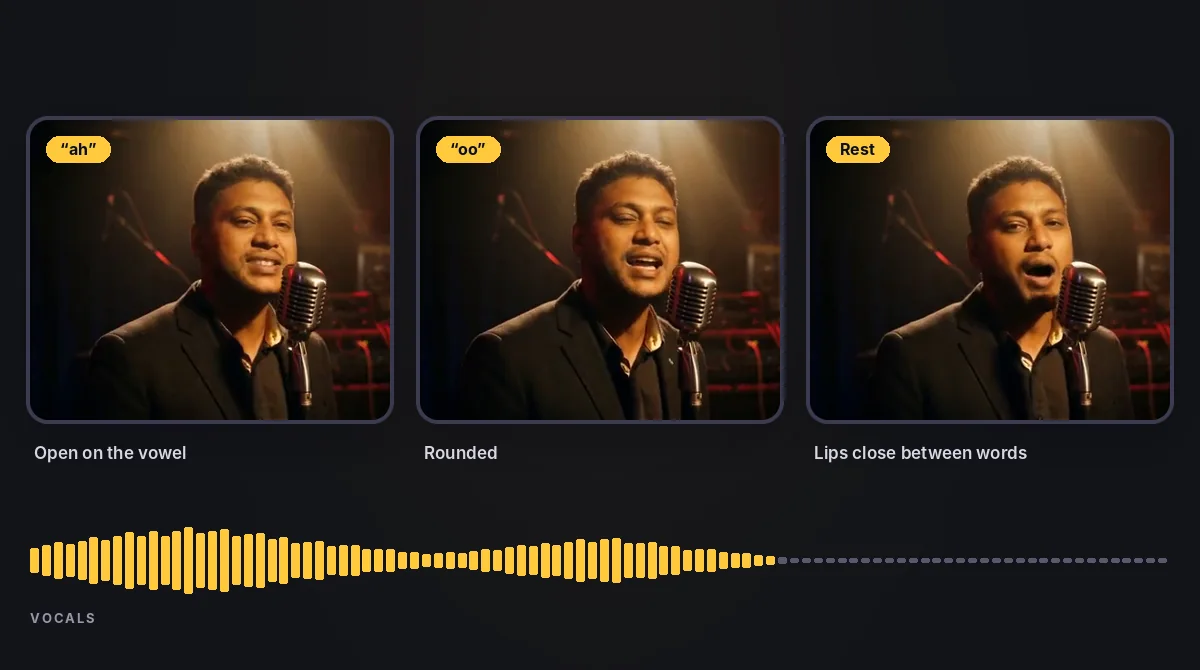
Any of these can be made without a shoot. Choose the Performance style, upload one clear, front-facing photo of yourself (or of someone who gave permission, confirmed with a consent box), and Muvora separates the vocals, finds where they come in and lip-syncs those shots to your voice. The same performer can turn up in the other shots too. The AI lip sync guide covers which photos work best.
Skip the blank page
Upload your song and Muvora's AI director plans a shot-by-shot storyboard on the beat. Edit every shot for free, and pay only if you render.
One-location, lyric and visualizer ideas
Not every track needs a full story. For a loosie, a freestyle, a type beat or the third single off a project, these five ideas stay simple: one place, one person or nobody, and a single motif the edit can lean on. They also suit Visualizer quality, the most affordable way to cover a whole song.
- Performance · bedroom
Closet booth
A walk-in closet turned vocal booth: foam on the walls, a duvet over the door, one warm lamp and a pop filter. The lead raps every verse in tight close-up, headphones half on. Each hook cuts to the window, where the city outside shifts from dusk to night to dawn, and the last shot is the lead asleep on the floor with the lamp still on.
Use this idea on my songUse this idea on my song - Story · no lead
One streetlight
A single streetlight on a corner from dusk to dawn, the camera never leaving it. Each verse, different people pass through its pool of orange light: a delivery rider, a couple arguing quietly, a man walking a tiny dog. Each hook the light flickers on the downbeat, and the last hook catches the bulb going out as the sky turns blue.
Use this idea on my songUse this idea on my song - Visualizer · type beat
Speaker cone
Macro shots of a subwoofer in a dark room: the cone pushing on every kick, water droplets jumping off it, dust lifting through a single beam of light. The 808s get the deepest pushes; the hook adds slow-motion splashes and colored light, deep red shading into violet. No people, made for a type beat or an instrumental.
Use this idea on my songUse this idea on my song - Lyric · one location
Car park captions
Karaoke-style captions over the top level of an empty multi-story car park at night. One car's headlights sweep across wet concrete on each hook, a lone figure leans on the barrier during the verses, and the city glows below. The words carry the track; the place stays calm and dark so every bar reads.
Use this idea on my songUse this idea on my song - Animated · drawn performer
Saturday-morning cartoon
The lead as a hand-drawn character in the style of a 1990s Saturday-morning cartoon, rapping on a bright painted block: a corner shop, a fire escape, an ice cream truck. Verses follow the character's everyday mischief; each hook the whole block bounces in time, cartoon style. Upload a drawing of the character as the performer photo so the rapped parts lip-sync.
Use this idea on my songUse this idea on my song
If you release beats rather than songs, the type beat video maker page covers visuals that hold up for a channel posting week after week, and if your track leans toward singing, the R&B music video ideas may suit it better.
Shot ideas for each part of a rap song
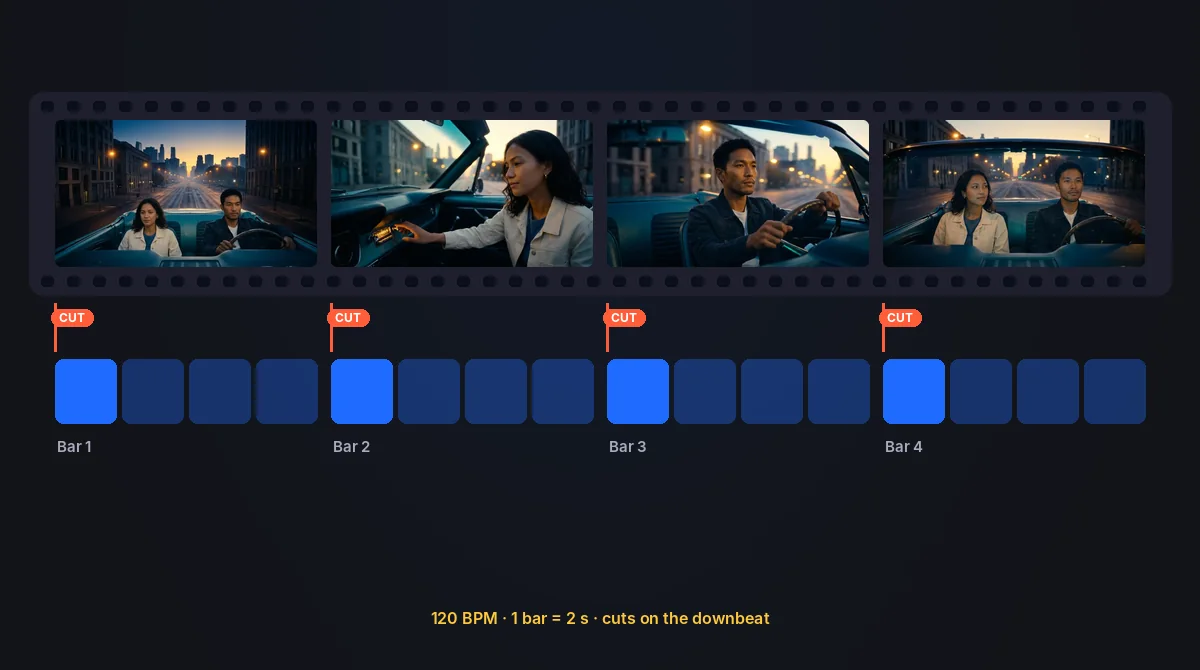
Once you have a concept, spread it across the track. The table maps each part of a typical rap song to its job and the shots that do it. In Muvora the planner places the cuts on the downbeats for you; your job is deciding what the viewer sees between them.
| Section | Its job | Shot ideas | How long a shot holds |
|---|---|---|---|
| Intro (beat only) | Set the place before a word is said | A wide of the block or the room; one slow push toward the lead | Two to four bars |
| Verse 1 | Introduce the lead and their world | Mediums rapping to the lens, close-ups of hands and wardrobe, a low angle on the walk | One to two bars |
| Hook | The image fans remember | The signature place or motif, wider framings, the most color in the video | A bar or less |
| Verse 2 | Move the story on | A new place or time of day, over-the-shoulder shots, inserts of what the verse is about | One to two bars |
| Beat switch or bridge | Turn the video | A change of light or location, one long still shot, the lead alone | Hold, then cut on the switch |
| Final hook | Pay everything off | The biggest version of the hook image: more people, more light, the widest shot | A bar or less |
| Outro | Leave a last picture | The lead walking out of frame, a light going out, the empty location | Two bars or more |
Each block is a shot. Same tempo, same bar grid: only the shot length changes with the energy.
Clichés and mistakes to skip
A few habits make a rap video look like every other one. None of them is forbidden, but each should be a choice rather than a default.
- Luxury with no story. A car or a watch says nothing on its own. Give it a reason: the car is the one the lead's father drove, the watch is the gift they can't afford to lose.
- Shouting at the lens for three minutes. Energy belongs in the delivery and the edit. A relaxed face on a hard bar often hits harder.
- Smoke, slow motion and a lone figure on a rooftop. It has been done thousands of times. If you want a rooftop, give the lead something to do up there.
- Too many places. Eight locations in three minutes means none of them land. Two or three, each with its own light, read as a world.
- A crowd in every shot. Crowds blur together on screen. A few specific faces (the barber, the kid on the bike, the neighbor on the stoop) give a block more life than fifty extras.
From idea to storyboard in Muvora
- 01
Upload the final master
Export the finished mix as WAV, FLAC, M4A or MP3 (up to 8 minutes) and upload it, confirming you own it or have the rights. The free analysis finds the tempo, every downbeat, the sections and the energy, and times your lyrics to the vocals when you paste them.
- 02
Choose the style and the hip-hop look
Pick Story for a narrative concept, Performance to rap on screen from one photo, Lyric for captions over the scenes or Abstract for a beat with no cast. The hip-hop genre look cuts at a driving pace; choose 9:16 if the video is mainly for Shorts, Reels and TikTok.
- 03
Write the concept in the idea box
Paste one of the ideas above or your own, in up to 600 characters: the lead, the place, what happens in the verses, what the hook looks like and the mood. Name the lead's signature piece of wardrobe in the words you want repeated in every shot.
- 04
Read the brief and the shots
The AI director writes a brief (the concept, the world, the palette, the light and the cast) and a shot for every slot between the cuts. Check that the hook has an image of its own and that each verse moves somewhere new.
- 05
Edit until it's yours
Rewrite any prompt, drag a cut onto the beat switch, split a long verse shot or merge two short ones, or ask AI to rewrite a shot. The style frames show the look and the character before you pay anything.
- 06
Render and post
Choose a quality, check the exact price and generate. Re-roll any shot that misses, then download the 16:9 video for YouTube, the 9:16 cut for Shorts and Reels, a square version and an 8-second Canvas loop.
For a full rap track, Visualizer quality at 38 credits a second is the most affordable way to cover the whole song; Standard, at 60 credits a second, keeps a recurring character more consistent; and lip-synced seconds in a Performance video are 75 credits each. A 3-minute Visualizer video comes to 6,840 credits. More on the genre's look is on the hip-hop music video page, and concepts for every other genre are in music video ideas.
Put your bars on screen
Upload the track, drop your concept in the idea box and get a storyboard cut on your beat. Edit every shot free, then render when the hook looks right.
Written by the Muvora team. Last updated November 13, 2026. Spotted something out of date? Tell us at [email protected].