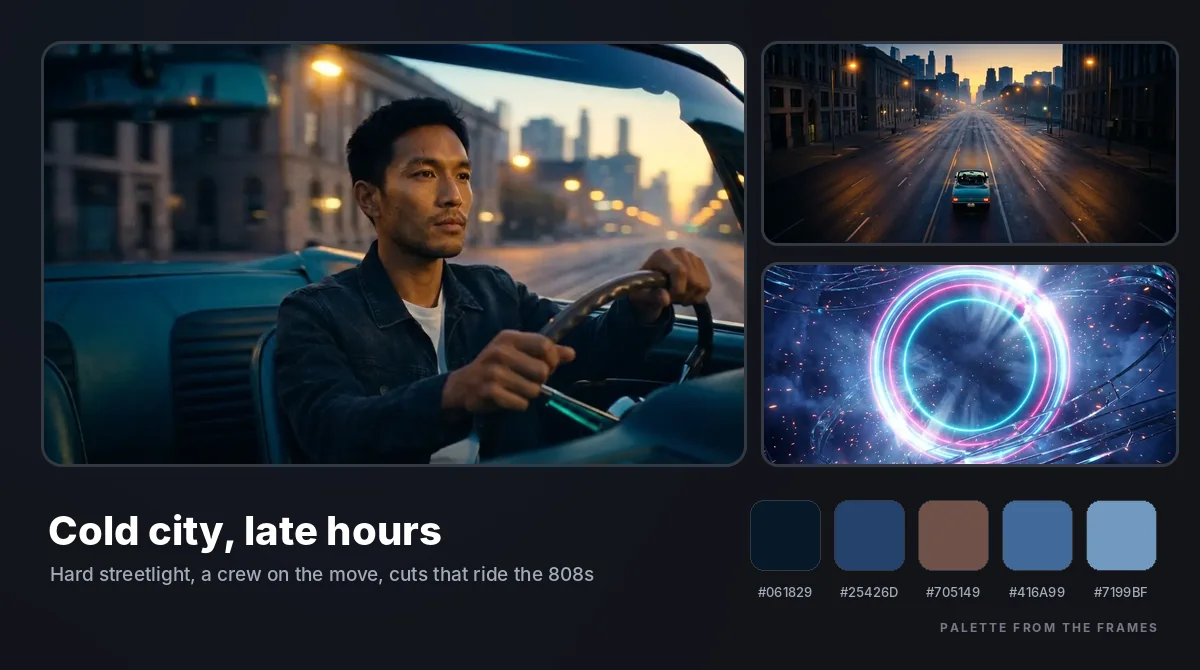
The car lot after hours
Performance, hip-hop look: you rap between rows of cars under bare bulbs, and the crew fills the lot one hook at a time.
Trap runs at two speeds at once: hi-hats rolling in triplets on top, the 808 and the snare moving at half the pace underneath. A video has to cut on the slow pulse and leave the fast one to whatever moves inside the shot. Upload the finished track and Muvora finds its beats, its hook and its drop, plans the cuts at the hip-hop look's pace, and writes a storyboard set in the night you describe, which you can rework for free before rendering a second of it.
Free to start · 5 storyboards a month · No card needed
Trap is often made around 140 BPM and felt in half time, so beat tracking can count it at 140 or at 70. On the hip-hop look, which trims every shot by about a fifth, the plan comes out much the same either way: on a typical arrangement, verse shots of about 3.4 seconds and a hook that cuts every 1.7, one bar at 140 or half a bar at 70. Where the energy jumps and stays up, say the 808 and the drums slamming back after a beat-stop or a filtered bar, the analysis marks a drop, and a drop always gets a cut and a two-frame white flash. A beat switch often reads as a new section, and a section change is always a cut; if yours doesn't, drag one onto it. Cuts snap to downbeats, and holding Alt (or setting the timeline's snap to beats) lets you place one on the beat where an 808 slide lands. Nothing inside a shot moves in time with the hats or the bass, so the cuts are what hit. Check your tempo with the BPM and key finder before you upload.
See your song as a storyboard first
Upload the track and the AI director plans every shot on the beat in minutes. Edit anything for free; you only pay if you render.
The hip-hop look sets the pace; the world comes from the idea box, which takes up to 600 characters. Name a real place and the lights in it: a used-car lot under strings of bare bulbs, an empty strip-mall parking lot under sodium lamps, a kitchen lit by the open fridge, a hotel corridor's brass wall lamps, a 24-hour diner's corner booth. Then plan the song part by part. The intro sets the place in one or two long shots. Verses stay on small moments: hands on a steering wheel, a phone's glow on a face, keys dropped on a counter. Each hook pulls back to the crew, wider and brighter every time, and the shots right after the drop should be the boldest pictures you have. The outro goes back to where it started, emptier. Name the mood in a few words, since it sets every face: “cold and unbothered” gets still, sure faces rather than snarls. Describe jewelry in the idea by shape, color and size (a thin gold rope chain, small diamond studs) and check it made it into the character's description on the brief card, which the storyboard repeats word for word in every shot that character is in. Describe cars by kind rather than badge (a black sedan with tinted windows): no logo or lettering is drawn. Mature themes the lyrics carry are allowed; gore, nudity and sexual content are not.
Choose Performance, add one clear, front-facing photo of yourself (or a drawing of yourself) and tick the consent box, and the shots your vocal carries are lip-synced, whether rapped, sung or Auto-Tuned. A shot that holds only an ad-lib or a reverb tail stays a story shot, because a shot is lip-synced only where your words fill at least half of it, and each verse opens on story shots before it comes to you. Paste your lyrics with the upload so the karaoke captions spell your slang your way. Story keeps you off camera with an invented lead, and Abstract suits a beat with no vocal; producers selling leases have the type beat video maker. A trap video never shows the artist a song or a beat is named after: real people are never drawn, and a prompt naming one is refused. One 16:9 render also gives a 9:16 cut for clips, a square post and an 8-second Canvas. The rap and drill music video ideas guides have concepts that suit trap, and music videos for rappers goes deeper into lip sync from a photo.
Every card starts the upload with a style, the hip-hop look and an idea already written. Swap in your own city, crew and jewelry before the storyboard is written; the Performance cards ask for your photo on the vibe step.
Performance, hip-hop look: you rap between rows of cars under bare bulbs, and the crew fills the lot one hook at a time.

Story style, hip-hop look: after a show, three friends walk one endless hotel corridor, a different scene behind every door.

Performance, hip-hop look, 9:16: a melodic trap record sung at a tall window over the city at night, framed tall for clips.
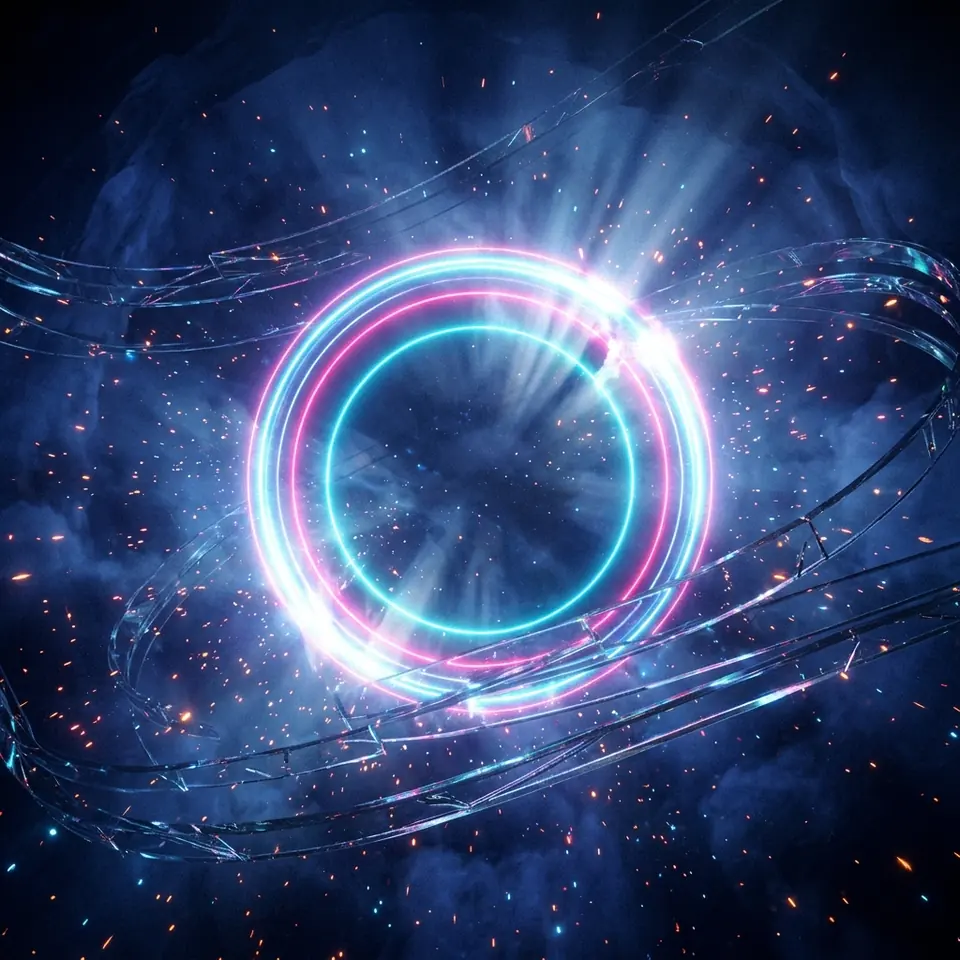
Abstract style, hip-hop look: for an instrumental trap beat, ice and cut glass that glitter harder every hook.
Drop in an MP3, WAV, M4A or FLAC up to 8 minutes. Muvora finds the tempo, the beats, the downbeats and the sections of your song, like intro, verse and chorus.
An AI director writes a shot-by-shot plan timed to your downbeats. Rewrite any prompt, drag a cut (it snaps to the beat) or ask AI to redo a shot. None of it costs anything.
See the final price, then render. Pick Visualizer, Standard or Cinematic quality. If a shot fails, its credits come straight back.
Free storyboard in minutes. No card needed.
Can't find what you need? Start a free storyboard and see for yourself.
Yes. Upload the finished track (MP3, WAV, M4A, AAC or FLAC, up to 8 minutes) and the analysis finds the tempo, the beats, the sections, the drop and the timing of every word. Pick a style, describe the night in the idea box, and the AI director writes a shot for every slot, which you can edit for free before you render.
On a typical arrangement, yes. Whether the analysis counts your beat at 140 or at 70, the hook cuts about every 1.7 seconds on the hip-hop look, and every section change and drop is a cut. Play the storyboard with the song and drag any cut you want somewhere else; hold Alt to drop it on a beat between downbeats.
No. The five looks are hip-hop, pop, EDM, rock and lo-fi, and hip-hop is the one to start from: its driving pace suits trap's hooks. The places, the light and the wardrobe that make it trap come from the idea box.
No. The pictures never include real people, and a prompt that names one is refused before anything is drawn. Describe the world the sound comes from instead: the city, the hour, the clothes and the light. The only real face in a Muvora video is a performer's, from a photo used with their consent.
It follows your separated vocal, so Auto-Tuned singing and rapping are lip-synced alike. Shots where you only throw in an ad-lib stay story shots, since a lip-sync shot needs your words across at least half of it. Paste your lyrics with the upload so the timing and the captions match what you actually said.
Planning is free: the storyboard costs nothing to read or edit, and the free plan makes 5 new storyboards a month. Rendering is 38 credits a finished second in Visualizer, 60 in Standard or 110 in Cinematic, and lip-synced seconds are 75. Your exact total is shown before you press Generate.
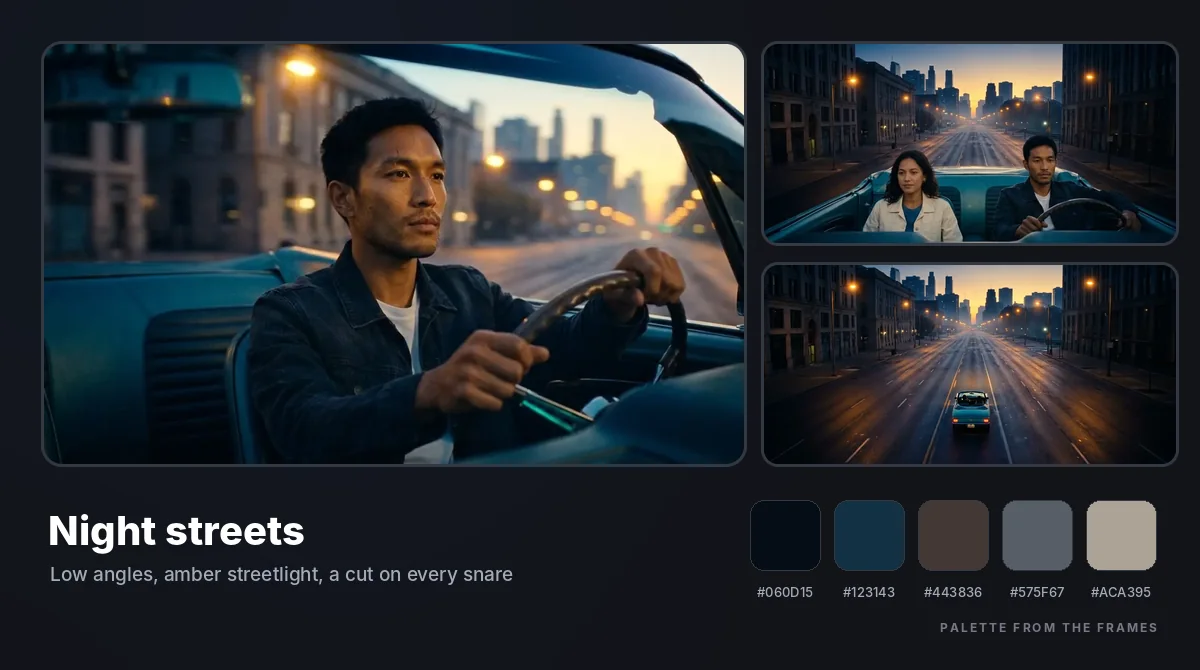
Night streets, low angles and cuts that hit with the snare.
Learn more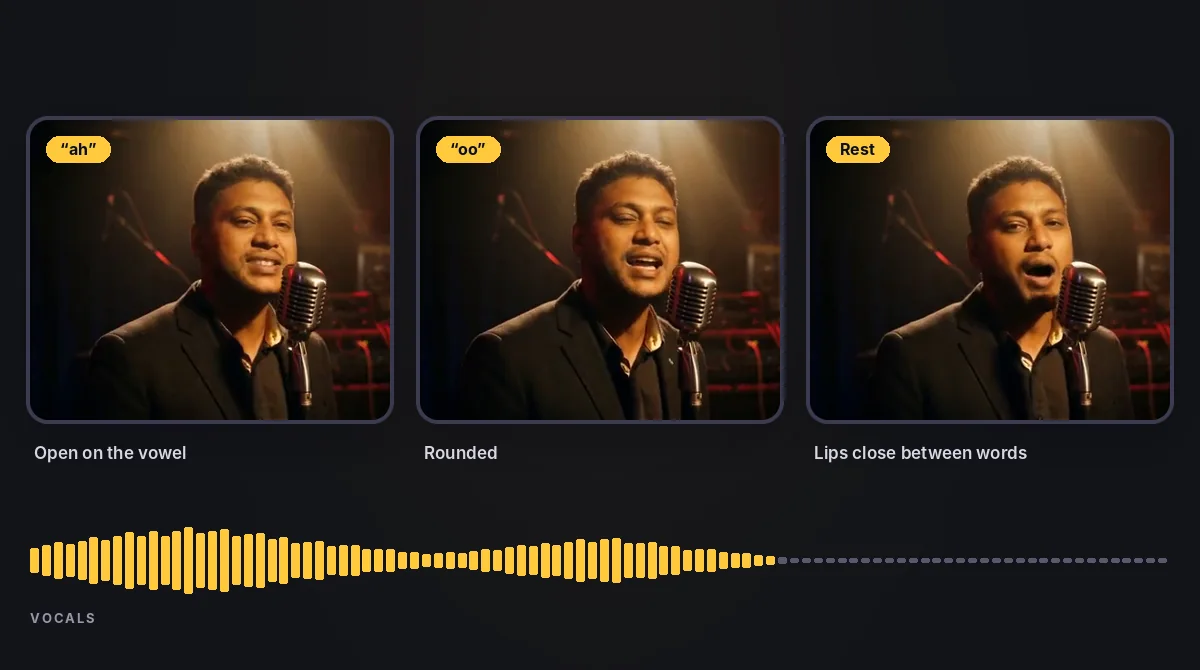
Fast cuts on your beat, your bars lip-synced from one photo, story shots in the verses and a vertical cut for clips.
Learn more15 hip-hop concepts with real places, wardrobe and camera moves, and how to pace the verses and the hook.
Read the guide15 drill concepts in the UK, Chicago and Brooklyn styles: the city at night, the crew, wordplay as pictures and cuts that ride the slide.
Read the guideVisuals for the beats you sell or share, cut on the kick and ready for YouTube.
Learn more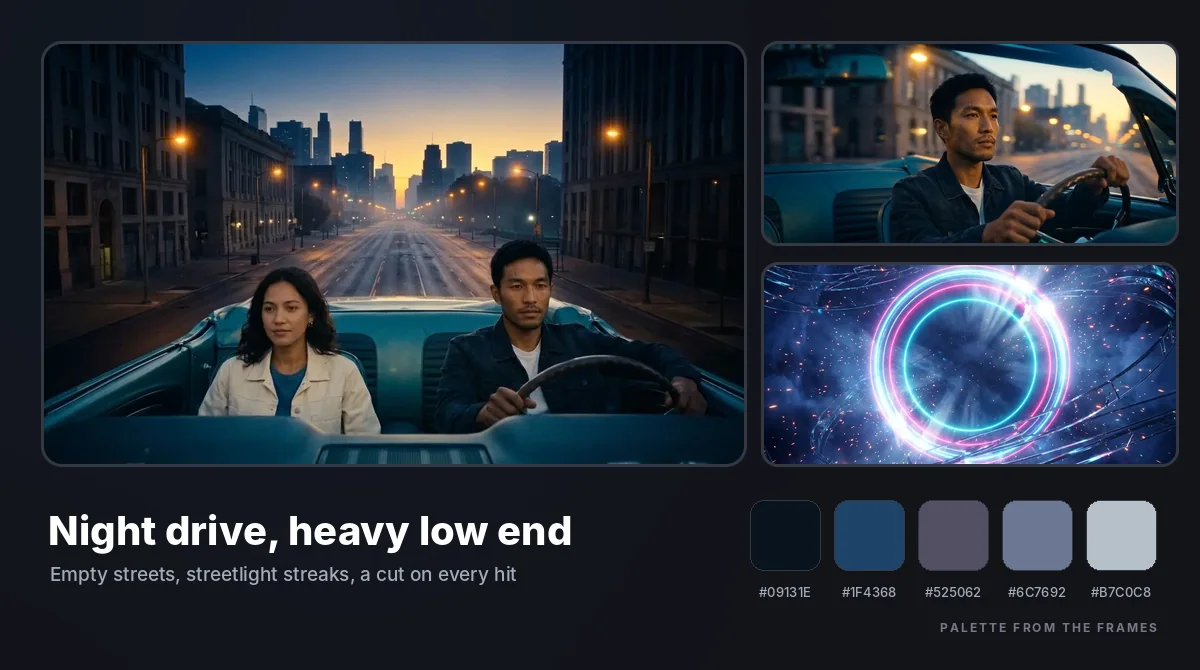
Drift and Brazilian phonk videos with night roads, dashboard glow and hard cuts on your track's downbeats.
Learn more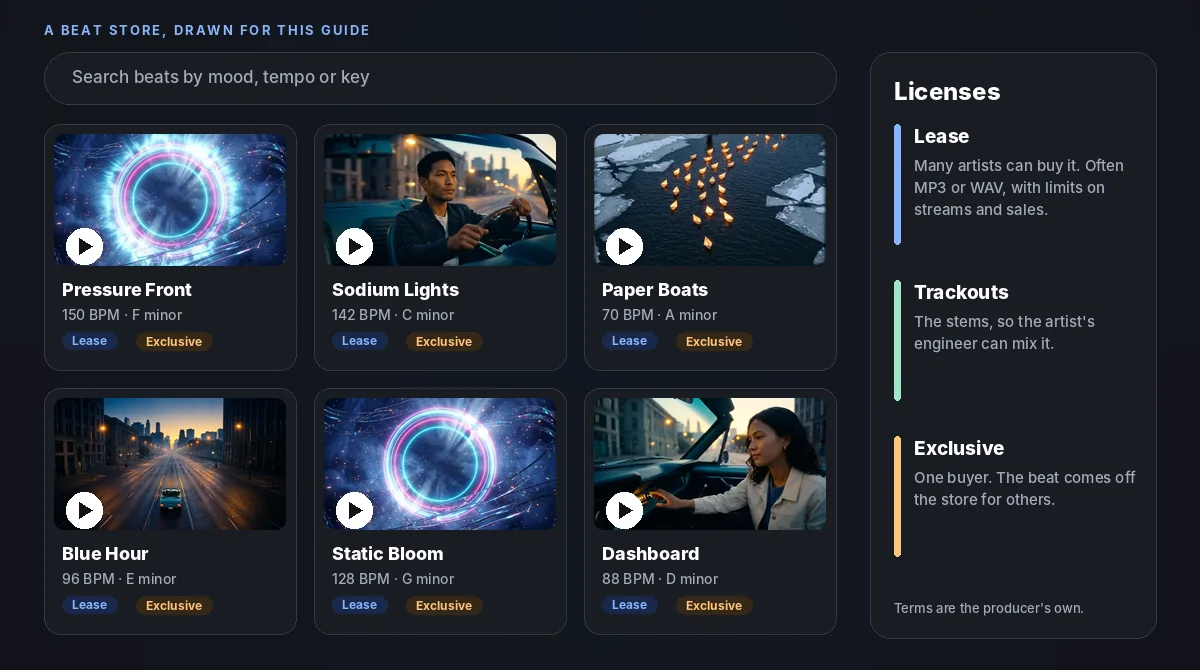
Leases and exclusives, what a beat license spells out, tagged previews and trackouts, where producers sell, type beat videos and Content ID on leased beats.
Read the guideWords that rhyme with any word or phrase: perfect, near and multi-syllable rhymes, grouped by syllables, common words first.
Open the tool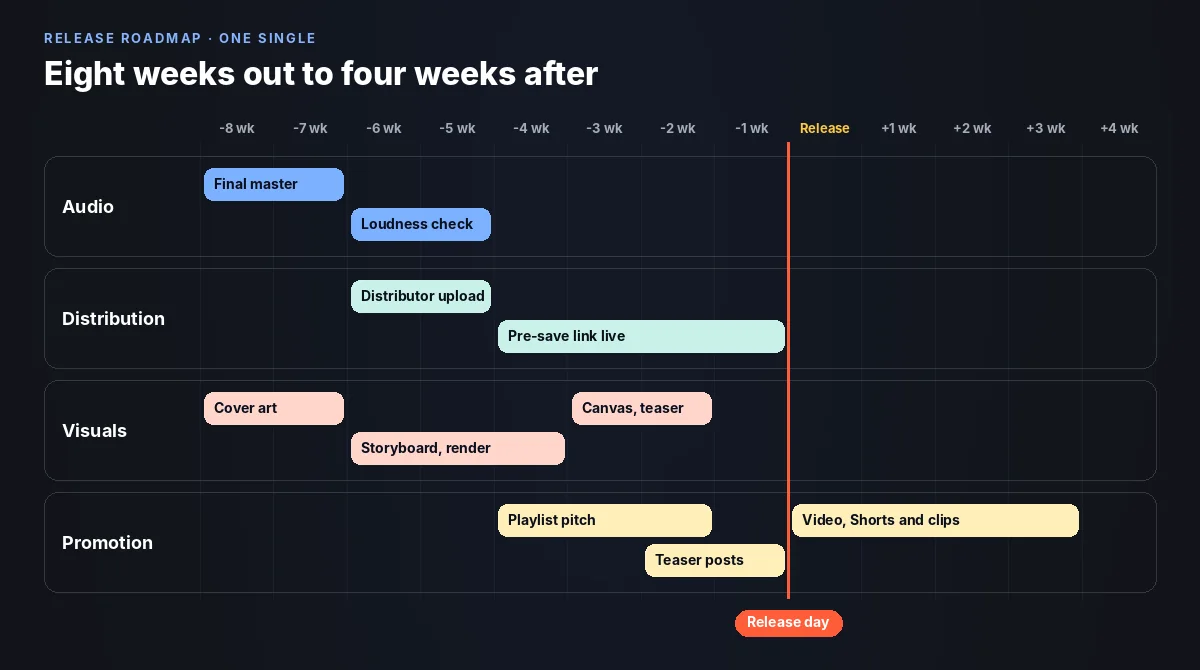
A storyboard and an exact price for every release on the schedule, every format from one render, and Studio sized for a roster.
Learn moreDrill videos cut on the half-time pulse, set in a night you describe, with your bars lip-synced from one photo or a masked lead in your place.
Learn more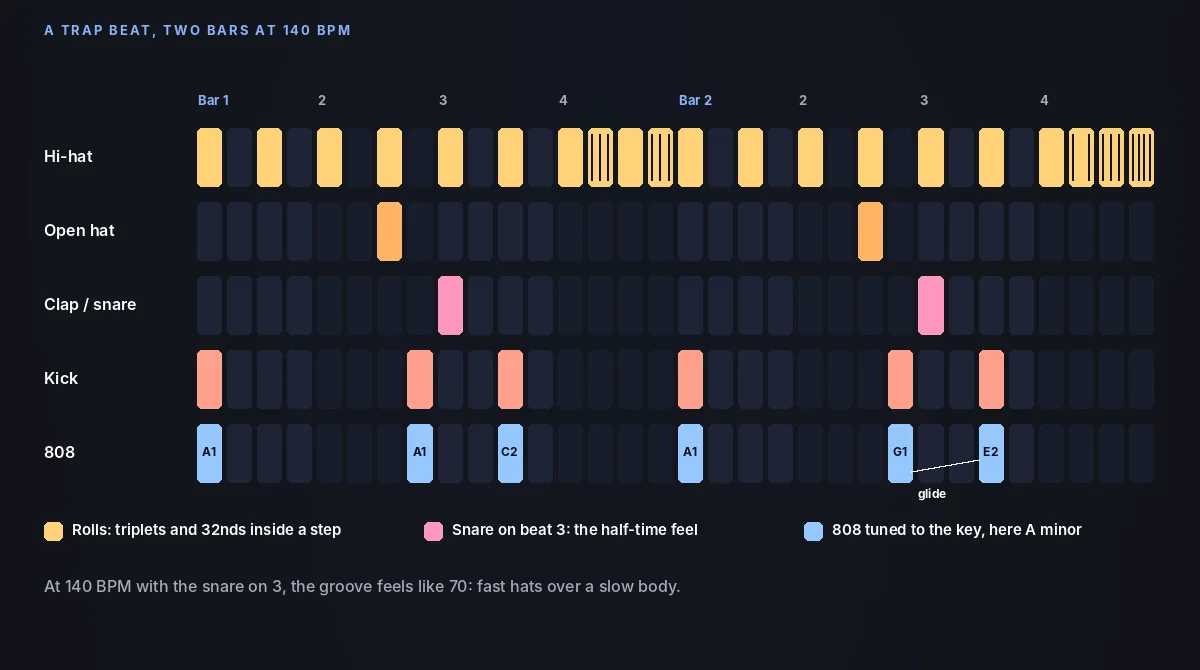
A trap beat from an empty grid: the half-time snare, hi-hat rolls in milliseconds, a tuned 808 with glides, a dark melody, the arrangement and the low end.
Read the guideUpload a track and get a free beat-synced storyboard in minutes. Render it when you are ready.
No card needed to start.





