Looking for a Hedra alternative for music videos?
Hedra is an AI content studio known for characters that talk and sing: its Character-3 model takes one image (a photo, a drawing or a generated face) and an audio file, and makes a video of that character speaking or singing it, for up to 10 minutes by its own model pages. Around it sit other companies' video, image and voice models, an agent that plans content in chat and a timeline editor called Composer. Muvora starts from your song and makes the whole music video: story shots, sung shots and every cut on the beat. Here is how they compare.
Free storyboard · 5 a month · No card needed
The verdict
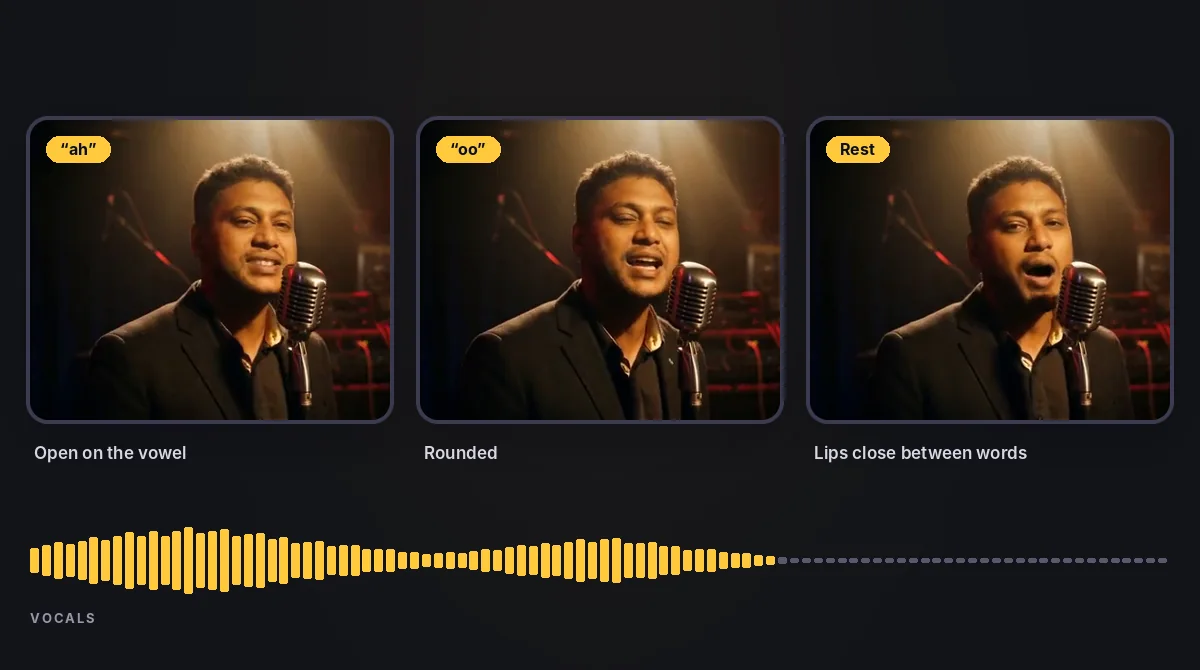
Muvora is the one to pick for a music video from your song: a free storyboard of story shots and sung shots, cuts on the beat, and your singer lip-synced from one photo where the song is sung, after the vocal is separated from your mix. Hedra's Character-3 makes one character talk or sing in a single take; Muvora builds the whole video around the singer.
Hedra facts checked November 16, 2026. Three frames of a Muvora lip-sync shot made from one photo (a generated face, not a real person); the vocal level under them is a sketch.
Muvora vs Hedra
| What is compared | Muvora | Hedra |
|---|---|---|
| What it is | A music video generator: your song is analyzed, storyboarded shot by shot, rendered as AI video and cut over your own audio | An AI content studio built around talking and singing characters (its Character-3 model), with other companies' models, an AI agent and a timeline editor, Composer |
| What you start with | Your song file (MP3, WAV, M4A, AAC or FLAC, up to 8 minutes), plus one clear photo of the singer for a Performance video | One image of a character (a photo, a drawing or a generated face) and an audio file, or a script turned into speech by its voice models |
| Lip sync | Your vocal separated from the mix, the sung stretches found, and only those shots lip-synced from your photo; between them the singer can appear without singing | The heart of the product: the mouth follows the audio you give it, a song included, in one continuous take of up to 10 minutes; its pages say clean, high-quality audio syncs best |
| Who plans the video | An AI director writes the brief and every shot, and you edit the storyboard for free before rendering | You do, one generation at a time; its agent can plan content scene by scene in chat, and Composer arranges the clips on a timeline |
| Cutting to the music | Cut points from the song's downbeats, at every section change and every drop, with longer holds where it's quiet | No beat or section analysis in our sources: a take runs as long as its audio, and cuts between clips are placed by hand in Composer |
| Shots besides the singer | Story shots written for the song: a small cast, three to six designed locations and light from named sources | Clips from other companies' models, each from its own prompt; its developer API lists Veo, Kling, Seedance and Nano Banana among more than 110 models |
| Resolution and shape | 16:9, 9:16, 1:1 and an 8-second Spotify Canvas loop from one widescreen render, at 720p or 1080p | Character-3 at 540p or 720p in 16:9, 9:16 or 1:1 by its FAQ; its model page lists up to 1080p and more ratios |
| Price | Credits per finished second: 38 in Visualizer, 60 in Standard, 110 in Cinematic, 75 for lip-synced seconds, the exact total shown before you render | Monthly: Basic $20 (2,000 credits), Pro $50 (7,200), Ultra $100 (18,000), Teams $75 (14,400), after a late-September 2026 repricing; Character-3 at 720p about 6 credits a second; plan credits reset each month |
| Free to start | 5 new storyboards a month with style frames and the performer's look sheet, no card needed | Free outputs carry a Hedra watermark and are for non-commercial use only, by its own pages |
| Commercial use | Yours to use commercially when you have the rights to the song | Included with paid plans, for the video, images and audio you generate |
Compare it on your own song
Upload a track and see Muvora's whole storyboard, every shot planned on your song's beats, and its exact price before you spend a credit. The storyboard is free, so you can judge the plan before you pay for anything.
What you get with Muvora that changes the outcome
- 01
A music video, not one long take
A character singing for three minutes is one shot held for the whole song. Muvora plans a video around the singer instead: the director writes a concept, a small cast and a handful of designed locations, then a shot for every stretch between cuts. The lip-synced shots fall where your song is sung (the choruses, and the second half of each verse once the words fill it), and story shots carry the intro, the breaks and the start of each verse. Make a photo sing shows what that looks like.
- 02
The vocal found inside your mix
Lip sync follows the sound it's given, and a finished master has drums, bass and pads under the voice. Muvora separates the vocal from your mix first, finds the stretches that are really sung, and moves the mouth to the vocal alone, letting it rest between words. The soundtrack of the finished video is still your original upload, untouched. The AI lip-sync music video page explains how the sung stretches are found.
- 03
Cuts placed by the song
A single take gives you nothing to cut, and stitching clips together leaves every cut point to you. Muvora's shot planner reads the downbeats, the sections, the drops and the energy of every beat, cuts at each section change and each drop with a two-frame white flash, holds longer where the song is quiet and cuts quicker where it's loud. Drag a cut in the storyboard and it snaps to a beat; editing a music video to the beat explains the rules it follows.
- 04
The singer's look and the price, before you pay
Your photo goes through a check, then a look sheet draws the performer in the video's outfit and medium, free with the storyboard, so you judge the face before spending a credit. The finished song is priced at one rate a second for the quality you pick and 75 for each lip-synced second, with the exact total shown before you render, free re-rolls up to 10% of the length and nothing charged for a shot that fails. Try your song's length in the cost calculator.
The bottom line
Hedra makes a character sing. Muvora makes the music video around them.
Hedra's Character-3 turns one image and an audio file into one continuous take of that character talking or singing, and its studio adds voices, an agent and other companies' models. A music video needs more than the take: story shots around the sung parts, cuts that land on the beat, and a singer whose mouth rests when the vocal does. Muvora plans all of that from your song; photo to music video shows where your photo fits in.
- Story shots and sung shots planned together on your song
- Your vocal separated from the mix before the lips move
- Cuts on the downbeats, at every section change and drop
- The performer's look sheet, free, before you spend a credit
- The exact price first, lip-synced seconds included
Still comparing? See how Muvora compares with every other tool.
How Muvora works, and what it costs
- 01
Upload your song
Drop in an MP3, WAV, M4A or FLAC up to 8 minutes. Muvora finds the tempo, the beats, the downbeats and the sections of your song, like intro, verse and chorus.
- 02
Edit your free storyboard
An AI director writes a shot-by-shot plan timed to your downbeats. Rewrite any prompt, drag a cut (it snaps to the beat) or ask AI to redo a shot. None of it costs anything.
- 03
Generate your video
See the final price, then render. Pick Visualizer, Standard or Cinematic quality. If a shot fails, its credits come straight back.
The storyboard is free. Rendering is priced per second.
- Visualizer38 credits/s6,840 for 3 minutes
- Standard60 credits/s10,800 for 3 minutes
- Cinematic110 credits/s19,800 for 3 minutes
- The exact price is shown before you generate
- Failed shots cost nothing
- 16:9, 9:16, 1:1 and a Canvas loop from one widescreen render
Free storyboard in minutes. No card needed.
Questions, answered
Can't find what you need? Start a free storyboard and see for yourself.
Is Muvora a good alternative to Hedra for music videos?
Yes, when you want the whole music video and not only the singing. Muvora storyboards your song, lip-syncs your photo in the shots where the song is sung, fills the rest with story shots and cuts it all on the downbeats. Hedra's Character-3 gives you one continuous take of a character; Muvora places the performance inside a full video planned on your track.
What is the difference between Muvora and Hedra?
Hedra animates a character to the audio you give it: one image and one sound file become one take of that character speaking or singing. Muvora makes a music video: it analyzes the song, writes a shot for each stretch between cuts, renders story shots and lip-synced shots, and assembles them on the beat over your track.
Can Hedra make a singing music video from a photo?
Hedra's own beginner guide says a song works with the same photo-and-audio workflow as speech, and its model pages describe singing takes of up to 10 minutes. What you get is one continuous performance; a video with other shots and cuts is built in its Composer editor or elsewhere. Muvora plans those shots and cuts for you.
How much does Hedra cost compared with Muvora?
As of November 2026, trackers reading Hedra's pricing page listed Basic at 20 dollars a month with 2,000 credits, Pro at 50 with 7,200, Ultra at 100 with 18,000 and Teams at 75 with 14,400, and its plans page put Character-3 at about 6 credits a second at 720p. Muvora prices the finished video per second, lip-synced seconds at 75 credits each, shown before you render.
Can I lip-sync a photo to a full song mix?
Hedra's model pages say clean, high-quality audio gives the best lip-sync results. Muvora takes your finished mix as it is: it separates the vocal itself, lip-syncs only the sung shots to it, and keeps your original upload as the video's soundtrack.
Can I use my own face or a drawn character?
Both tools take either. Hedra animates photos, drawings and generated characters. Muvora's Performance style takes one clear, front-facing photo of yourself or of someone who agreed, confirmed with a consent box, or a drawn character, in which case the whole video is drawn in that character's medium.
Keep exploring
Make a photo sing
Your photo sings your own song: its face lip-synced to your vocals in every sung shot of a full music video.
Learn more
Lip-sync videos
A singer made from one photo, lip-syncing to your vocals where the song is sung.
Learn more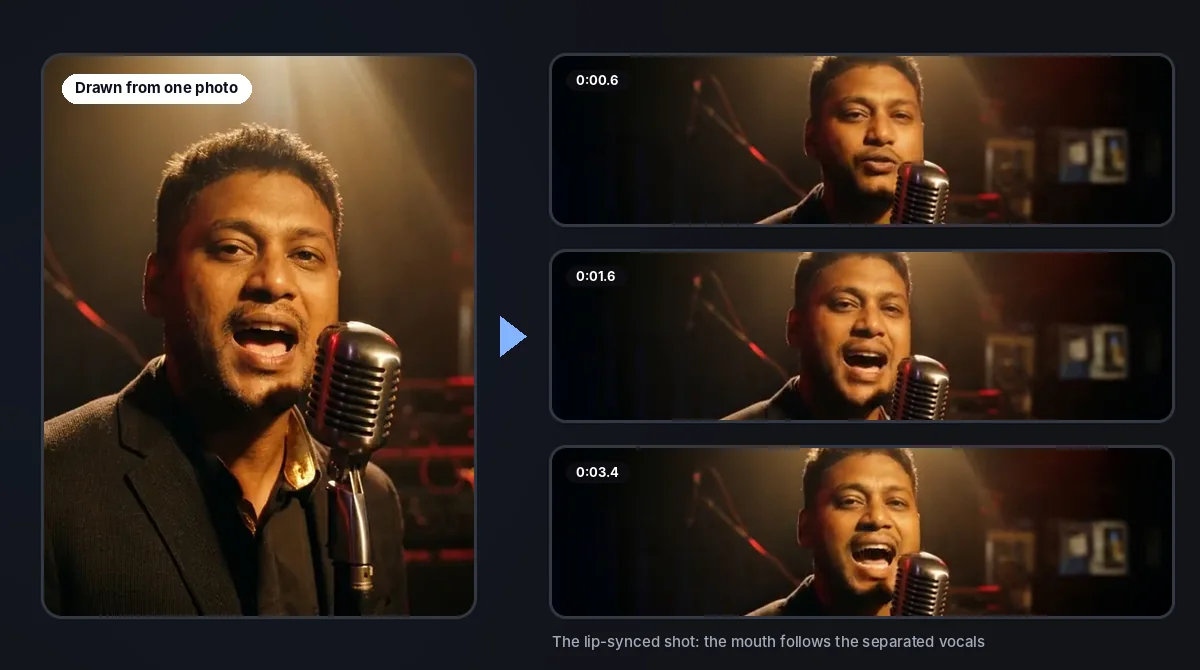
Photo to music video
One photo of the singer becomes lip-synced performance shots inside a full video.
Learn moreAI lip sync for music videos
How a photo becomes a singer whose mouth follows your vocals, and how to get a take that looks real.
Read the guide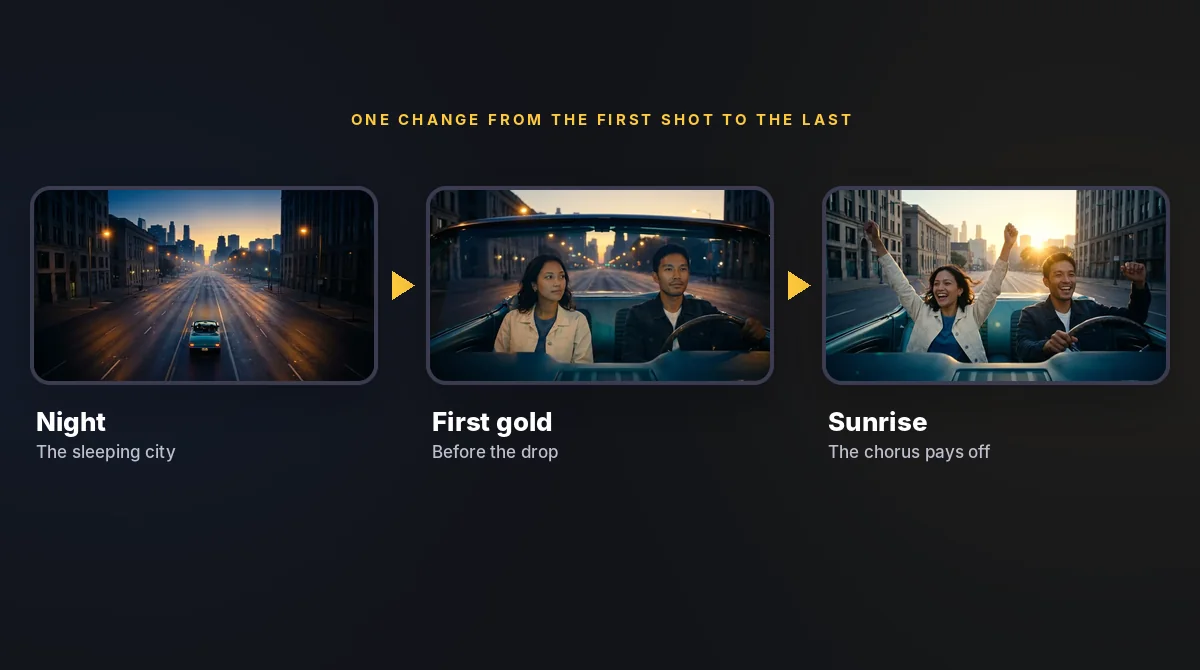
Pika alternative
Muvora and Pika side by side: a whole music video planned on your song's beats, against a creative app for short AI clips, effects, singing images and sound.
See the comparison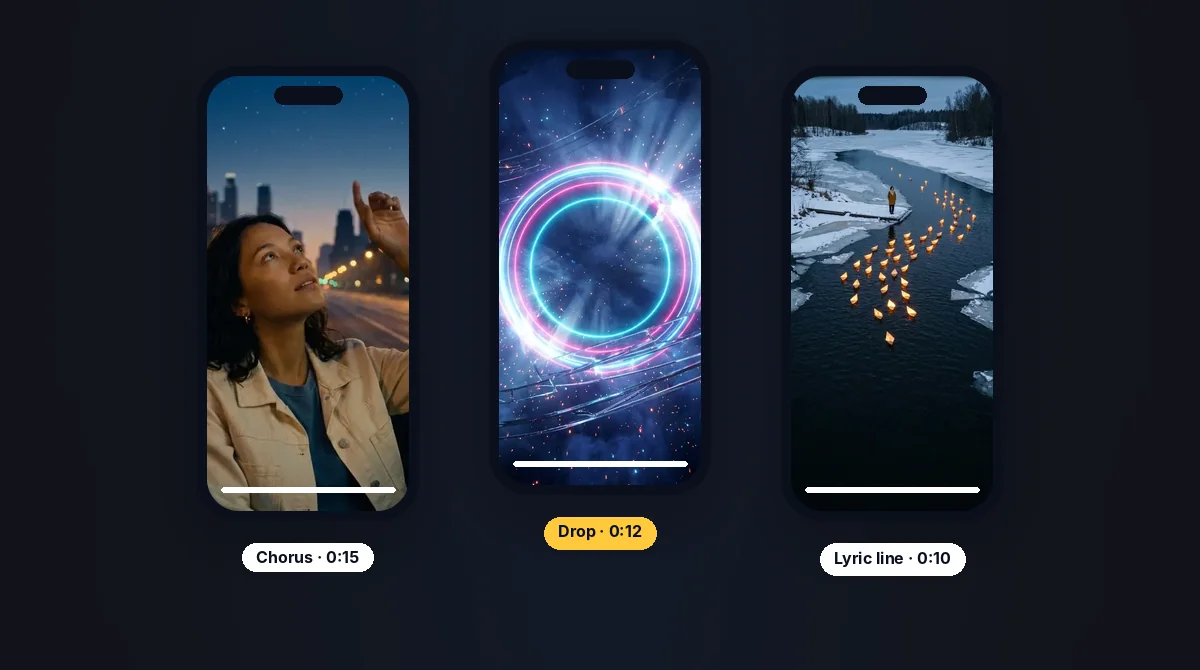
Revid alternative
Muvora and Revid side by side: a music video storyboarded and cut on your song's downbeats, against a short-form video maker that times scenes to lyrics or beats and posts them.
See the comparisonHiggsfield alternative
Muvora and Higgsfield side by side: a music video planned, rendered and cut from your song in one pass, against an AI studio where you build each shot and cut it in your editor.
See the comparison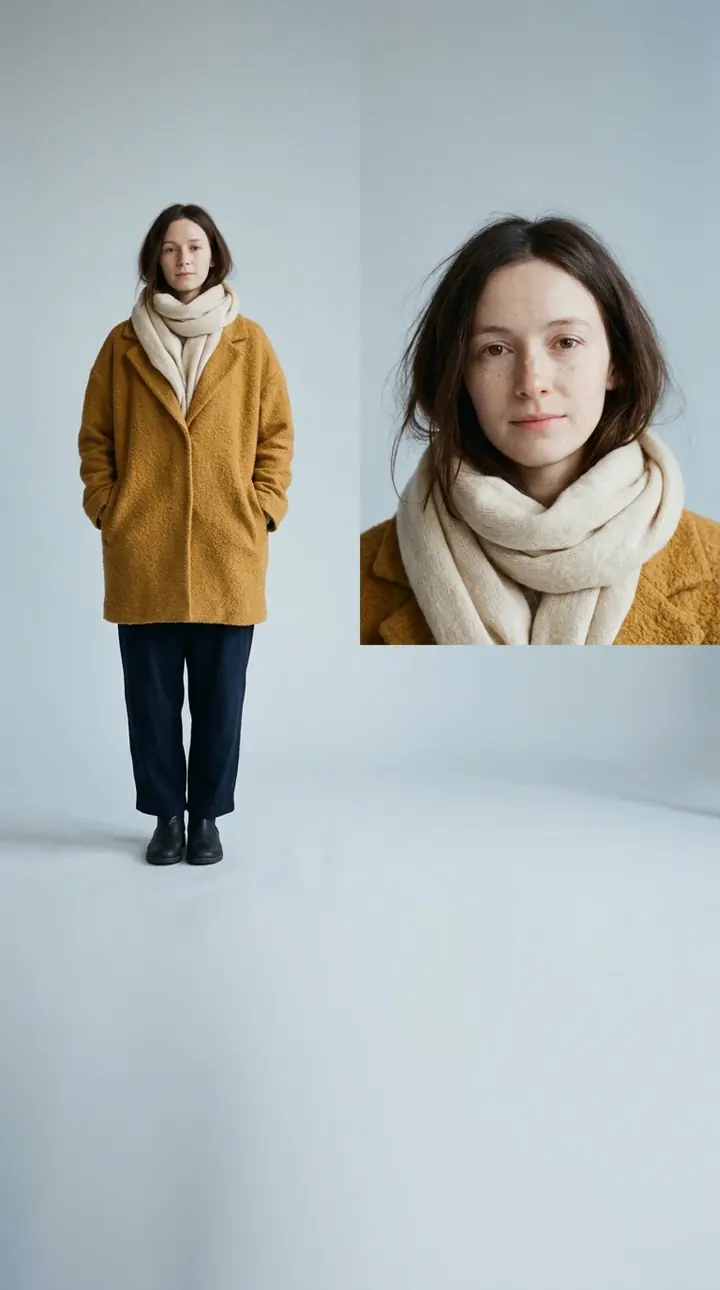
Viggle alternative
Muvora and Viggle side by side: a whole music video planned and cut on your song's beats, against an app that puts a character from one image into a dance or motion clip.
See the comparison
Your song deserves a music video
Upload a track and get a free beat-synced storyboard in minutes. Render it when you are ready.
No card needed to start.





