Looking for a Luma Dream Machine alternative for music videos?
Luma AI made its name with Dream Machine. Its own pages now call Dream Machine an earlier, deprecated model and send its old address to the Luma app: a workspace where Luma Agents plan, generate and refine images, video and audio on infinite boards, with Luma's Ray3.2 video model beside Veo, Kling, Seedance and others. Muvora starts from your song and makes the whole music video, with every shot cut on the beat. Here is how they compare.
Free storyboard · 5 a month · No card needed
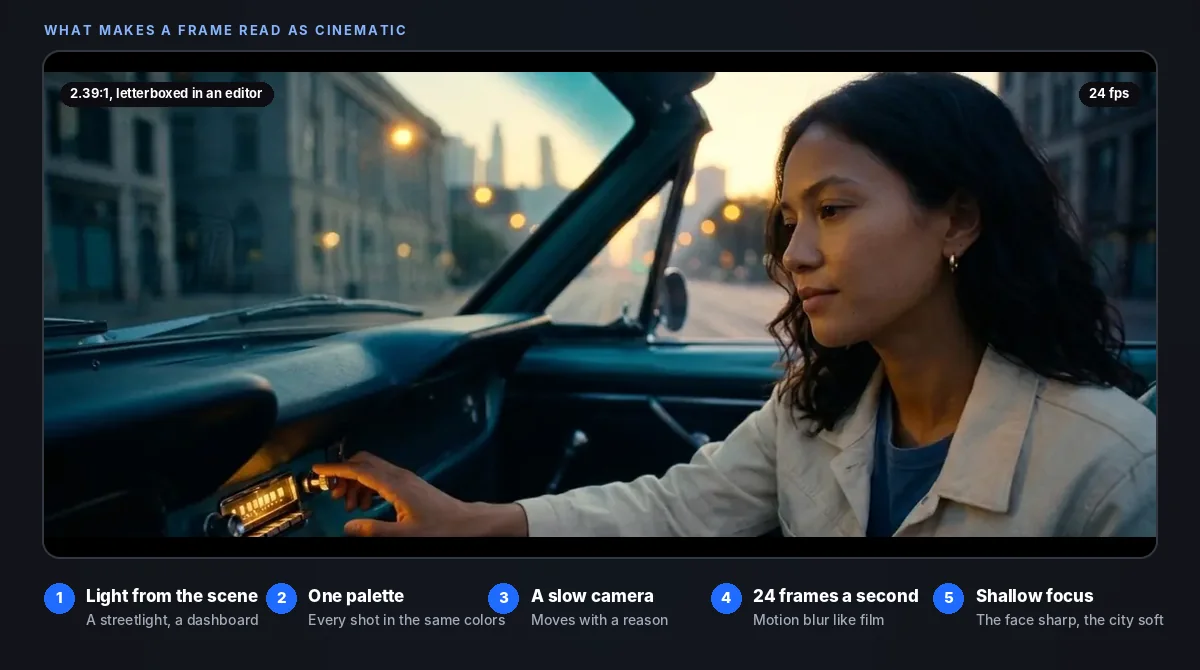
The verdict
Muvora is the one to choose for a music video made from your song: it analyzes the track, writes a free storyboard of every shot, renders and cuts them on the downbeats, section changes and drops, with your singer lip-synced from one photo. Luma AI makes cinematic clips of 5 or 10 seconds with its Ray models, which its own guide says you sync to the song in an editor.
Luma AI facts checked November 17, 2026. A storyboard frame from “Night Drive” (a 120 BPM pop test song), annotated for this guide.
Muvora vs Luma AI
| What is compared | Muvora | Luma AI |
|---|---|---|
| What it is | A music video generator built around one song: analysis, a storyboard, AI video for every shot and an edit over your own audio | A creative workspace where Luma Agents plan, generate and edit images, video, audio and text on infinite boards; Dream Machine, its earlier product, is now listed as deprecated |
| What you start with | Your song file (MP3, WAV, M4A, AAC or FLAC, up to 8 minutes), an optional idea of up to 600 characters, and one photo of the singer for lip sync | A prompt, a script, a brief or one sentence, plus optional reference images, clips, storyboards or brand guidelines |
| Who plans the video | An AI director writes the brief and a shot for every stretch between cuts, sized to the song's sections; you edit it all for free | The Luma Agent, from your brief; Luma Scenes turns a brief into an editable storyboard of keyframes on a timeline, made for short pieces of roughly 10 frames including references |
| Cutting to the music | Cut points from the song's downbeats, at every section change and every drop, holding longer where it's quiet | No automatic beat sync, by Luma's own September 2026 guide to music video generators: clips are synced to the track by hand in your video editor |
| Clip length | The whole song in one render, up to 8 minutes, each shot as long as its stretch between cuts | Ray3.2 makes 5 or 10 seconds from text or an image and up to 20 seconds when restyling footage; Ray3.14 can extend a clip |
| Lip sync | Performance style: your vocal separated from the mix, the sung stretches found, and those shots lip-synced from one photo | Sync's lip-sync models pair a video of a character with an audio track; vocal isolation and ElevenLabs stem separation are separate tools |
| Sound | Your original upload is the soundtrack, untouched; no clip's own audio is ever used | Ray3.2 makes no audio from text or images; Seedance and Kling clips can carry generated audio, and ElevenLabs makes voice, music and effects |
| Formats | 16:9, 9:16, 1:1 and an 8-second Spotify Canvas loop from one widescreen render, at 720p or 1080p, as H.264 MP4 | MP4 at 360p to 1080p, upscaling to 4K, 16-bit HDR and EXR frames, and Reframe to 9:16, 3:4, 1:1, 4:3, 16:9 or 21:9 |
| Price | Credits per finished second: 38 in Visualizer, 60 in Standard, 110 in Cinematic, 75 for lip-synced seconds, the exact total shown first | Monthly: Plus $30 (10,000 credits), Pro $90 (40,000), Ultra $300 (150,000), or $25, $75 and $250 a month billed yearly; a Ray3.2 clip at 1080p is 400 credits for 5 seconds; unused credits expire each cycle |
| Free to start | 5 new storyboards a month with style frames, no card needed | Free trial credits; by its terms, outputs can be used commercially only when made during a paid subscription that allows it |
| Failed generations | A shot that fails costs nothing | Credits for failed generations are returned automatically; outputs you reject still use credits |
Compare it on your own song
Upload a track and see Muvora's whole storyboard, every shot planned on your song's beats, and its exact price before you spend a credit. The storyboard is free, so you can judge the plan before you pay for anything.
What you get with Muvora that changes the outcome
- 01
Planned for the length of your song
Luma Scenes plans short pieces, a product spot or one campaign beat, at roughly ten frames, and its guide suggests splitting anything longer into smaller pieces. Muvora plans the whole track at once: its director reads your song's tempo, sections, drops and words, writes a concept with a small cast and three to six designed locations, and gives every stretch between cuts a shot of its own, from the first bar of the intro to the last chorus. The storyboard example shows a full plan.
- 02
The song decides every cut
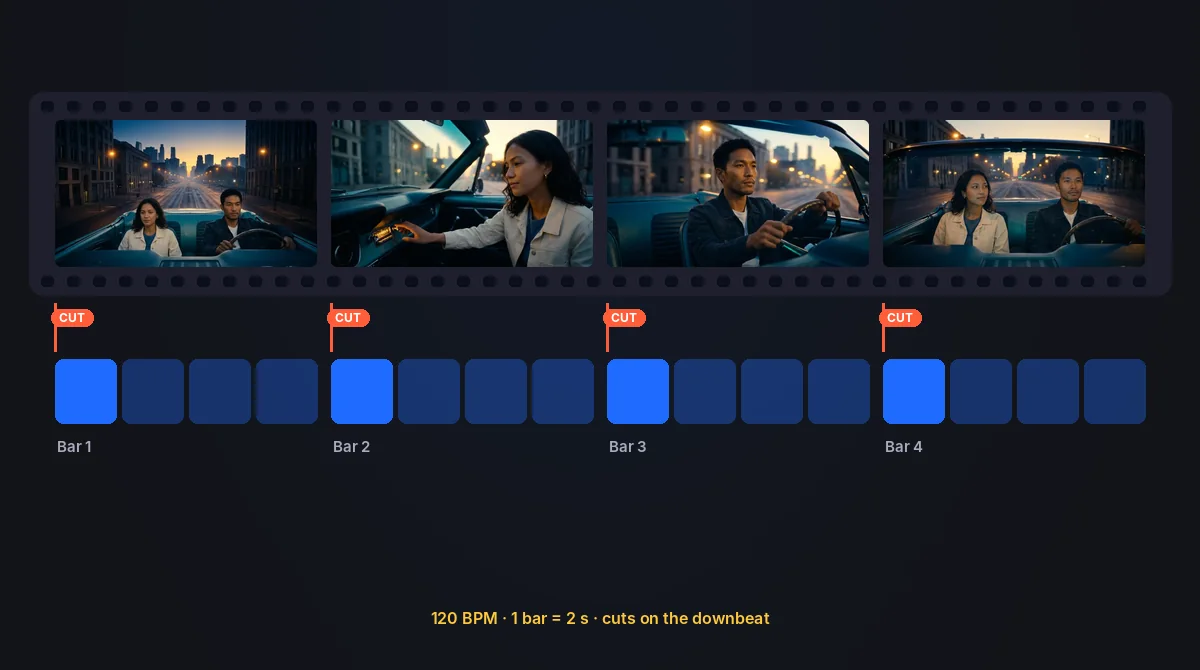
Luma's own guide to music video tools says syncing its clips to a track happens in your editor. Muvora's shot planner does it from the song's analysis: a cut on a downbeat, a change at each section boundary, a two-frame white flash on each drop, long holds in quiet verses and quicker changes in loud choruses, paced for the genre. Move a cut in the storyboard and it snaps back onto a beat, as the beat sync video maker page shows.
- 03
A singer who sings your song
Lip sync in Luma pairs a character's video with an audio track you supply. Muvora starts from your finished mix: it separates the vocal itself, finds the stretches that are really sung, lip-syncs only those shots from one clear photo of the singer, and lets the mouth rest between words. A look sheet drawn before you pay shows the performer in the video's outfit; make a photo sing walks through it.
- 04
One price for the finished video
Luma prices each generation by model, resolution and length, and a take you don't keep still uses credits. Muvora charges one rate per finished second for the quality you pick, shows the exact total before you press Generate, charges nothing for a shot that fails and includes free re-rolls up to 10% of the length. One widescreen render then gives 16:9, 9:16 and 1:1 versions and an 8-second Canvas loop; try your song's length in the cost calculator.
The bottom line
Luma is built for cinematic clips and campaigns. Muvora is built for the music video your song needs.
Luma gives creative teams an agent, a board and its Ray models beside Veo, Kling and Seedance, for campaigns, product shots and short cinematic pieces, with HDR and EXR frames for post-production. A music video is one long piece set to one song: shots planned for its sections, cuts on its beats and a singer who follows its vocal. Muvora builds all of that from your track and lets you change the plan for free first; the cinematic music video maker page shows Muvora's most detailed quality.
- The whole song planned in one storyboard, free to edit
- Cuts placed on downbeats, section changes and drops
- Lip sync from one photo, on the sung stretches only
- Your original audio as the soundtrack, untouched
- One rate a second, with the exact total before you render
Still comparing? See how Muvora compares with every other tool.
How Muvora works, and what it costs
- 01
Upload your song
Drop in an MP3, WAV, M4A or FLAC up to 8 minutes. Muvora finds the tempo, the beats, the downbeats and the sections of your song, like intro, verse and chorus.
- 02
Edit your free storyboard
An AI director writes a shot-by-shot plan timed to your downbeats. Rewrite any prompt, drag a cut (it snaps to the beat) or ask AI to redo a shot. None of it costs anything.
- 03
Generate your video
See the final price, then render. Pick Visualizer, Standard or Cinematic quality. If a shot fails, its credits come straight back.
The storyboard is free. Rendering is priced per second.
- Visualizer38 credits/s6,840 for 3 minutes
- Standard60 credits/s10,800 for 3 minutes
- Cinematic110 credits/s19,800 for 3 minutes
- The exact price is shown before you generate
- Failed shots cost nothing
- 16:9, 9:16, 1:1 and a Canvas loop from one widescreen render
Free storyboard in minutes. No card needed.
Questions, answered
Can't find what you need? Start a free storyboard and see for yourself.
Is Muvora a good alternative to Luma Dream Machine for music videos?
Yes, when the video has to follow a finished song. Muvora plans the whole track as a storyboard, renders every shot, cuts the shots on the downbeats and can lip-sync your singer from a photo. Luma, the app that grew out of Dream Machine, generates cinematic clips that you sync to the music in an editor; Muvora hands you the music video already cut to your song.
What happened to Luma Dream Machine?
Luma's information page, as of November 2026, describes Dream Machine as an earlier, deprecated model, and its old address opens the Luma app, where Luma Agents work with Luma's Ray3.2 video model and other companies' models. Muvora is a different kind of tool: it starts from your song file and makes one finished music video for it.
Can Luma make a music video from a song?
Luma's own guide to music video generators says it has no automatic beat sync: you generate clips there and sync them to the track by hand in your video editor. Its Scenes tool storyboards short pieces of roughly ten frames. Muvora reads the song itself, plans a shot for every stretch between cuts and places every cut, for songs up to 8 minutes.
How much does Luma cost compared with Muvora?
As of November 2026, Luma's pricing page listed Plus at 30 dollars a month with 10,000 credits, Pro at 90 with 40,000 and Ultra at 300 with 150,000, or 300, 900 and 3,000 dollars billed yearly, with a 5-second Ray3.2 clip at 1080p costing 400 credits. Muvora prices the finished video by the second for the quality you pick, with the exact total shown before you render.
Does Luma lip-sync a singer?
Its workspace pairs a video of a character with an audio track through Sync's lip-sync models, and it can isolate vocals as a separate step. Muvora runs the whole chain for a song: it separates the vocal from your mix, lip-syncs only the shots where the song is sung from one photo of the singer, and keeps your original upload as the soundtrack.
Can I use a Luma or Muvora video commercially?
Luma's terms give you ownership of your outputs but allow commercial use only for those made during a paid subscription that permits it. Muvora's videos are yours to use commercially when you have the rights to the song, and they download without a watermark.
Keep exploring
Runway alternative
Muvora and Runway side by side: a whole song storyboarded and cut on its downbeats, against a toolkit for generating and editing AI clips one at a time.
See the comparison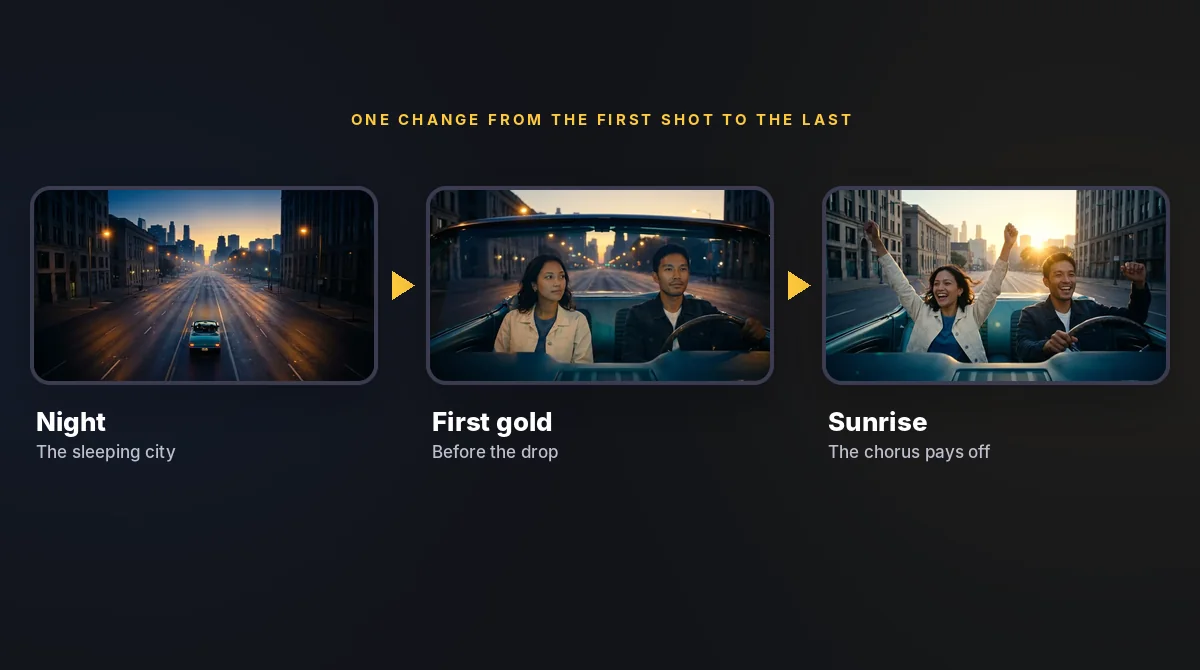
Pika alternative
Muvora and Pika side by side: a whole music video planned on your song's beats, against a creative app for short AI clips, effects, singing images and sound.
See the comparison
Higgsfield alternative
Muvora and Higgsfield side by side: a music video planned, rendered and cut from your song in one pass, against an AI studio where you build each shot and cut it in your editor.
See the comparison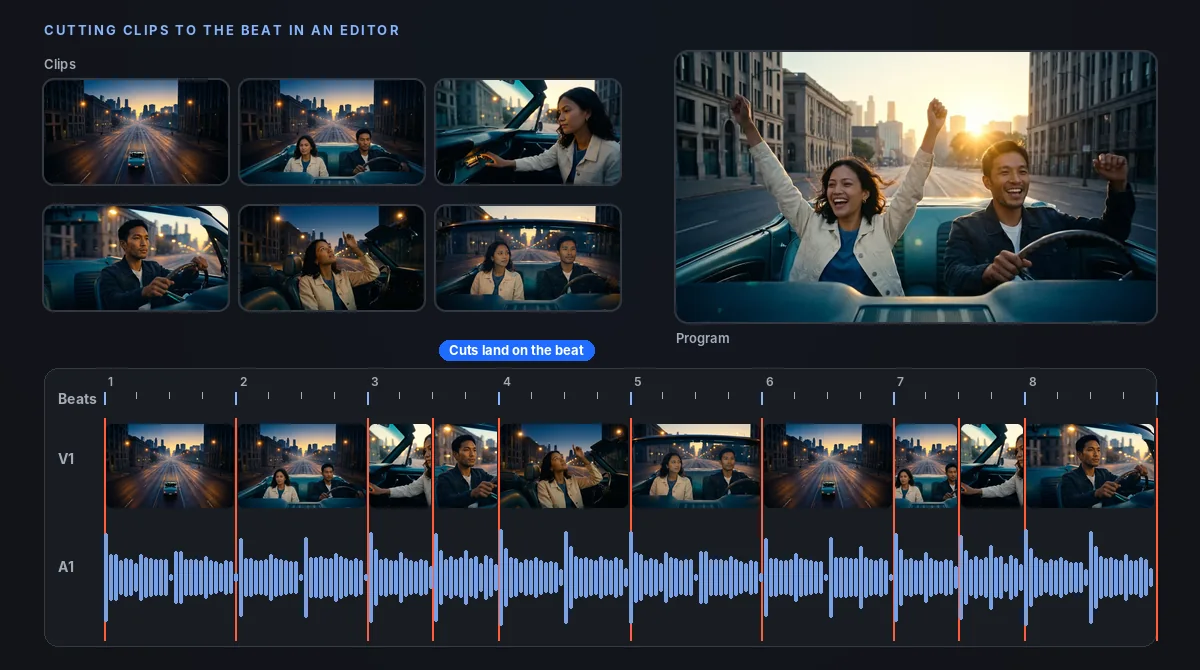
Adobe Express alternative
Muvora and Adobe Express side by side: a music video written, generated and cut on your song's beats, against Adobe's design and video app for templates, stock and the footage you bring.
See the comparison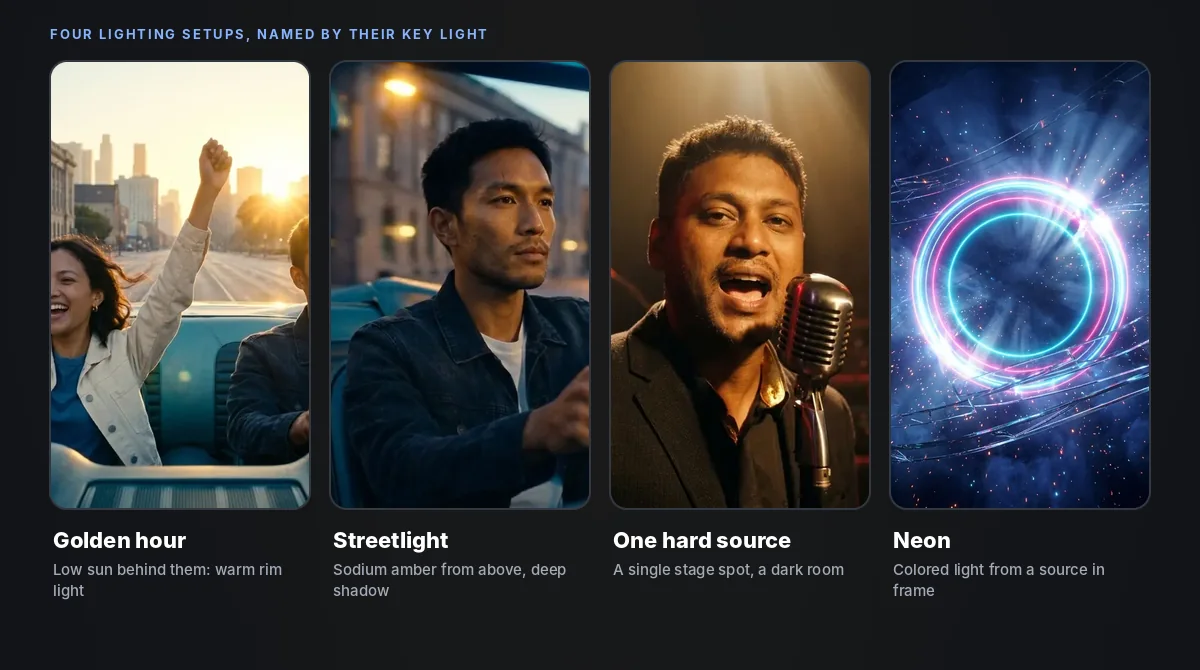
Cinematic music videos
Muvora's highest-quality render: sharper first frames, clips made at 1080p, and light that comes from the scene.
Learn more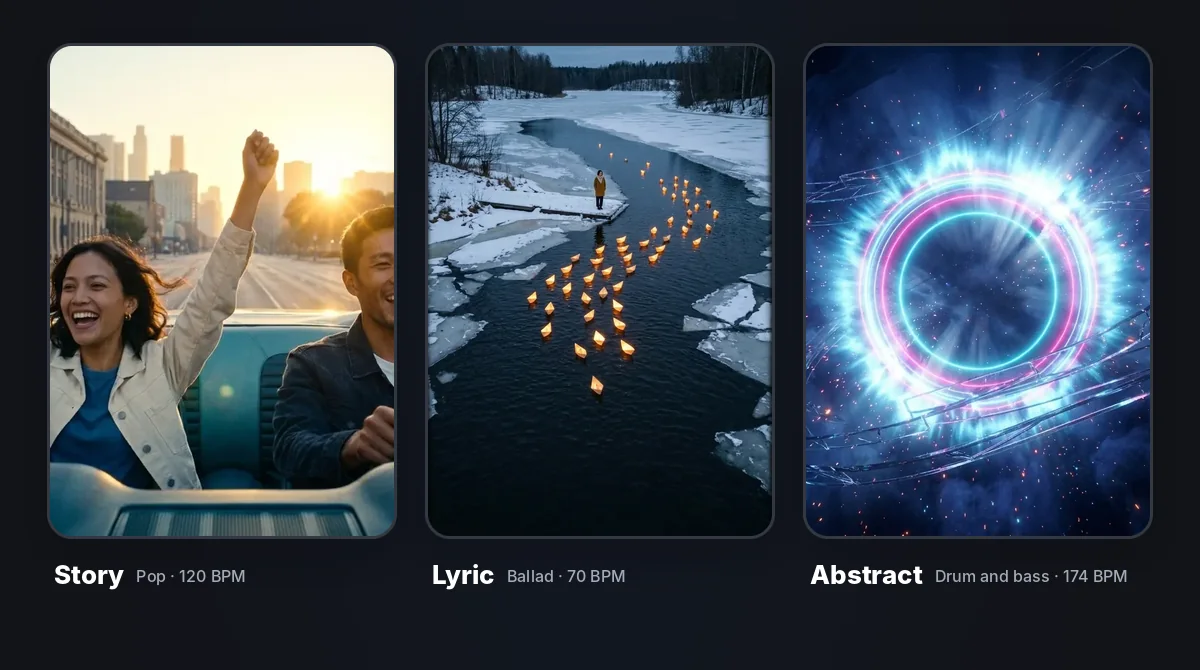
Best AI music video generators
Muvora, Neural Frames, Freebeat, Kaiber and Rotor compared, and why Muvora's beat-cut, editable storyboard is our pick for your song.
Read the guide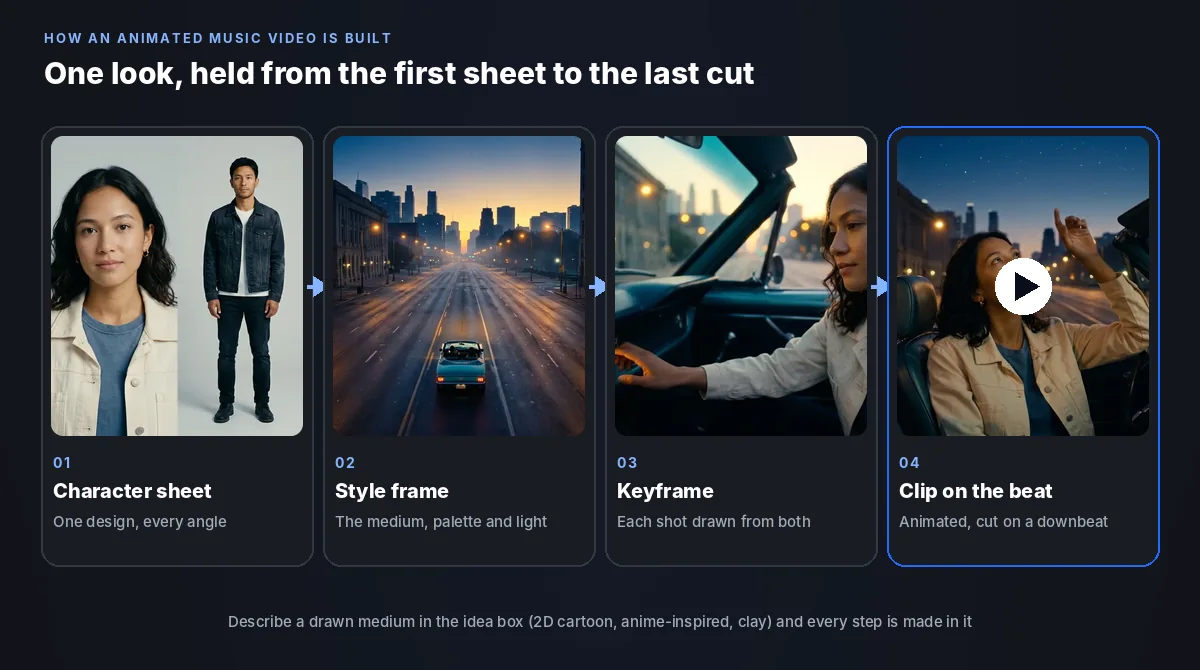
Hailuo AI alternative
Muvora and Hailuo AI side by side: a whole music video planned and cut on your song's beats, against MiniMax's generator of short clips from prompts and references that you cut to the track yourself.
See the comparison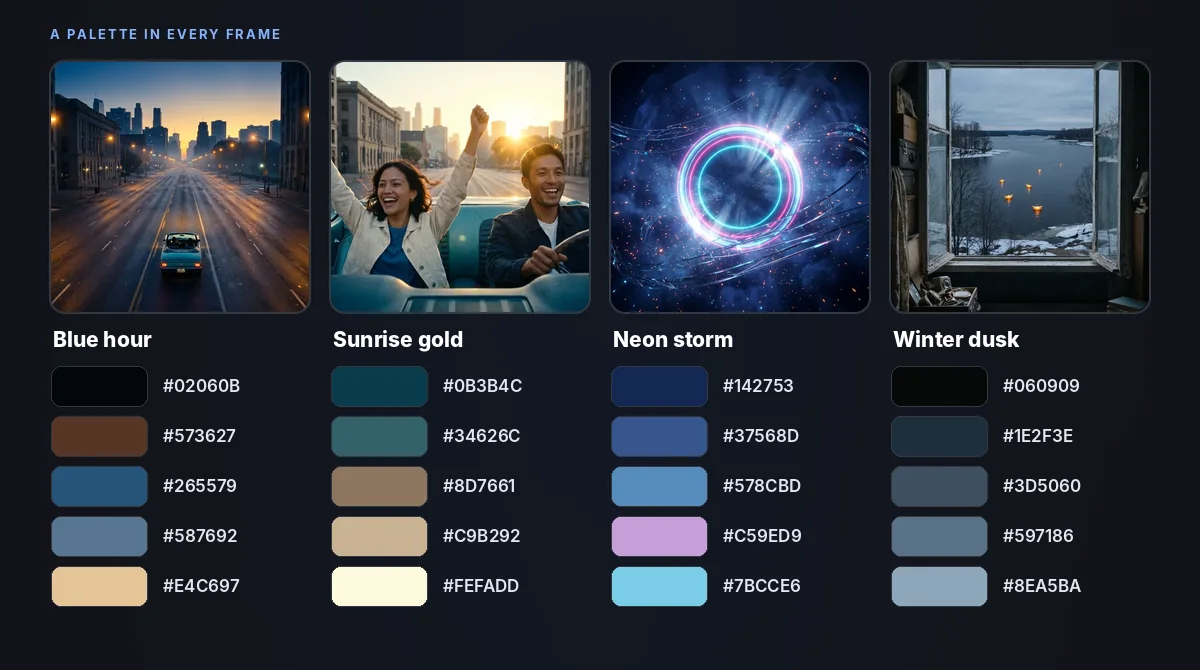
Midjourney alternative
Muvora and Midjourney side by side: a whole music video planned and cut on your song's beats, against short silent clips animated from one image at a time.
See the comparison
Your song deserves a music video
Upload a track and get a free beat-synced storyboard in minutes. Render it when you are ready.
No card needed to start.






