The short answer
Aesthetic music video ideas start from one look defined by five parts: a palette of three to five colors, named light sources, a texture, a lens and an era. Try 35mm grain for a cook's day off in a fishing town, camcorder tape for a basement birthday party, Y2K chrome for getting ready in 2002 or neon noir for a lost-property office at 3 a.m.
- An aesthetic is five decisions: palette, light, texture, lens and era. Write all five down.
- Name the light sources (a sodium streetlight, a fridge door, a low sun), never a filter.
- Hold the palette to three to five colors and repeat them in wardrobe and props.
- Leave out anything that needs lettering: date stamps, signs, logos. The pictures never carry text.
- Check the style frames before you render: they show the look on your own song first.
On this page (7 sections)ShowHide
- 1.What an aesthetic is made of
- 2.Film, tape and monochrome looks
- 3.Glossy and dreamy looks: Y2K and dreamcore
- 4.City after dark: blue hour and neon noir
- 5.Sunlight and countryside: cottagecore and 70s sun-bleached
- 6.What breaks an aesthetic, and how to avoid it
- 7.How to write an aesthetic into the idea box
- Questions
What an aesthetic is made of
Online, “aesthetic” has come to mean any recognizable visual world: soft film, glossy chrome, pastel haze. In a music video it has a practical meaning. It is the set of rules every shot obeys, so that a close-up of a hand and a wide of a street feel as though they came from the same camera on the same day. Break any one rule and the look slips.
- Palette. Three to five colors allowed in the frame, carried by wardrobe, walls, props and light. Name them plainly (cream, faded blue, rust) and mute or leave out everything else.
- Light. Where it comes from, its color and how hard it is. “A low sun through dusty blinds” or “a sodium streetlight and a fridge's glow” is an aesthetic; “cinematic lighting” is not.
- Texture. The surface of the image: fine film grain, tape noise and color bleed, glossy highlights, soft haze, or clean and sharp.
- Lens. How the camera sees: a fisheye close to faces, a long lens compressing a street, a 35mm or 50mm at eye level, shallow focus or everything sharp.
- Era. The year the world seems to be set in, which decides the cars, phones, clothes and furniture. One decade, held everywhere.
- Pace. How the camera behaves between cuts: slow push-ins and long holds, restless handheld, quick orbits. In Muvora the cuts follow the song, so the pace comes from the camera moves you name and the genre look you pick.
| Aesthetic | Palette | Light | Texture | Lens | Pace |
|---|---|---|---|---|---|
| 35mm film | Warm cream, faded blue, soft red, true skin tones | Daylight and window light, gentle contrast | Fine grain, a soft glow around bright lamps | 35mm or 50mm at eye level, shallow focus | Unhurried: holds and slow push-ins |
| VHS and camcorder | Washed-out primaries, warm skin, murky blacks | Room lamps, an on-camera light, a flash in the dark | Soft focus, tape noise, colors bleeding past their edges | A wide zoom lens held at arm's length | Restless handheld, quick reframes |
| Minimal monochrome | Black, white and two grays | One hard source, deep shadow | Clean, or a fine grain | A normal lens, locked off | Few moves, long holds |
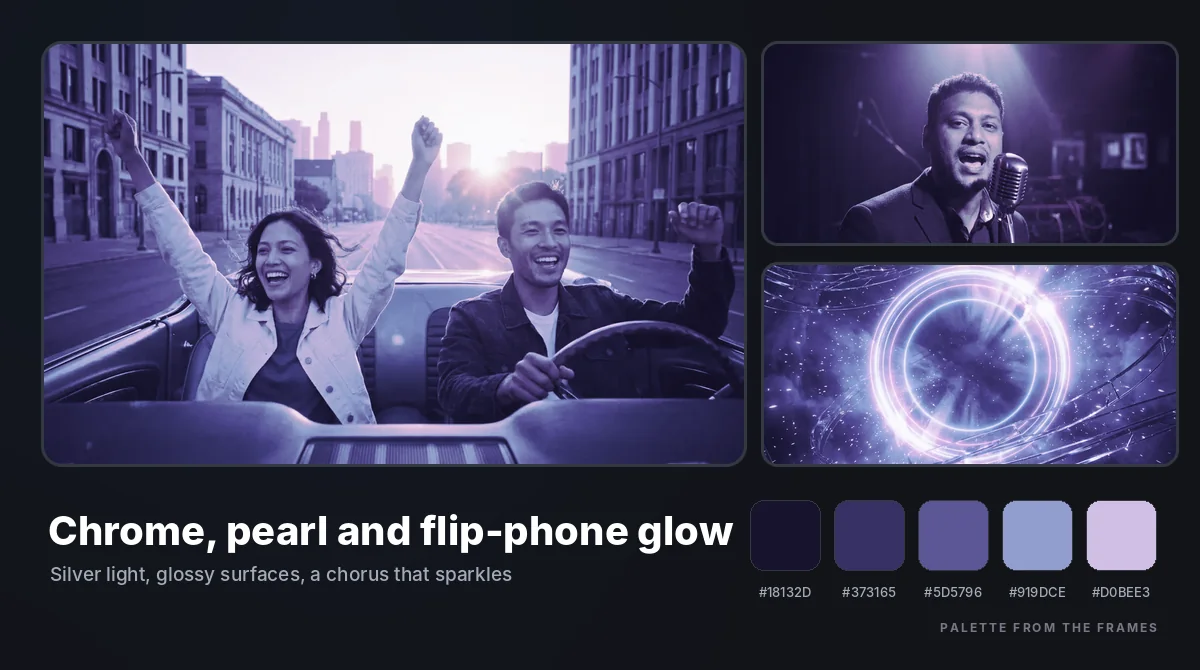
| Y2K chrome | Silver, ice blue, bubblegum pink, frosted lilac | Direct flash, fluorescent rings, bright club light | Glossy highlights, translucent plastic, sparkle | Fisheye and wide angles close to faces | Quick: push-ins and orbits on the beat |
| Dreamcore and pastel haze | Pastel pink, mint, baby blue, butter yellow | Soft overcast daylight, a lone lamp in an empty room | Haze, slight overexposure, blooming whites | Wide and very still | Slow drifts and long holds |
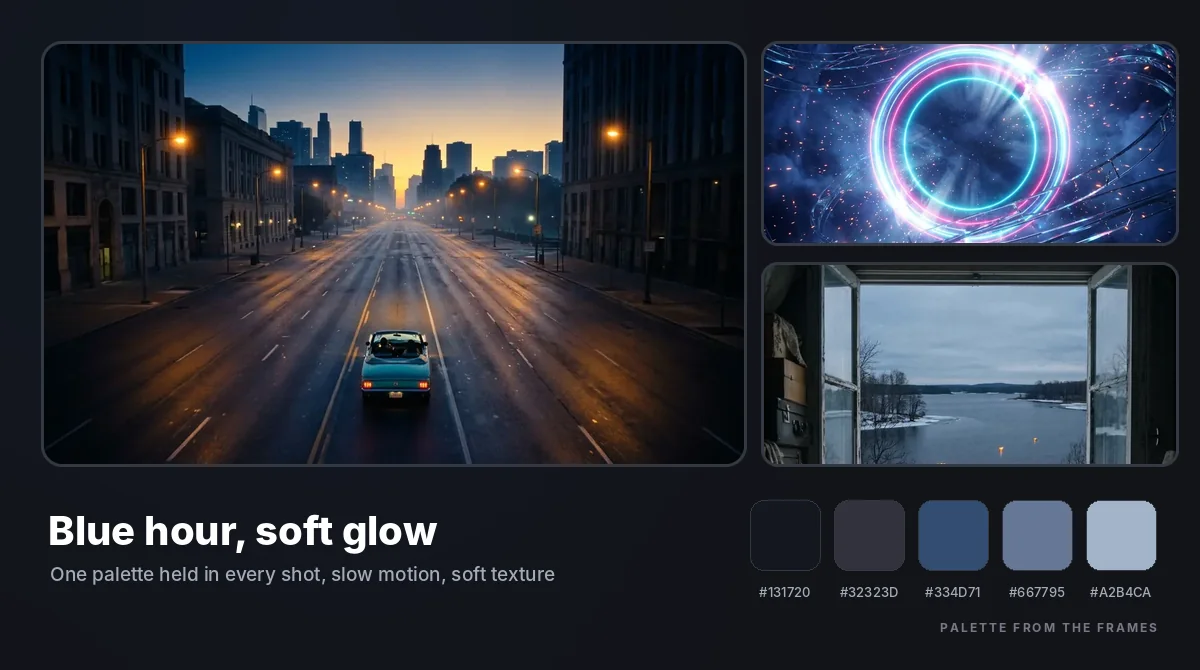
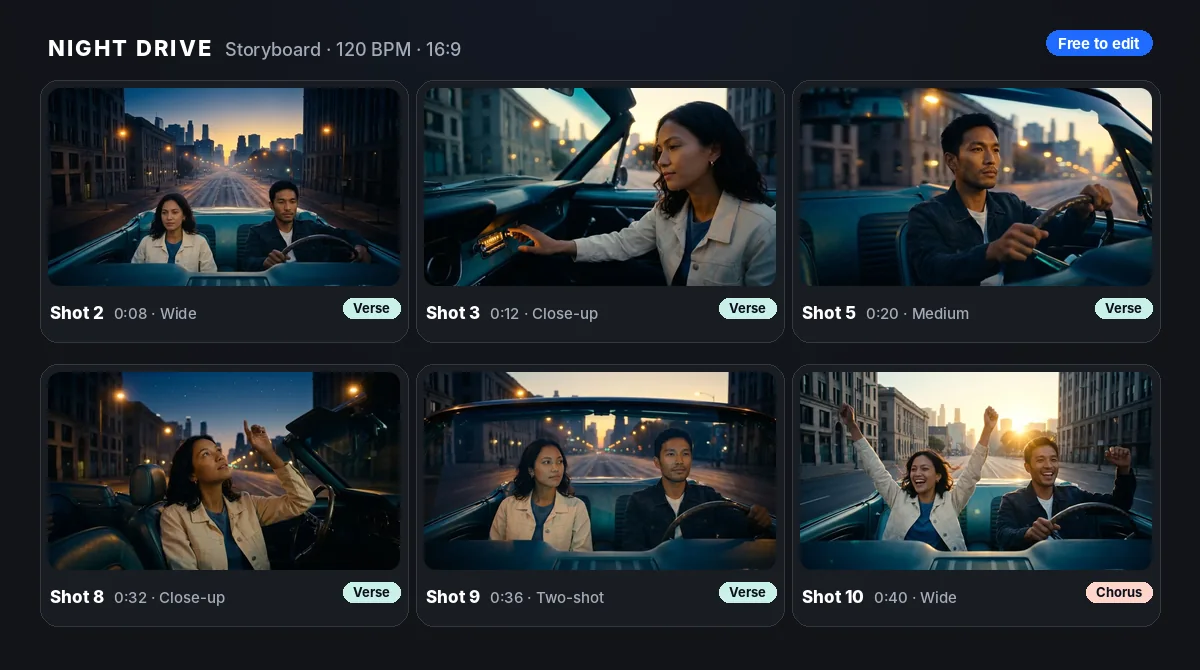
| Blue hour city | Deep blue, slate, sodium amber, a few lit windows | The last of the sky plus streetlights and windows switching on | Clean with a little grain | A long lens down a street, or a wide from a rooftop | Steady glides and slow pans |
| Neon noir | Magenta, cyan, deep green, near-black | Neon tubes, wet reflections, one hard key from a doorway | Rain, steam, sharp reflections | A wide lens low to the ground | Slow and deliberate, static frames |
| Cottagecore and countryside | Cream, sage, butter yellow, a faded floral | Morning light through linen, candlelight at dusk | Soft and natural, a touch of grain | 50mm or longer, shallow focus on hands | Slow: still frames and gentle pans |
| 70s sun-bleached | Faded orange, mustard, tan, washed-out sky blue | Hard afternoon sun, low contrast from the haze | Warm grain, faded blacks, colors gone soft | A long lens across heat shimmer, then wide | Lazy: slow pans and long holds |
Film, tape and monochrome looks
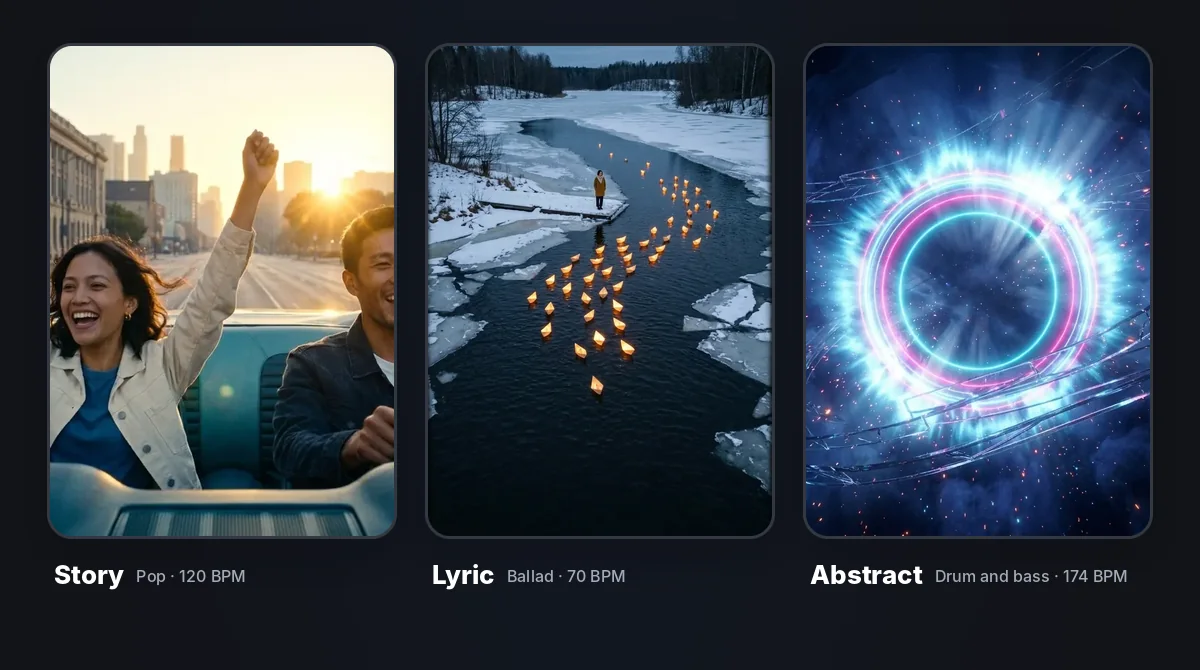
35mm film is the safest aesthetic to start from, because it flatters everything: skin, daylight, ordinary rooms. The look is warm but never orange, with fine grain, gentle contrast and a soft glow (halation) around bright lamps and windows. It suits indie, folk, soft pop and R&B, and it rewards real places seen at eye level through a 35mm or 50mm lens.
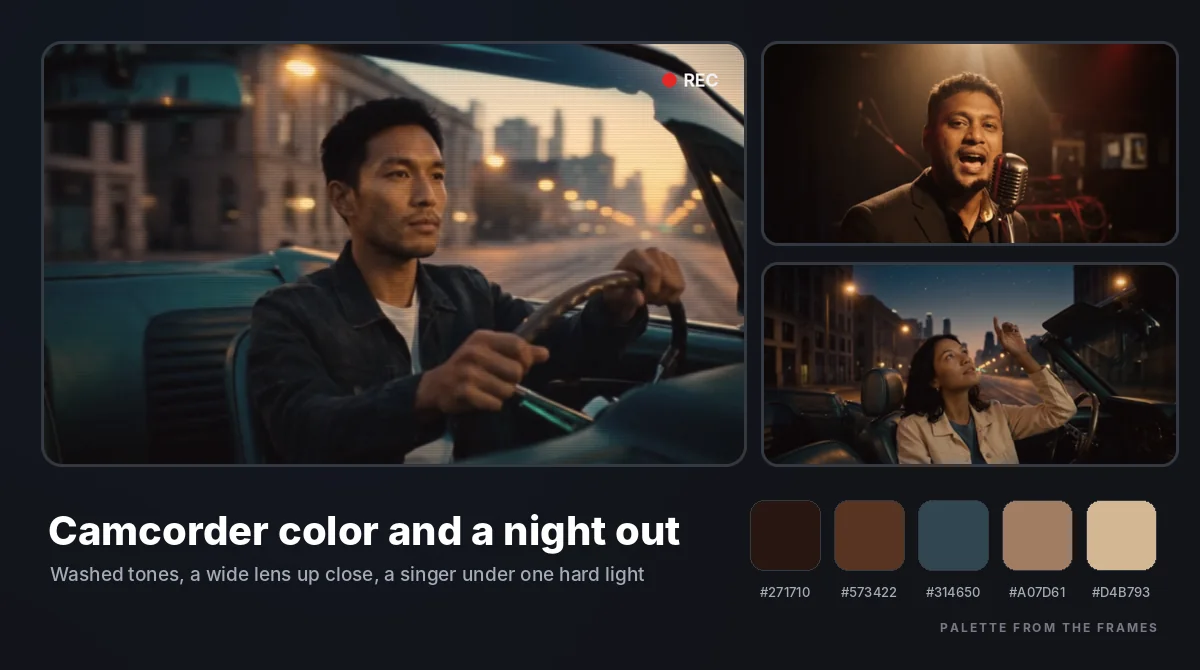
VHS and camcorder is home video: soft focus, colors smearing past their edges, noise in the shadows and a camera held at arm's length by someone who is also at the party. It suits bedroom pop, hip-hop, punk and anything nostalgic. Leave out the date stamp and the battery icon, since the pictures never carry lettering; the softness, the color bleed and the era's rooms carry the look on their own.
Minimal monochrome strips the picture back to shape and light: black, white and a few grays, one hard source, a plain wall. It makes a single performer or a single object look deliberate, and it is the easiest look to keep consistent, because there is so little in the frame to drift.
- 35mm film · coastal town
The cook's day off
35mm film, fine grain, cream, faded blue and soft red, overcast daylight breaking into sun, a 50mm lens at eye level. A line cook in a fishing town spends her one day off alone: laundry snapping on a line, a near-empty afternoon matinee, the window seat of a pier café, a cold swim in a gray sea. The verses stay close and quiet; each chorus the clouds break a little more. On the final chorus she falls asleep on warm stones at golden hour, a towel over her face.
Use this idea on my songUse this idea on my song - 35mm film · family
Reunion in the park
35mm film from the mid-1990s, warm grain, grass green, picnic-table red and denim blue, high summer sun under park trees. A big family reunion at a lakeside pavilion: corn on the grill, a three-legged race, an uncle asleep in a folding chair, cousins sneaking off to the water. The verses follow the youngest cousin wandering between groups; each chorus the games get louder. On the final chorus everyone squeezes onto the pavilion steps for one family photo as the light turns gold.
Use this idea on my songUse this idea on my song - Camcorder · home video
Birthday tape
Shot on a 1990s camcorder: soft focus, colors bleeding, a little tape noise, handheld at arm's length, lit by table lamps and an on-camera light. A seventh birthday party in a wood-paneled basement: paper hats, a sheet cake, balloons taped to a pillar, a dad wrestling with a folding table. The verses are the setting up and the waiting; each chorus the party gets wilder, kids running loops around the couch. On the final chorus the candles go out in one breath on the downbeat.
Use this idea on my songUse this idea on my song - Camcorder · school hall
Talent show tape
A parent's camcorder tape of a school talent show, filmed from the fourth row over the audience's heads: soft focus, washed-out color, a hard spotlight on a small stage, the framing drifting. The verses are the acts before the band: a nervous juggler, two sisters tap dancing, a boy whose magic trick fails. Each chorus cuts backstage to the band waiting in the dim wings, and on the final chorus they play while the parents leave their folding chairs to dance.
Use this idea on my songUse this idea on my song - Monochrome · performance
One chair, one light
Black and white, clean and sharp: a white studio with a curved floor, one wooden chair and a single hard light from above. The singer sits, stands and turns the chair around, always alone. The verses are close: a hand on the chair back, the shadow of an eyelash. Each chorus the light moves a few degrees, so the shadows swing across the floor, and on the final chorus the camera pulls far back to show the chair and its long shadow alone in all that white.
Use this idea on my songUse this idea on my song - Monochrome · no faces
Shadow on the wall
Black and white, a bare plaster wall and one bare bulb on a long cord. Only shadows play the song: a hand opening and closing, two silhouettes slow-dancing, a bicycle wheel spinning, a cat on a windowsill. The verses keep to one shadow at a time; each chorus the bulb swings on its cord and the shadows sway with it. On the final chorus every shadow from the video crowds the wall at once, and the bulb goes out on the last note.
Use this idea on my songUse this idea on my song
See your song in one of these looks
Upload a track and paste an idea, palette and all. The storyboard and its style frames come back in that look before you spend a credit, and every shot is yours to rewrite.
Glossy and dreamy looks: Y2K and dreamcore
Y2K chrome is the turn of the millennium as it imagined the future: silver and ice blue, bubblegum pink, frosted lilac, translucent plastic, inflatable furniture and chrome everything. Light it with direct flash and bright fluorescent rings, shoot wide and close to the face, and let the camera move on the beat. It suits hyperpop, pop, R&B and dance tracks.
Dreamcore and pastel haze is the opposite energy: places that feel half-remembered, empty and slightly wrong. Pastel walls, a playground with no children, a hallway carpet from someone's grandparents, soft overexposed light pouring in through big windows. Keep the camera slow and the frames still, and give each shot one small impossible detail rather than many.
- Y2K · night out
Getting ready, 2002
Y2K gloss: silver, ice blue and bubblegum pink, frosted lip gloss, a translucent flip phone, direct on-camera flash, a fisheye lens close to faces. Two best friends get ready for a night out in a bedroom with an inflatable chair and a chrome-framed mirror. The verses are the getting ready under a fluorescent ring. Each chorus jumps to a flash-lit stop on the way: a taxi back seat, a mirrored dance floor, a gas station at 2 a.m. On the final chorus they share fries on a rooftop at dawn in silver jackets.
Use this idea on my songUse this idea on my song - Y2K · visualizer
Chrome droplets
A Y2K chrome visualizer with no people: liquid silver droplets, iridescent bubbles and translucent blue plastic spheres floating in a pale lilac void, lit by soft studio strips that glide across their surfaces. The verses are slow, a single droplet stretching and splitting on the kick. Each chorus the spheres multiply and bounce on the downbeat, bubbles bursting into glitter. On the final chorus every surface melts into one rippling mirror pool that reflects the whole palette back.
Use this idea on my songUse this idea on my song - Dreamcore · liminal
Playground at the wrong hour
Dreamcore in pastel haze: mint, baby pink and butter yellow, soft overexposed daylight under a flat lilac sky, a wide lens held very still. An empty playground at an hour that doesn't exist: a swing moving slightly on its own, a plastic slide, a sandpit with one red bucket. The singer, in pajamas, wanders it alone. Each chorus brings one new impossible detail: the sandpit turns into a shallow pool, then the slide's ladder carries on up into the clouds. On the final chorus the playground lamps switch on in broad daylight.
Use this idea on my songUse this idea on my song - Dreamcore · night to dawn
Sleepwalker
Pastel haze, soft focus and blooming whites in peach, powder blue and cream, lit by porch lamps and the first gray of dawn. A girl in a long nightdress sleepwalks through her sleeping neighborhood at 5 a.m.: across dewy lawns, past a parked mint-green car, through the shallow end of a swimming pool without getting wet. The verses are slow and close on bare feet and half-closed eyes; each chorus the houses grow softer and further apart. On the final chorus she wakes standing in a field of tall grass as the sun rises.
Use this idea on my songUse this idea on my song
Skip the blank page
Upload your song and Muvora's AI director plans a shot-by-shot storyboard on the beat. Edit every shot for free, and pay only if you render.
City after dark: blue hour and neon noir
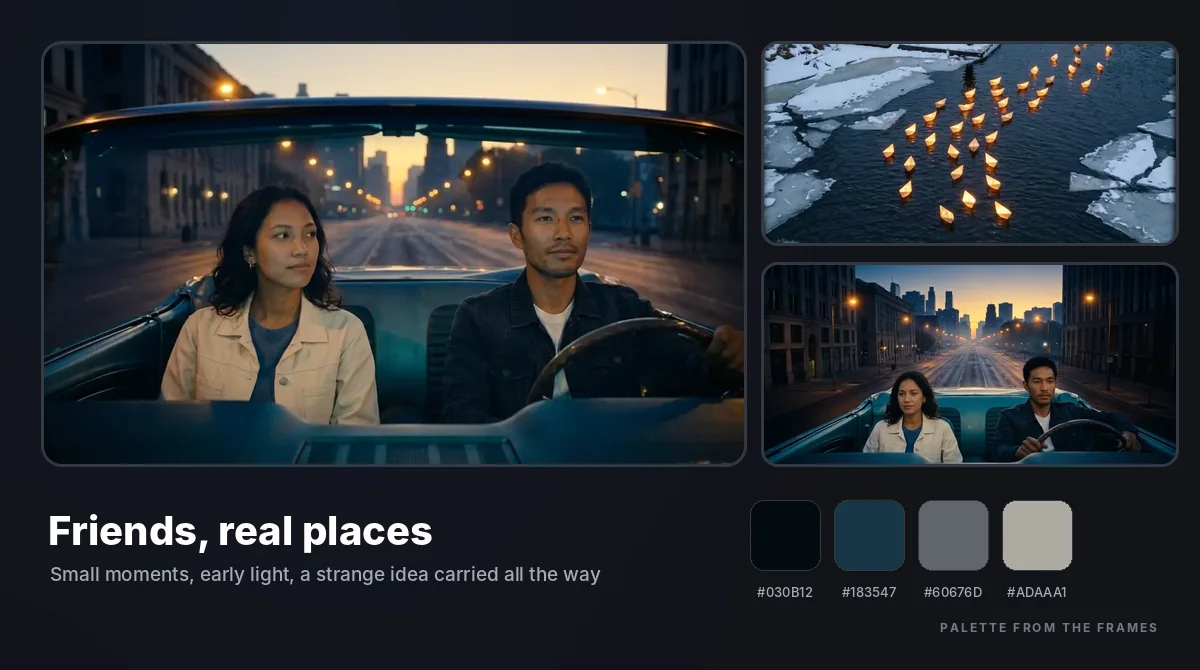
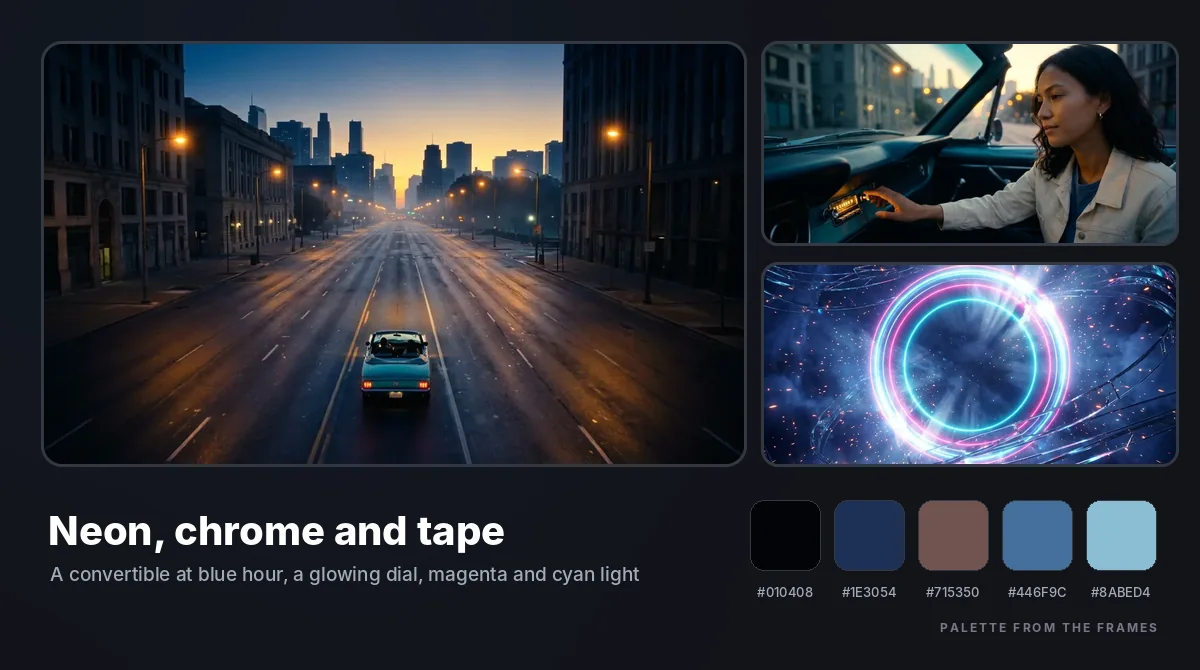
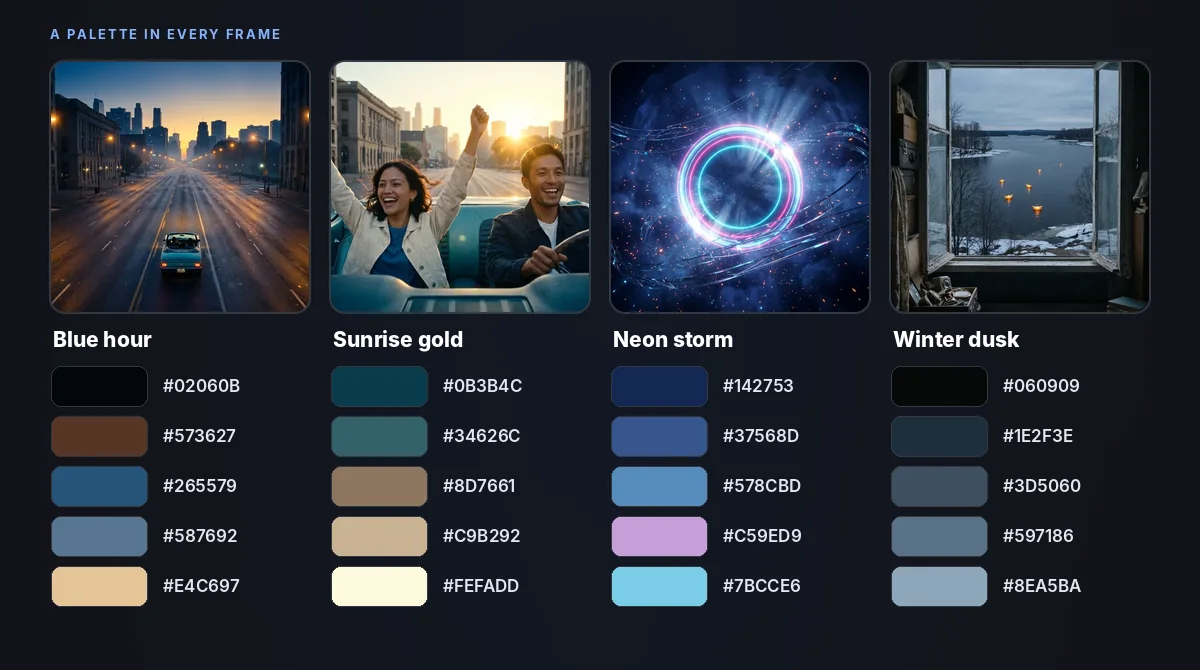
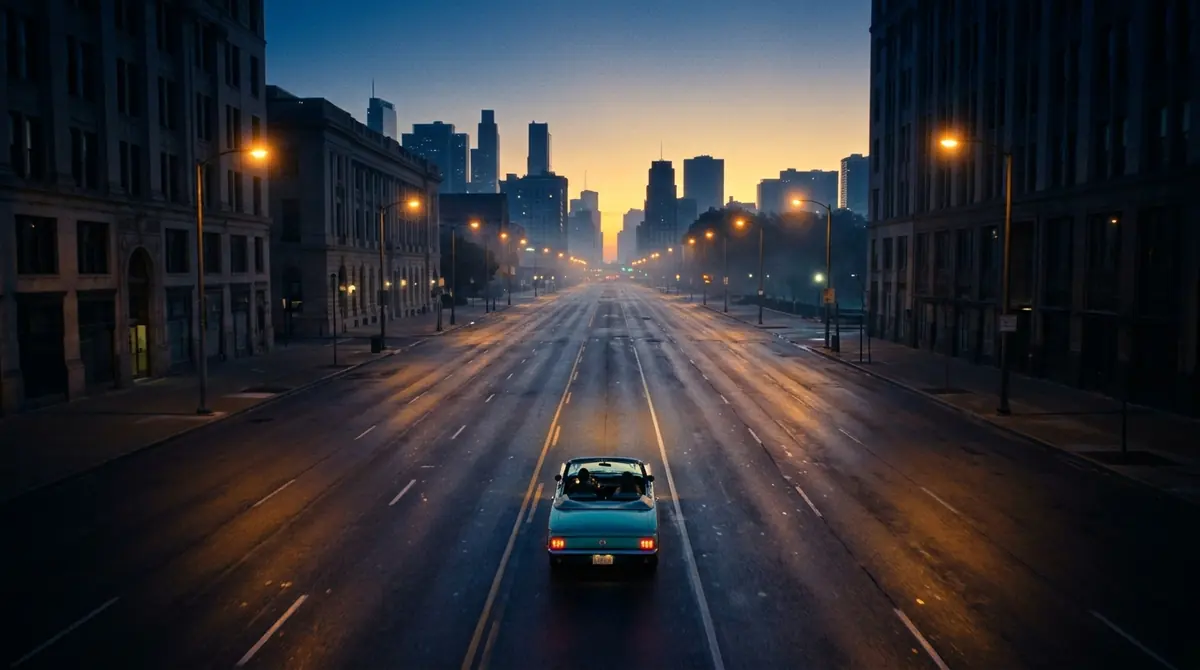
Blue hour is the half hour or so after sunset (or before sunrise) when the sky turns deep blue and the city's own lights take over: sodium streetlights, lit windows, the glow inside a passing bus. Its palette is cool and its light soft, so faces stay gentle. It suits synth-pop, R&B, indie and ballads, and it is far easier to describe than to shoot, since in real life the light lasts minutes.
Neon noir takes the old detective film's hard shadows and puts them under colored tubes: magenta and cyan on wet asphalt, steam from a grate, a doorway throwing a hard key light across one face. It suits dark pop, synthwave, trip-hop and moody hip-hop. Describe the neon as shapes and colors (a pink arrow, a green cross, a ring of blue tube) rather than as signs, so no words appear.
- Blue hour · high-rise
Window cleaner
A blue hour city, clean with a little grain: deep blue sky, slate glass, sodium amber streets far below, a long lens and slow, steady moves. A window cleaner works his way down a glass office tower on a hanging platform as the day ends. The verses show the people on each floor through the glass: someone vacuuming, two coworkers arguing, a man asleep at his desk. Each chorus more windows across the skyline switch on, and on the final chorus he reaches the street just as every streetlight comes on at once.
Use this idea on my songUse this idea on my song - Blue hour · lyric
Footbridge at blue hour
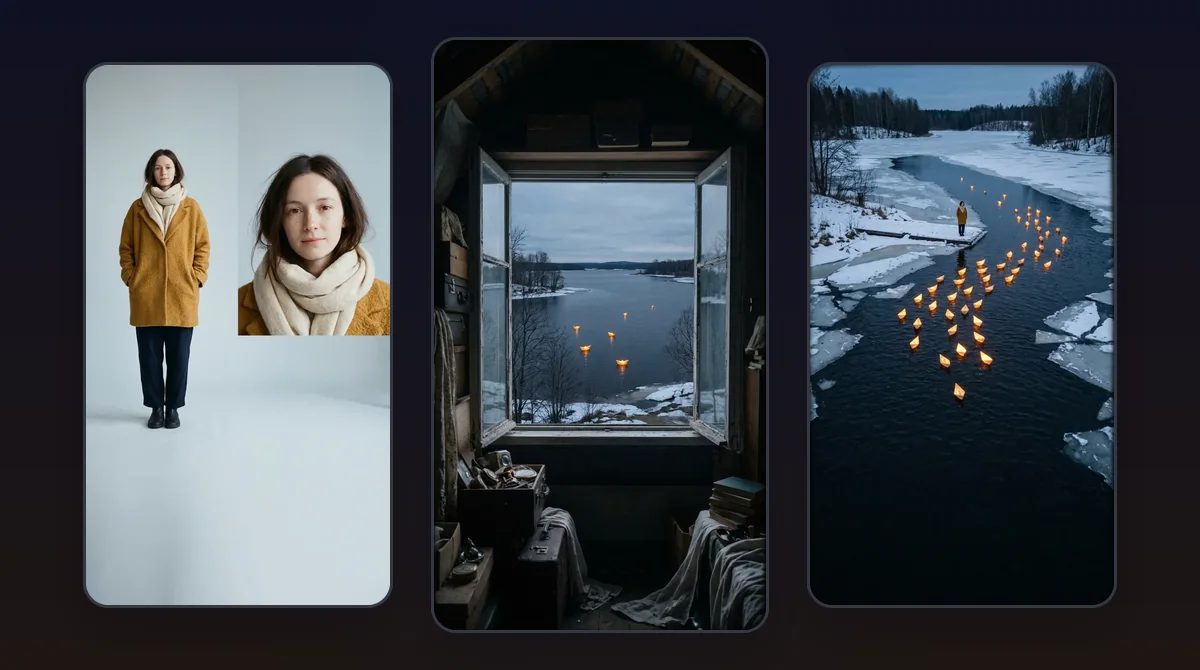
Karaoke-style captions over one long footbridge across a river at blue hour: the sky sliding from cobalt to ink, office windows lighting up floor by floor on both banks, the lamps along the railing flickering on. Calm, wide frames with space low in the picture for the words. The verses follow commuters crossing in long coats; each chorus a train crosses a bridge downstream, its windows lit. On the final chorus the river holds the whole lit skyline in its reflection.
Use this idea on my songUse this idea on my song - Neon noir · story
Lost property, 3 a.m.
Neon noir: magenta, cyan and deep green on near-black, wet asphalt reflecting colored tubes, steam from a grate, a wide lens low to the ground. A night clerk at a city lost-property office returns forgotten things: an umbrella to a drenched nurse, a trumpet to a jazz player, a single glove to a man in a phone booth. The verses are the long, quiet shelves; each chorus brings another return in the rain. On the final chorus the last unclaimed item turns out to be the clerk's own, a scarf he lost years ago.
Use this idea on my songUse this idea on my song - Neon noir · performance
Noodle counter
Neon noir performance: a narrow noodle counter open all night, rain sheeting down the window, a green tube light overhead, a magenta glow from the street and steam rising from the pots. The singer sits on the last stool and sings toward the window while the cook works behind them. The verses stay on the counter, the steam and the rain; each chorus the street outside gets wetter and brighter with passing taxis. On the final chorus the cook switches off the lights, leaving only the street's neon on the singer's face.
Use this idea on my songUse this idea on my song
Sunlight and countryside: cottagecore and 70s sun-bleached
Cottagecore and countryside is slow rural life made gentle: linen and wildflowers, bread on a board, a creek, a kitchen garden, morning light through thin curtains and candlelight at dusk. The palette is cream, sage and butter yellow with a faded floral or two. It suits folk, soft pop, lo-fi and acoustic songs, and works best with small, careful actions: kneading dough, threading a needle, carrying a basket.
70s sun-bleached looks like a photo left on a dashboard all summer: oranges faded to peach, blacks gone brown, a sky washed nearly white at the horizon. Hard afternoon sun, heat shimmer on a long road, wide collars and wood paneling. It suits soft rock, funk, indie and laid-back hip-hop, and its camera is lazy: slow pans and long holds, never a rush.
- Cottagecore · one day
Bread and bees
Cottagecore countryside: cream, sage and butter yellow, a faded floral apron, soft morning light through linen curtains, a 50mm lens with shallow focus and slow, gentle moves. A young beekeeper's day at a stone cottage: dough rising under a cloth, smoke drifting over the hives, sheets drying on a line above wildflowers, a creek to wash her hands in. The verses are small, careful actions; each chorus the bees and the light gather. On the final chorus she breaks the warm loaf at an outdoor table at dusk, candles in jars around her.
Use this idea on my songUse this idea on my song - Countryside · gathering
Orchard supper
Countryside at golden hour: cream linen, sage, apple red and honey gold, a low sun through orchard leaves, candlelight after dark, a soft natural texture. Friends carry a long table, mismatched chairs and armfuls of food into an apple orchard for a harvest supper. The verses are the preparations: picking, a pie cooling on a windowsill, wildflowers in jars. Each chorus more friends arrive along the lane on bicycles, and on the final chorus the table glows with candles under the trees as the first stars come out.
Use this idea on my songUse this idea on my song - 70s sun-bleached · desert road
Roadside peach stand
1970s sun-bleached film: faded orange, mustard, tan and a washed-out sky, warm grain, hard afternoon sun, heat shimmer on a long road, a long lens. Two sisters sell peaches from the back of a pickup on an empty desert highway. The verses are slow and deadpan: flies, a transistor radio, the odd car passing without stopping. Each chorus brings a stranger customer (a hearse, a hot-air balloon crew, a marching band's bus). On the final chorus they sell the last peach and lie on the warm hood watching the sun go down.
Use this idea on my songUse this idea on my song - 70s sun-bleached · beach
Lifeguard tower
A sun-bleached 1970s beach town: faded peach, sky blue and sandy tan, warm grain, a white-hot afternoon sun, wide frames then a long lens, lazy pans. The singer sings from a wooden lifeguard tower in a red swimsuit and a terry-cloth jacket while the beach drifts by below: a volleyball game, a boy with a kite, a couple asleep under a striped umbrella. Each chorus the tide comes further in, and on the final chorus the sun sets orange behind the tower as the beach empties to the last towel.
Use this idea on my songUse this idea on my song
What breaks an aesthetic, and how to avoid it
Most looks fall apart for the same handful of reasons. Check your idea, and later the storyboard, against this list before you render anything.
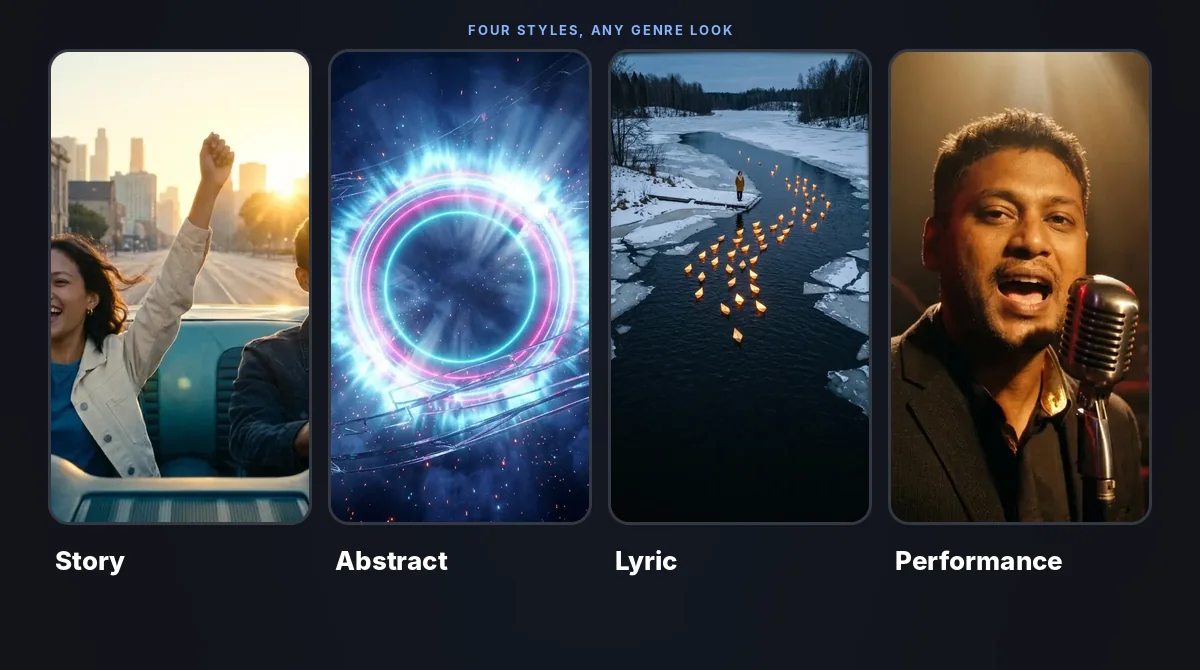
- Lettering. Date stamps, shop signs, neon words, logos, a newspaper headline. Muvora never draws text into the pictures, so an idea that depends on it loses its point. Use shapes, colors and objects instead, or the Lyric style if you want the song's words on screen as captions.
- Two eras at once. A flip phone in a 1970s kitchen reads as a mistake, not a mashup. Pick a decade and let it decide the cars, the phones and the clothes.
- Light without a source. “Moody lighting” gives the director nothing to hold on to. Name what makes the light in each place: a fridge, a streetlight, a low sun through blinds, a ring of fluorescent tubes.
- A palette that keeps growing. Every new location tempts a new color. Hold to three to five and let wardrobe and props repeat them.
- The usual clichés. Lens flares, beams of light through mist and a teal-and-orange grade are what generic AI video looks like, and Muvora's director steers away from them. Ask for the real source (a lamp, a window, a car's headlights) instead.
- A filter instead of a world. “Vintage filter” describes post-production. Describe what would stand in front of the camera in that era, and how it would have been filmed.
How to write an aesthetic into the idea box
Muvora's AI director reads the idea box (up to 600 characters) and writes a creative brief from it: the visual world, a palette, a lighting plan, a camera language, the mood and a style line that is added to every shot's image and motion prompts. That style line is what carries an aesthetic from the first shot to the last, so the clearer your words, the steadier the look.
- 01
Open with the look
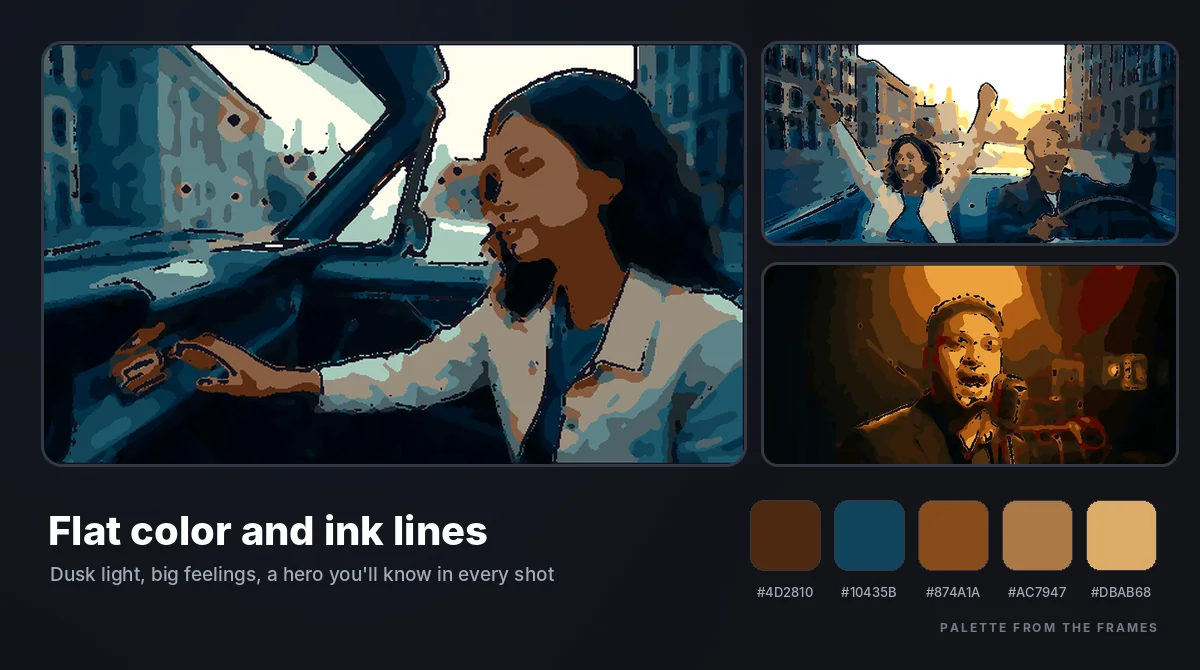
Start the idea with the aesthetic in a few words, such as “35mm film, fine grain, warm daylight”. For a drawn look, name the medium first (“colored pencil on cream paper”), so every shot is drawn in it.
- 02
Give the palette three to five colors
Name colors plainly and tie them to things: a mustard coat, sage walls, a cream tablecloth. Objects carry color more reliably than adjectives do.
- 03
Name the light sources
Say what lights each place: a low sun through blinds, a sodium streetlight, an open fridge, a ring of fluorescent tubes. The director writes each shot's own light from them.
- 04
Add the texture, the lens and the era
One phrase each, such as “tape noise and soft color bleed”, “wide and close to faces” and “set in 1977”. Then the concept itself: who, where, and what changes each chorus.
- 05
Check the style frames
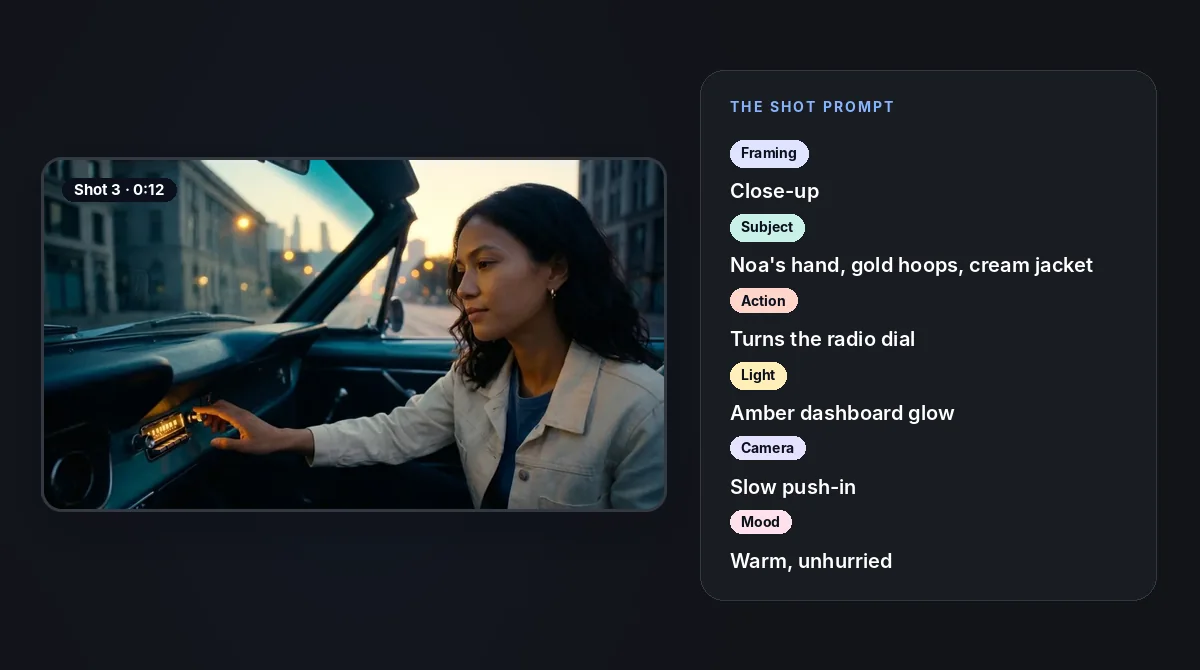
Once the storyboard is written, Muvora draws an establishing shot, the chorus hero shot and, when there are characters, a character sheet. If the look isn't there, adjust the words and start a fresh storyboard; the free plan includes 5 a month.
- 06
Render, then review
Choose a quality, see the exact price and generate. On the review page, re-roll any shot that strays from the look: re-rolls are free up to 10% of the video's length.
Written that way, a complete idea reads like this: “35mm film, fine grain, cream, rust and faded blue, window light and one green desk lamp, a 50mm lens at eye level, set in 1994. A night-shift baker walks home through a waking town and falls asleep on the bus; each chorus the town grows brighter.” That is about 250 characters, which leaves room to describe a character or two. For more on the words that steer each shot, see AI music video prompts, and for the formats and safe areas of every export, the aspect ratio guide.
The look you choose doesn't move the price. Rendering is charged per finished second at the quality you pick: 38 credits in Visualizer, 60 in Standard and 110 in Cinematic, the last made natively at 1080p with the most detail, which fine grain and chrome both show off. Lip-synced singing is 75 a second. To compare looks side by side as starting points, browse the music video templates, and check a looping Canvas cut from your video with the Spotify Canvas checker.
Try the look on your own song
Upload a track, open the idea box with the palette, the light and the era, and get a storyboard and style frames in that look for free. Render only once every frame feels like the same world.
Written by the Muvora team. Last updated November 14, 2026. Spotted something out of date? Tell us at [email protected].