“Night Drive” by Noa Vale: music video treatment
Logline
Two friends drive through a sleeping city in an old convertible until the road carries them out of town and into the sunrise.
Concept
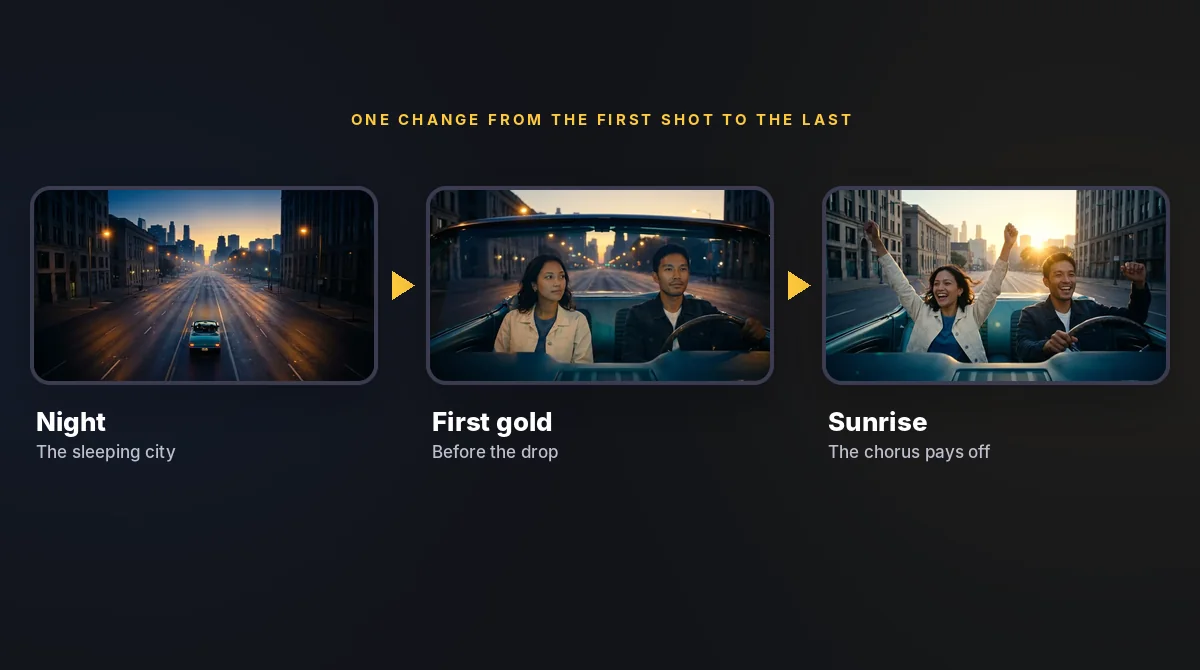
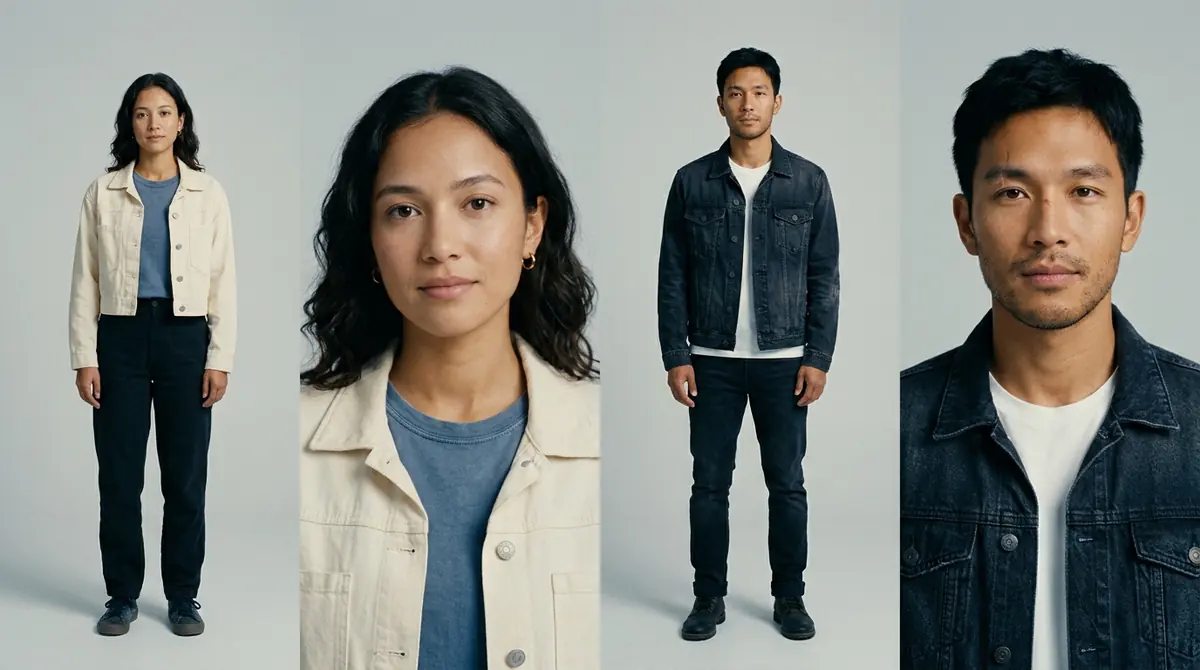
A nostalgic Pop video built on one idea, told through what two friends in their twenties, Noa (cream cropped jacket, gold hoops) and Eli (denim jacket, a scar through one eyebrow) does rather than by acting out the lyrics line by line. The world is small and specific: three places, faded film tones: mustard, teal and warm brown, and dashboard glow and passing street lamps, then real dawn. A paper cup on the dashboard that rattles with every bump. It returns in every chorus, a little different each time, so the video has an image people can hold on to. From the first shot to the last, one thing changes: they pull over on the coast road and watch the sun come up.
The arc, section by section
Intro. Open on an empty gas station under buzzing strip lights before anything happens. One held image that sets the world and its light, with a paper cup on the dashboard that rattles with every bump somewhere in frame.
Verse 1. Meet two friends in their twenties, Noa (cream cropped jacket, gold hoops) and Eli (denim jacket, a scar through one eyebrow) in an empty gas station under buzzing strip lights. Small, specific actions in medium shots and details, a new framing at every cut. Nothing big yet: the verse sets up what the chorus pays off.
Build. Things start to move toward a tunnel of orange sodium lamps. Shots get shorter and the camera starts to travel.
Chorus 1. The roof comes down in the tunnel and the lamps strobe across their faces. The strongest image so far, cut on the downbeats, the light at its brightest.
Verse 2. A tunnel of orange sodium lamps. A step further along the story, and a paper cup on the dashboard that rattles with every bump comes back, changed.
Chorus 2. The chorus image again, bigger: wider frames, more movement, more of the light.
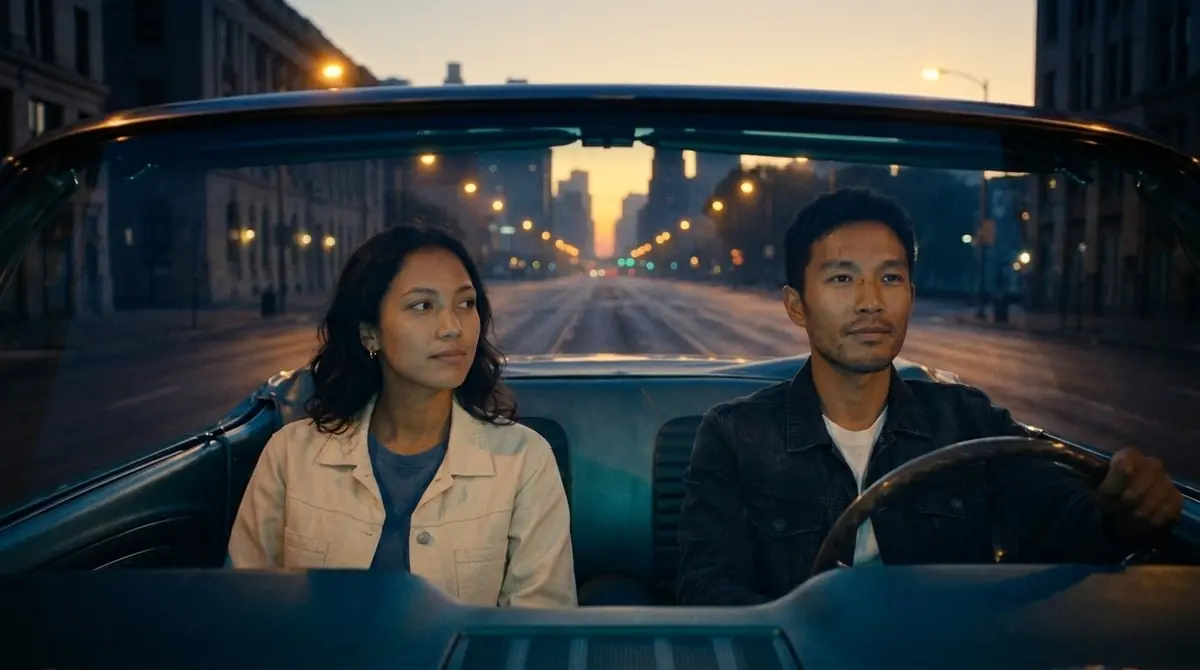
Bridge. The turn. Strip it back in a coastal road at first light: one or two long shots and a new angle on two friends in their twenties, Noa (cream cropped jacket, gold hoops) and Eli (denim jacket, a scar through one eyebrow) while the song breathes.
Final chorus. Everything at full size, landing on the change: they pull over on the coast road and watch the sun come up.
Outro. Hold the last image. A paper cup on the dashboard that rattles with every bump. One final time, then out.
The look
Medium. A real photograph shot on 35mm film, natural skin texture, fine grain.
Palette. Faded film tones: mustard, teal and warm brown.
Light. Dashboard glow and passing street lamps, then real dawn. Every shot names where its light comes from.
Camera. Calm in the verses, moving in the choruses. Medium and close framings on the lead, wides to reset, and a new framing at every cut.
Faces. Quiet and natural, matching the song's mood.
Cast and wardrobe
Two friends in their twenties, Noa (cream cropped jacket, gold hoops) and Eli (denim jacket, a scar through one eyebrow). Describe the cast once, in a few fixed words for face, hair and wardrobe, and keep those exact words for every shot they appear in. A small cast reads better on screen than a crowd.
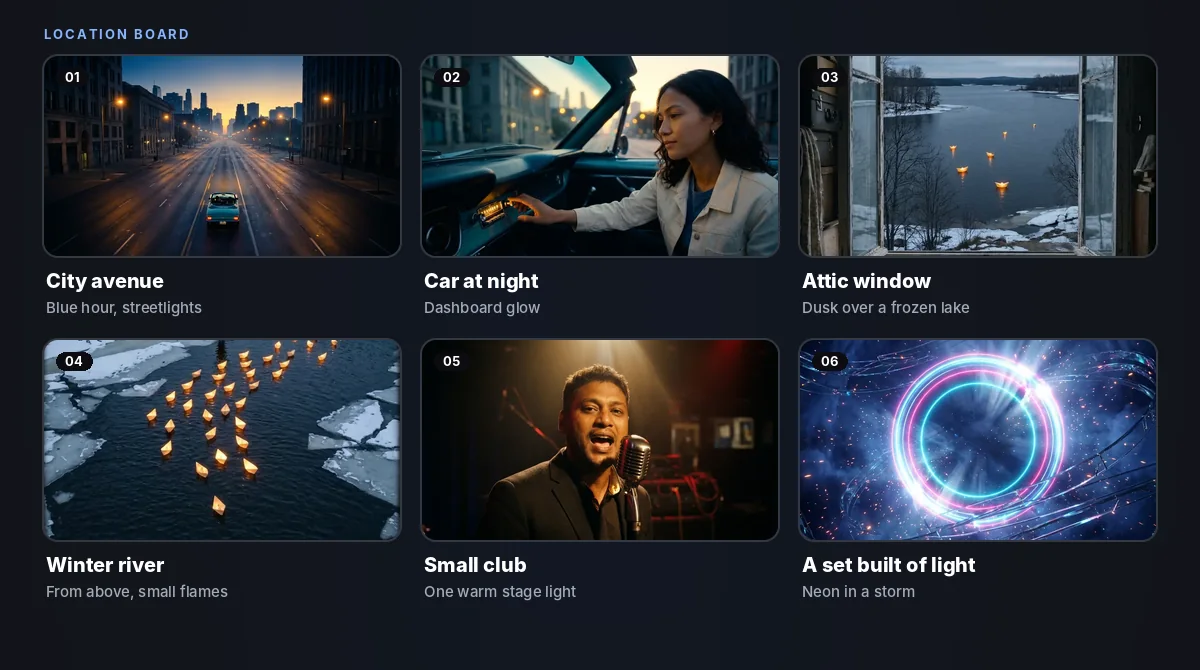
Locations
1. An empty gas station under buzzing strip lights. Where the video starts: the verses and the opening image.
2. A tunnel of orange sodium lamps. Where it moves to: the second verse and the build.
3. A coastal road at first light. Where it turns and lands: the bridge and the final chorus.
Key shots
• The hook (first seconds): an empty gas station under buzzing strip lights, wide and still, a paper cup on the dashboard that rattles with every bump catching the light.
• A detail: an insert of hands, an object or a texture from an empty gas station under buzzing strip lights that tells us who two friends in their twenties, Noa (cream cropped jacket, gold hoops) and Eli (denim jacket, a scar through one eyebrow) is.
• The chorus image: the roof comes down in the tunnel and the lamps strobe across their faces.
• The motif, changed: a paper cup on the dashboard that rattles with every bump in a tunnel of orange sodium lamps.
• The turn: two friends in their twenties, Noa (cream cropped jacket, gold hoops) and Eli (denim jacket, a scar through one eyebrow) alone in a coastal road at first light, framed in a way we haven't seen yet.
• The last image: they pull over on the coast road and watch the sun come up.
Pacing
At a steady Pop pace, a 2:56 song comes to roughly 52 shots (about one every 3.4 seconds on average): longer in the quiet parts, one bar or less in the choruses, and a cut at every section change and every drop.
Deliverables
• The full video in 16:9 for YouTube
• A vertical 9:16 cut of the hook for Shorts, Reels and TikTok
• A square 1:1 cut for feed posts
• An 8-second Spotify Canvas loop from the same world