The short answer
To get signed to a record label, give labels something to sign before you ask: release music regularly, build an audience you can show in numbers, and play live. Then reach labels through people they trust or through each label's own submission rules, with a short pitch and private links. Before you sign, understand the advance, recoupment, royalty, term and ownership, and have a music lawyer read the contract.
- Labels mostly sign artists who already have releases and a growing audience; a demo on its own rarely does it.
- Many labels don't take unsolicited demos: follow each label's own rules, or get introduced by someone it trusts.
- A deal is worth what its terms say, not its advance: recoupment, royalty, term, options and who owns the masters decide it.
- No legitimate label asks you to pay to submit music or to be signed.
- Staying independent is a real career, and the releases, numbers and videos that interest a label pay you meanwhile.
On this page (8 sections)ShowHide
What labels say they look for
Labels publish no checklist, but the people who sign artists say similar things. The UK's competition regulator, in its music and streaming market study of 2022, found that competition to sign artists is focused on those who are already popular or likely to be, and that the major labels' large advances attract proven, successful artists. A veteran A&R executive, Holly Hutchison, put it more bluntly in Music Week in April 2025: "The days of signing artists solely based on potential are fading", with data now used to spot rising talent that has real audience traction.
Independent labels describe it in their own words. Edition Records' submission policy says it looks for music that feels distinctive, well-shaped and creatively driven, with a strong artistic voice and an audience in mind, and weighs the story behind a project, the artist's profile and audience, and how the music might connect live and on streaming. The same page says it rarely works with an artist it has no knowledge of. Put together, the sources point to the same short list:
- Songs that sound like you. A clear identity in the writing and the production, not a good version of someone else.
- A release history. Several finished songs out over months, with a plan for the next ones.
- An audience that grows. Monthly listeners, saves, followers, subscribers and an email list, shown as numbers over time.
- A live show. A set you can play, and a few dates that sold tickets.
- A look. Releases whose cover, video and clips feel like one artist.
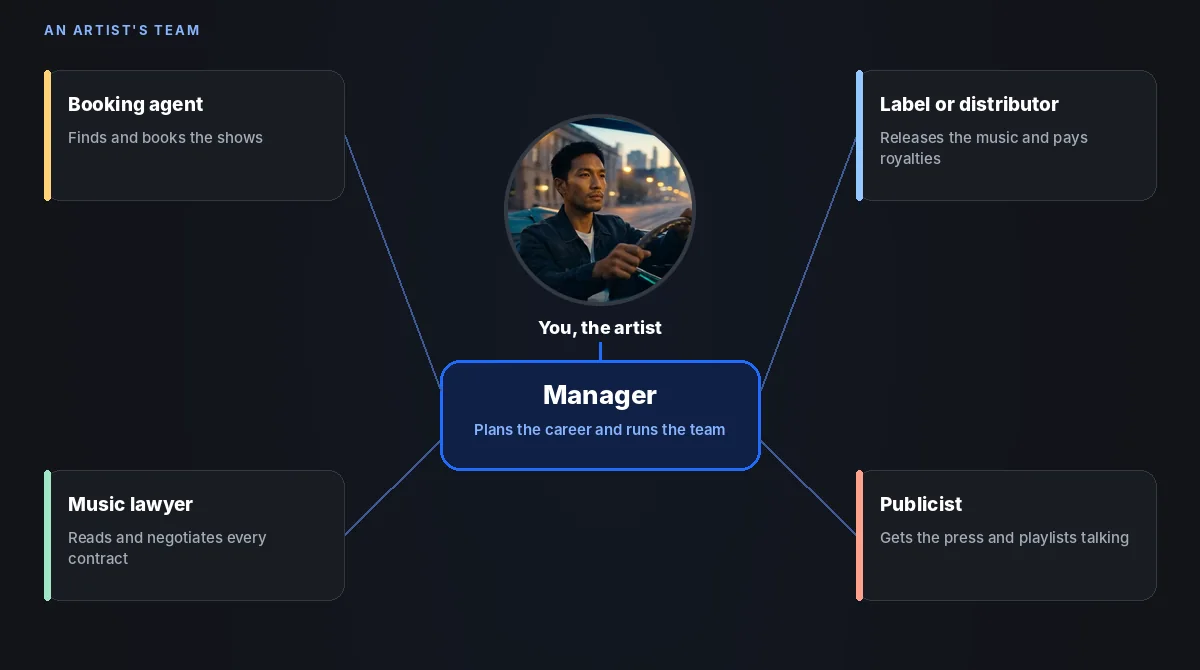
- People around you. A manager, a producer or other artists who can vouch for you, which is how many labels hear about anyone.
How to get signed, step by step
- 01
Finish songs that sound like you
Write and record until you have more finished songs than you need, and pick the ones that only you could have made rather than the ones closest to what's popular.
- 02
Release them on a schedule
Put out singles through a distributor every month or two, so there's a release history to look at and a reason for listeners to come back.
- 03
Give every release its visuals
Pair each single with a cover, a music video and vertical clips that share one look, so the project reads as an artist rather than a playlist of songs.
- 04
Measure the audience
Track monthly listeners, saves, followers and video views in Spotify for Artists and YouTube Studio each month, and note what moved them.
- 05
Play live and build a team
Play shows, find a manager if you can, and know which music lawyer you'd call before any contract arrives.
- 06
Make a press kit
Put your bio, the best two or three songs, the latest video, your numbers with dates, live dates and contacts on one page you can link.
- 07
Pick labels whose roster fits
List the labels that release artists near your sound and size, and read each one's submission rules before contacting it.
- 08
Approach them the way each label asks
Get introduced by someone the label trusts, or use its own form, with a short pitch and private links, and follow up once at most.
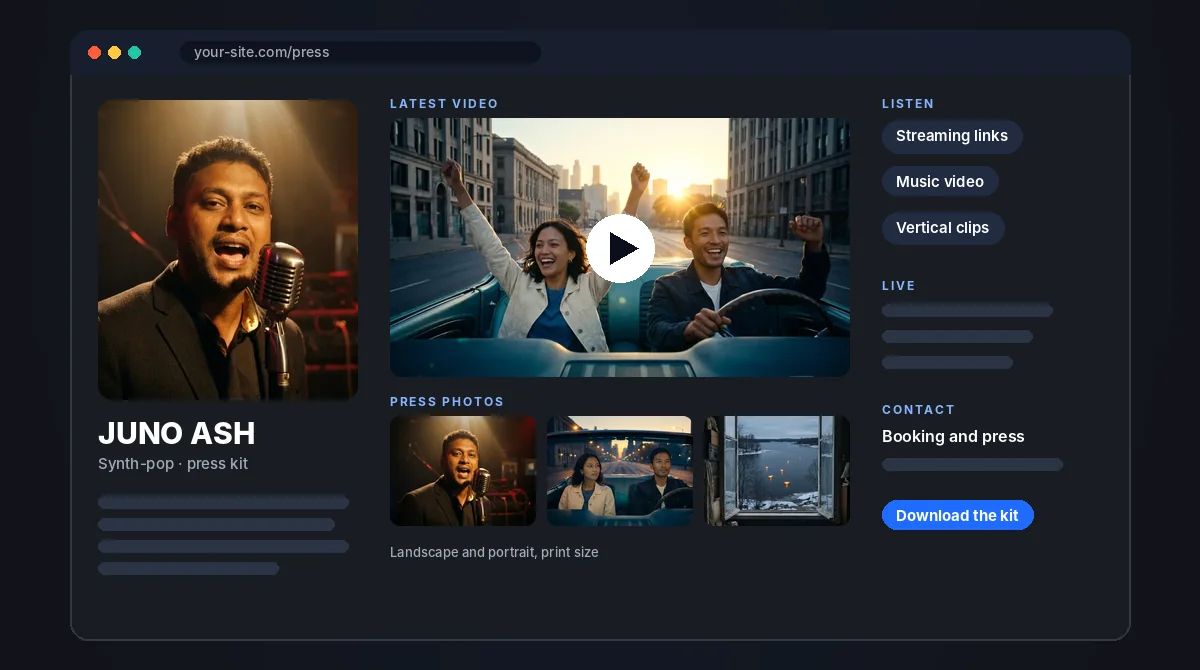
Give every release a music video
A label looks at the whole release, not just the audio. Upload your single and Muvora writes a storyboard on its beats for free, then renders the music video, the vertical clips and the Canvas from one render, priced before you pay.
How to approach a label
Start by assuming a label doesn't want a cold demo, and read its page to find out. Warner Music Group's FAQ says its record labels don't accept unsolicited material: a demo has to be recommended by an established industry professional, such as a manager, an agent, a lawyer, a journalist or one of its own artists. Independent labels vary. Joyful Noise Recordings' demo policy says that in more than ten years of taking unsolicited demos only one or two led to releases, that 99% of its new signings come through its existing roster, and suggests asking a mutual friend for an introduction instead. Edition Records takes submissions through a form only, not by email, and asks people not to resubmit or chase.
| Send | Why | Leave out |
|---|---|---|
| One line about who you are and what you sound like | Whoever reads it decides in seconds whether to press play | Your life story; it belongs in the press kit |
| Two or three finished songs as private streaming links | A link opens on any device and shows the plays are real | Attachments, unless the label asks for files |
| The latest music video | It shows the look and how the artist comes across | A reel of every clip you've made |
| Your numbers, with dates | Growth over months says more than a total | Screenshots without dates, and anything inflated |
| What's next: the release plan and live dates | A label signs a future, not just a past | Plans that depend on the label saying yes |
| A link to your press kit and your contact | Everything else in one place | A mass email to many labels at once |
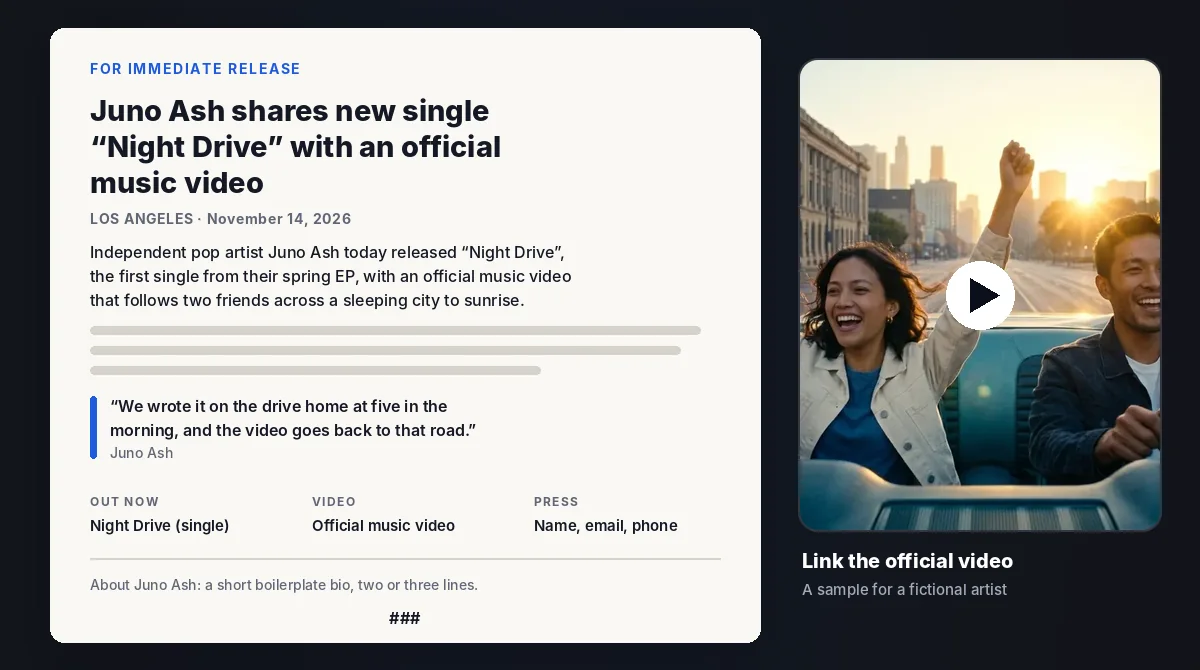
Introductions come from the work you're already doing: producers and engineers who work with signed artists, the support slot on a label act's show, a manager, a journalist who liked the last single. How to make an EPK covers the press kit in full, how to write a music press release the announcement for a release, and the artist bio generator turns your facts into bios of every length.
Skip the blank page
Upload your song and Muvora's AI director plans a shot-by-shot storyboard on the beat. Edit every shot for free, and pay only if you render.
The kinds of record deal
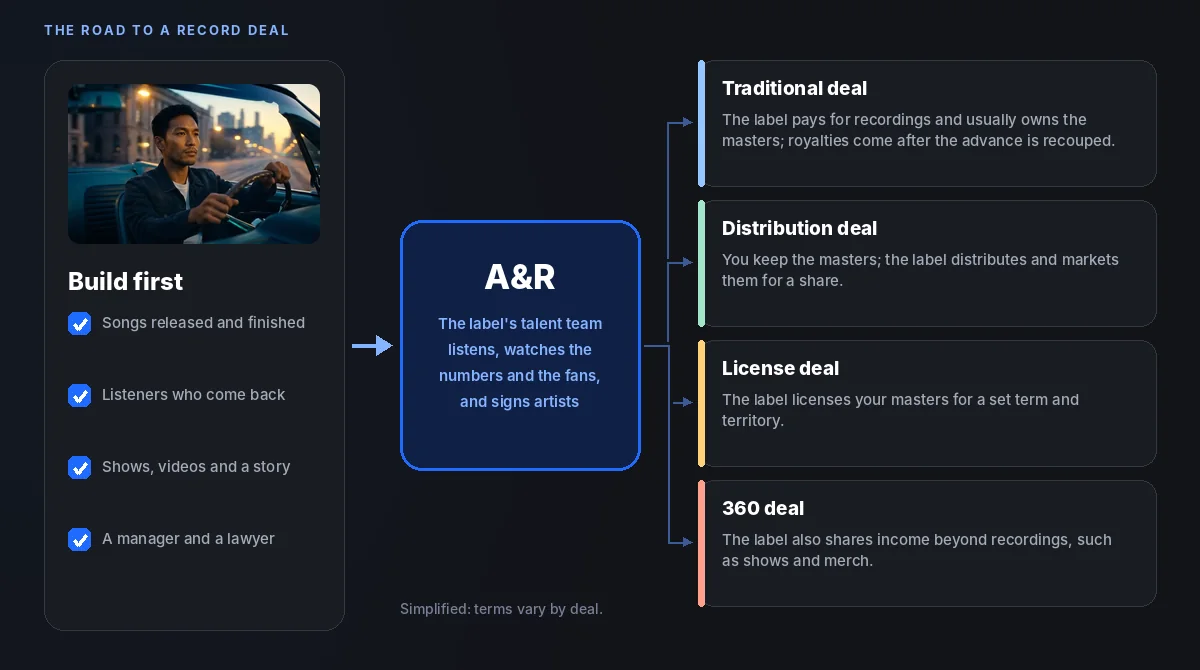
This is general information, not legal advice. The UK regulator's final report groups the deals on offer into three broad structures (traditional record deals, artist and label services, and distribution only), with variations inside the first: royalty deals, profit shares and 360 deals. It also notes that the terms within any structure can vary substantially and the boundaries blur, so read the table as a map of the shapes, not as the terms of any deal you'll be offered.
| Deal | What the label does | Who owns the masters | Money up front | How long it ties you |
|---|---|---|---|---|
| Traditional record deal | Funds recording, marketing and promotion, and distributes | Often the label, sometimes for a long period or for good | An advance, recouped from your royalties | Several commitment periods, continued at the label's option |
| 360 deal | A traditional deal that also takes a share of income beyond recordings | As in a traditional deal | An advance | As in a traditional deal, with touring, merch or publishing shared too |
| Profit split or joint venture | Takes costs off the income and splits what's left, sometimes through a label you co-own | Agreed deal by deal | Varies | Agreed deal by deal |
| License deal | Releases and markets recordings you own, for an agreed time and territory | You | Usually smaller than a traditional advance | A set term, after which the rights come back |
| Artist and label services | Marketing, promotion and distribution services, often chosen piece by piece | You | Smaller advances, if any | Shorter terms, with higher royalties to you |
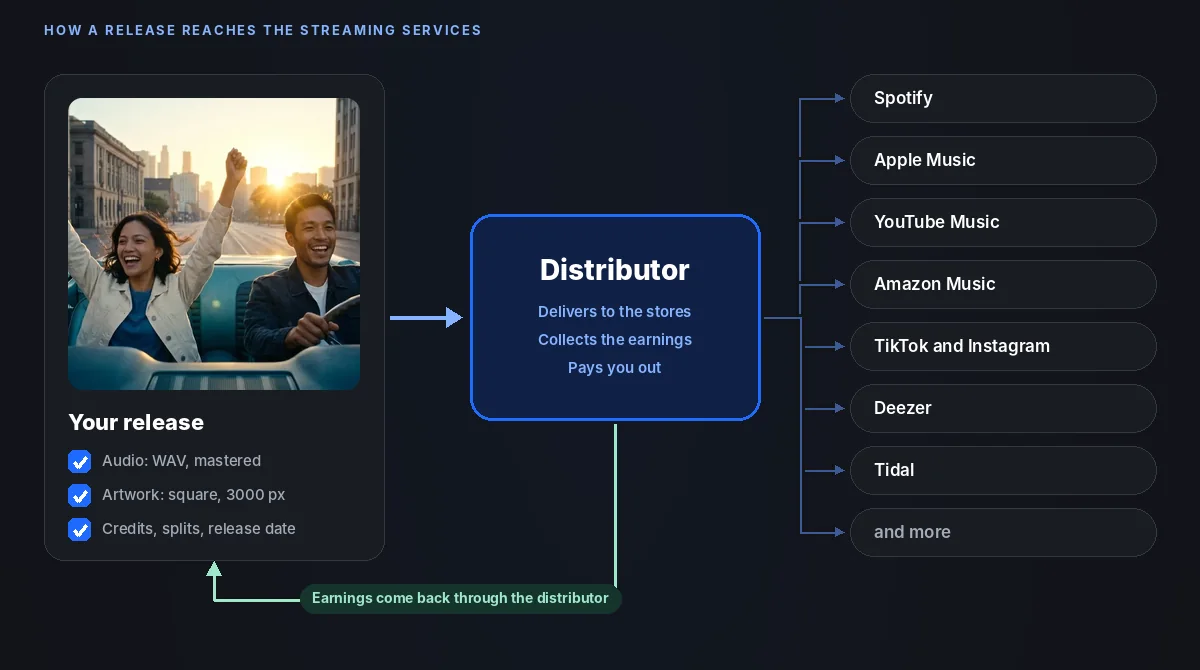
| Distribution only | Delivers your music to the services, with little else | You | None | As long as you keep the account, paid by a yearly or monthly fee or a share of earnings |
Deals have also got smaller in scope. The CMA found that the major labels' new artist contracts in the UK increasingly cover single tracks rather than albums, and that fewer of them give the label the recordings for good. A single deal can be a way for both sides to try each other out before anything longer.
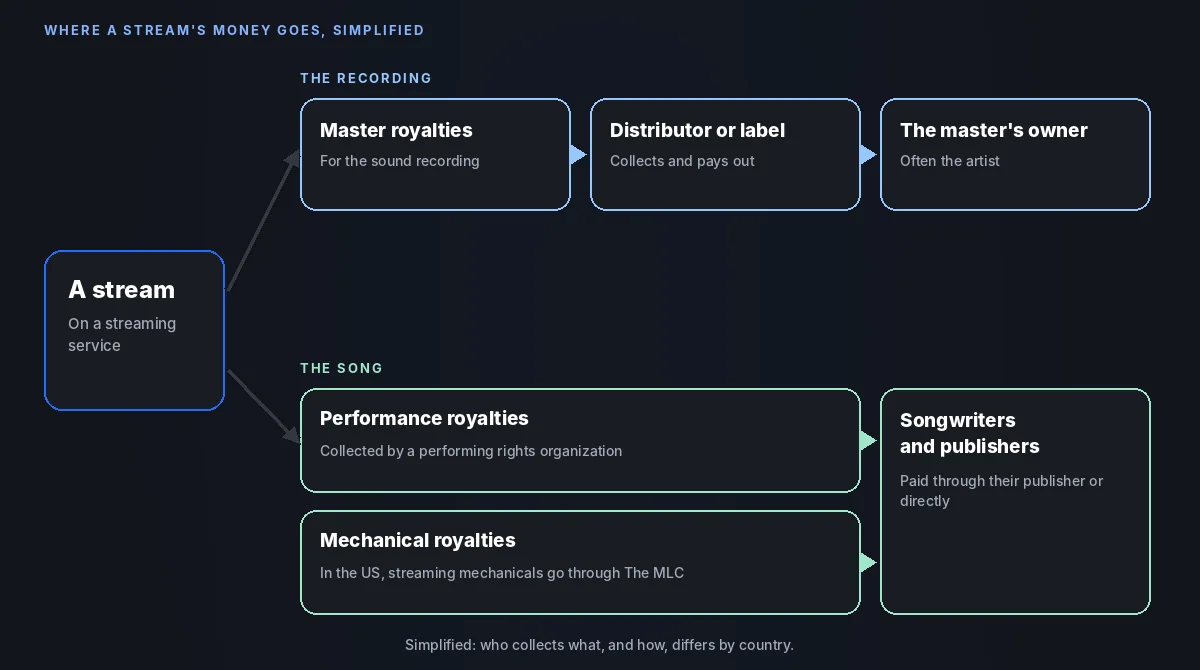
The terms to understand before you sign
The advance is the number people talk about, and the least useful one on its own. What a deal is worth comes from how the terms below fit together, and they trade against each other: the CMA notes trade-offs between the royalty rate, the minimum commitment and the marketing support a label offers.
- Advance
- Money paid up front against your future royalties. It isn't a fee: the label takes it back out of what your music earns before you're paid anything more.
- Recoupment
- The label paying itself back. Your royalties go toward the advance and the other recoupable costs until they're covered; only then do royalties reach you.
- Recoupable costs
- The costs a contract lets the label recover from your royalties. The CMA lists advances, recording, video and TV advertising, tour support and legal fees as typical, with video and TV costs usually only partly recoupable.
- Royalty rate
- Your percentage of what the label receives for the recordings, before costs are taken back. Producers are often paid points out of it.
- Commitment period
- One stage of the deal, usually tied to delivering an album or a set number of tracks. The deal's term is counted in these periods.
- Options
- The label's right, not yours, to extend the deal by a further commitment period, usually decided after each one.
- Territory
- The countries the deal covers. A worldwide deal means you can't make a separate deal anywhere else for those recordings.
- Rights in the masters
- Who owns the recordings made under the deal, and for how long: the term of the deal, a set number of years after it, or for good.
- Reversion
- The rights in your recordings coming back to you, after a set period or when a condition in the contract is met.
- Cross-collateralization
- Recouping one release's costs from another release's royalties, so a later success pays off an earlier release before you see its money.
- 360 participation
- The label's share of income outside recordings, such as touring, merch, publishing or brand deals.
- Creative approval
- Who signs off on the songs, the artwork, the videos and the release dates. Put what you need in writing.
| Term | 2012 | 2017 | 2019 | 2021 |
|---|---|---|---|---|
| Average gross royalty rate | 19.7% | 21.4% | 21.9% | 23.3% |
| Average minimum number of commitment periods | 3.8 | 3.3 | 3.4 | 3.0 |
| Contracts where the label owns the recordings for good | 66.0% | 45.5% | 44.7% | 26.4% |
| Estimated years the label keeps the copyright after the contract ends | 50.4 | 38.9 | 39.3 | 30.0 |
Two details in the same report are worth knowing. The royalty rates above are gross: the CMA says producer royalties of around 3 to 5% are typically deducted from them. And an artist on a traditional deal is paid royalties directly only once the upfront commitment has been fully recouped, which is why a large advance can mean years of statements with nothing to collect.
Getting rights back can also come from the law, not just the contract. In the US, the Copyright Office's page on notices of termination explains that authors can, under certain conditions, end a transfer of their copyright during set windows long after it was made; the same page says grants involving a work made for hire can't be terminated this way. Whether that could ever apply to your recordings is a question for a lawyer, and a reason to read how a contract describes them.
Red flags
The clearest one is money flowing the wrong way. Warner Music Group's FAQ says it is against its policy for its employees to ask for or accept any fee for submitting a demo or signing a contract, and warns of people impersonating its staff to scam artists. A label invests in you; it doesn't charge you to be considered.
- A fee to submit music, to be considered or to be signed
- Contact from a label's name through a personal email address or a new social account you can't check on the label's own site
- Pressure to sign quickly, or reluctance to let your lawyer read the contract
- Ownership of your recordings for good, with no reversion, in return for little money or support
- A share of your touring, merch or publishing with nothing offered to grow them
- Options that let the label hold you for many albums while you can't leave
- Recoupable costs left vague, such as anything the label decides is reasonable
- Promises of playlist placements, streams or chart positions
- A 'label' whose real business is selling you promotion packages
Not every hard term is a red flag: a label paying a large advance will ask for more in return. The warning sign is a mismatch, such as long ownership and a share of everything in exchange for little investment, or terms nobody will explain.
Staying independent is a real option
The CMA's executive summary found that the number of creators releasing music in the UK doubled from 200,000 in 2014 to 400,000 in 2020, that it's easier than ever to put music on streaming services without a label, and that artists have more choice of deal than before: distribution on their own, artist and label services, or a traditional record deal. Hutchison's Music Week piece makes the same point from the A&R side, arguing that many of the functions labels used to handle can now be managed independently.
| What a label can bring | How independent artists cover it |
|---|---|
| Money up front | Their own budget, grants, fan funding, or a smaller advance from a services deal |
| A marketing and promotion team | A release plan of their own, freelancers hired per release, and a services company |
| Relationships with editors, radio and press | Pitching through Spotify for Artists, a publicist hired per campaign |
| Distribution | A distributor, keeping the masters and the master income |
| Video budgets | Videos made for less, from a phone shoot to an AI-made video planned from the song |
| Time to focus on music | Fewer obligations to anyone else, and more of the business to run |
The work in this guide pays either way. A release history, a growing audience and a strong look are what labels say they want, and they're also how an independent artist earns. How to release music independently lays out the release plan, how to choose a music distributor the first decision, and how to make money from music every income stream an independent artist has.
A video for every release, signed or not
Whichever path you take, each release needs visuals: a music video for YouTube, vertical clips for Shorts, Reels and TikTok, a Spotify Canvas. They're part of what A&R looks at, and they're often what a filmed budget doesn't stretch to for every single. Muvora makes them from the song itself: it finds the beats, sections and drops, an AI director writes a storyboard you edit for free, and one render gives the 16:9 video, a 9:16 cut, a square post and an 8-second Canvas, every cut on the beat and your master as the untouched soundtrack.
- Priced before it renders. Rendering costs credits per finished second, from 38 a second, and the exact price shows before you click Generate; failed shots cost nothing.
- Yours to use. Muvora claims no ownership of the videos it makes, so you can use them commercially when you have the rights to the song.
- Check who owns the song first. If you sign, your label may own the recordings and decide on their videos; you confirm you have the rights before every upload, so ask the label first.
- For labels too. A label with many releases can storyboard each one and see the price before it commits; music videos for record labels explains how that works and what Muvora doesn't offer.
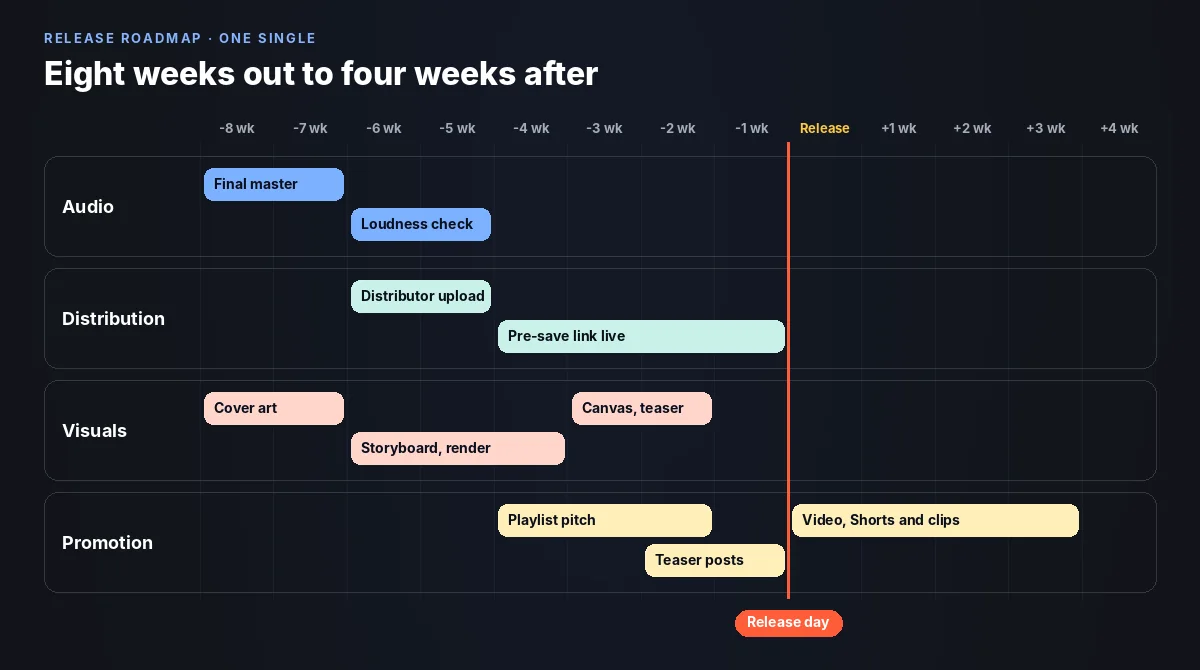
Make the next release's video
Upload the single you're pitching or releasing next. Muvora plans every shot on the beat in a free storyboard (5 new storyboards a month on the free plan), so you can read it, change it and see the price before you render.
Written by the Muvora team. Last updated November 17, 2026. Spotted something out of date? Tell us at [email protected].