The short answer
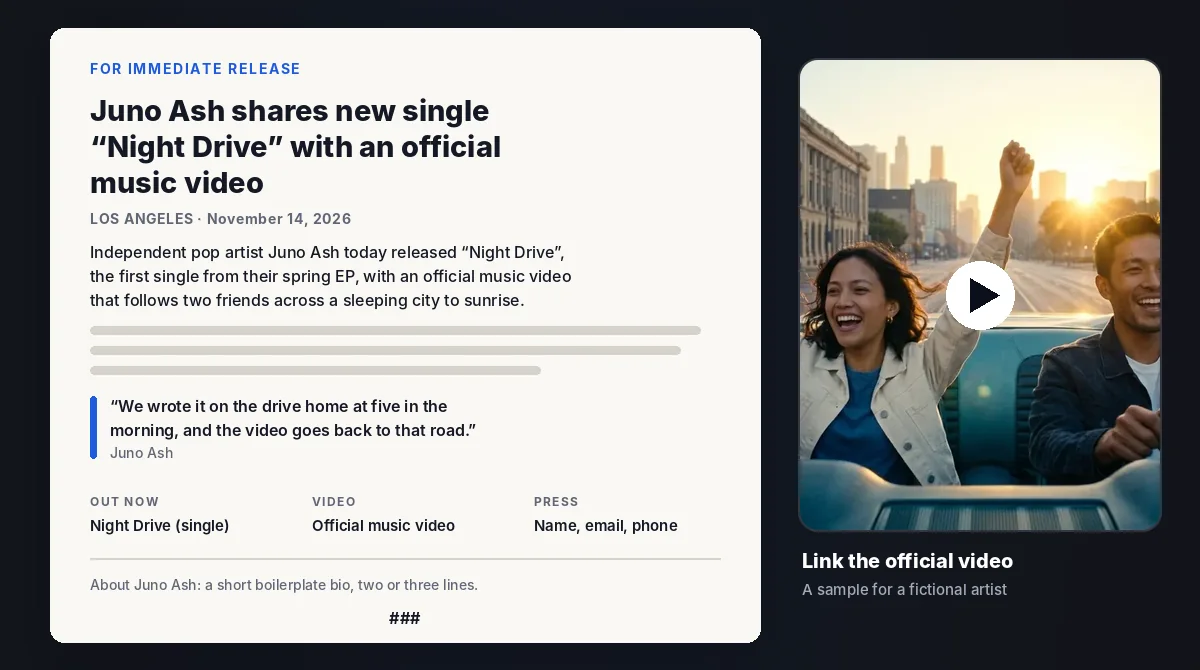
A music press release is a one-page announcement of one piece of news, such as a single, an EP or a music video. Put FOR IMMEDIATE RELEASE or an embargo at the top, then a headline naming the artist and release, a dateline and a first paragraph saying who, what and when, the story, a real quote, the details and links, a short bio, a contact and ###.
- One release, one piece of news, one page.
- The headline and the first paragraph carry the news: who, what and when.
- Quote the artist's own words, never lines written to sound like a review.
- Link the music, the music video and the press kit instead of attaching files.
- Send it a few weeks before release day, then follow up once with something new.
On this page (10 sections)ShowHide
- 1.What a music press release is, and when you need one
- 2.How to write a music press release in seven steps
- 3.The layout, part by part
- 4.How to write the headline and the first paragraph
- 5.The quote: one line that sounds like a person
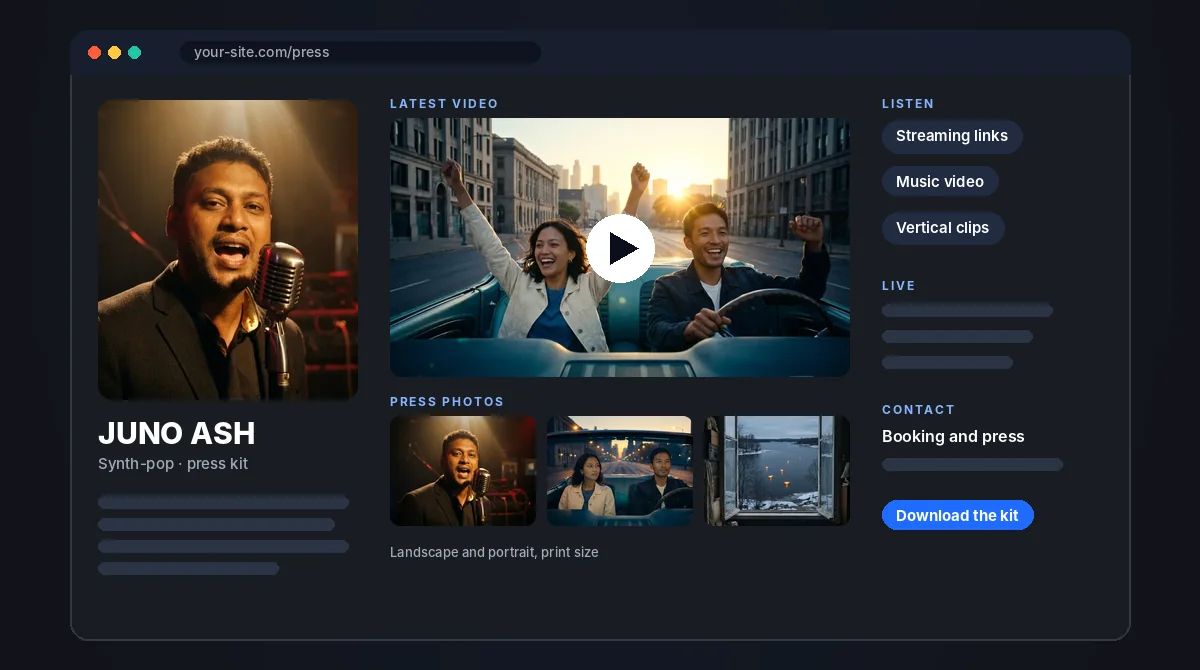
- 6.What to link: the music, the video, photos and the press kit
- 7.Who to send it to, and when
- 8.A sample music press release (for a fictional band)
- 9.Mistakes that get a press release skipped
- 10.Following up without being a nuisance
- Questions
What a music press release is, and when you need one
A press release announces one thing that is happening, with a date. That's what separates it from the other words a musician keeps on file: an artist bio describes who you are and barely changes between releases, and an electronic press kit is the standing page with your photos, music and contact. The press release is the news itself, written so a writer can turn it into a post, a listing or an on-air mention without asking you anything.
| The news | What the headline leads with | Worth a release when |
|---|---|---|
| A new single | The artist, the title and the release date | It's the first single from a project, or there's a story or video behind it |
| An EP or album | The title, the date and the number of tracks | Almost always: it's the biggest news a project has |
| A music video | The song it's for and where it premieres | The video has a concept worth describing, or premieres somewhere |
| Tour or show dates | The cities, the venues and the on-sale date | There's more than one date, or a show is a milestone |
| A signing, a festival slot or a collaboration | Who, with whom, and what comes of it | It changes what the artist will release or where they'll play |
Not every update needs one. A new photo, a playlist add or a single show in your hometown is a social post. Keep press releases for news a writer could build a story on, and they'll keep opening yours.
How to write a music press release in seven steps
- 01
Pick the one piece of news
Decide what the release announces, such as the single, the video or the tour, and leave everything else for another day or a single line near the end.
- 02
Set the release line
Write FOR IMMEDIATE RELEASE at the top if it can be published at once, or EMBARGOED UNTIL with a date, a time and a time zone if coverage should wait for release day.
- 03
Write the headline and the hook
Name the artist, the release and the date in the headline, then add one line under it with the angle that makes this release different.
- 04
Answer who, what and when in the first paragraph
Start with the dateline (the city and the date), then say in one or two sentences who is releasing what, and when it comes out.
- 05
Tell the story and add the quote
Give two or three short paragraphs on where the music came from and what the video shows, then one quote in the artist's own words.
- 06
Add the details, links, bio and contact
List the title, type, date and credits, link the music, the video and the press kit, paste a short bio, and give one press contact with an email address.
- 07
End with ### and check it on a phone
Close with three hash marks, then read it on a phone: every link should open, every name should be spelled right and the whole release should fit one page.
Skip the blank page
Upload your song and Muvora's AI director plans a shot-by-shot storyboard on the beat. Edit every shot for free, and pay only if you render.
The layout, part by part
Writers read hundreds of these, and the layout is what lets them skim. Each part has one job, and they come in the same order every time, so a reader who only needs the date or the contact knows exactly where to look.
| Part | What it does | Keep it to |
|---|---|---|
| Release line | Says when it may be published: FOR IMMEDIATE RELEASE, or EMBARGOED UNTIL a date, time and zone | One line, in capitals |
| Headline | Names the artist and the news, with the date if it's still to come | One line, about 10 to 15 words |
| Hook (subheadline) | Gives the angle: what makes this release worth a story | One line |
| Dateline | The city the news comes from and the date the release goes out | A city in capitals and a date, before the first word |
| First paragraph (the lead) | Who is releasing what, and when | One or two sentences |
| Body | The story behind the music and the video | Two or three short paragraphs |
| Quote | The artist in their own words | One or two sentences |
| Release details and links | Title, type, date, credits, tracklist, and links to listen, watch and download | A short list |
| Boilerplate | A short bio under the heading “About” and the act's name | 50 to 80 words |
| Press contact | Who to write to, by name, with an email address | Two or three lines |
| ### | Marks the end, so nobody wonders if a page is missing | Centered, on its own line |
The boilerplate is the same short bio every time, updated when something changes, which is why it's worth writing carefully once. How to write an artist bio covers the short version that fits here, and the details list is where credits go, so every writer and producer is named the way they want to be.
How to write the headline and the first paragraph
The headline is the subject line's twin: if it doesn't say what's new, the rest isn't read. Name the artist first, then a plain verb (shares, releases, announces), then what it is and its title, and add the date when the release is still to come. Leave adjectives out of it, since they're the first thing an editor deletes.
| Weak | Better | Why |
|---|---|---|
| An exciting new chapter for The Paper Moths | The Paper Moths Announce New Single “Paper Boats,” Out February 12 | Says what and when instead of how to feel |
| The Paper Moths are back! | The Paper Moths Release New Single “Paper Boats” | The news is the release, not the return |
| “Paper Boats” music video | The Paper Moths Share Music Video for “Paper Boats” | A writer can't tell whose video it is |
The first paragraph starts with the dateline, the city in capitals and the date, followed by a dash and the lead. Journalists call the order that follows the inverted pyramid: the most important facts first, the background later, so an editor can cut from the bottom without losing the news. In practice that's one or two sentences answering who (the act and its genre), what (the release and its title) and when (the date), with the dateline saying where.
The hook under the headline is where the angle goes: the thing a writer could build a paragraph around. A song written in a parked car, a video shot on a frozen river, a first release in a new language. One concrete line beats three general ones.
The quote: one line that sounds like a person
Writers lift the quote straight into their posts, so it's the part of the release most likely to be published word for word. That's why it has to be real: something the artist would actually say about the song, in their own voice. “We're so excited to share this with you” is true of every release ever made and gives a writer nothing to use.
- Where it came from: the room, the night or the conversation that started the song.
- What it's about, in one sentence: the way you'd answer a friend who asked.
- One decision in the making: why a take was kept, a sound left in, a verse cut.
- What the video adds: why it's set where it is, or why it shows what it shows.
What to link: the music, the video, photos and the press kit
Everything a writer needs to cover the release should be one click from the page, and nothing should arrive as a heavy attachment. The links go in the details list near the end and, for the music and the video, in the email's opening lines too.
- A private stream of the unreleased song, or the pre-save link once it exists
- The music video, or its premiere date and a private link to watch it early
- Two or three press photos at print size, in landscape and portrait, credited to the photographer
- The cover art at full size
- Your press kit, with the long bio and every photo
- Lyrics, if the story is about the words
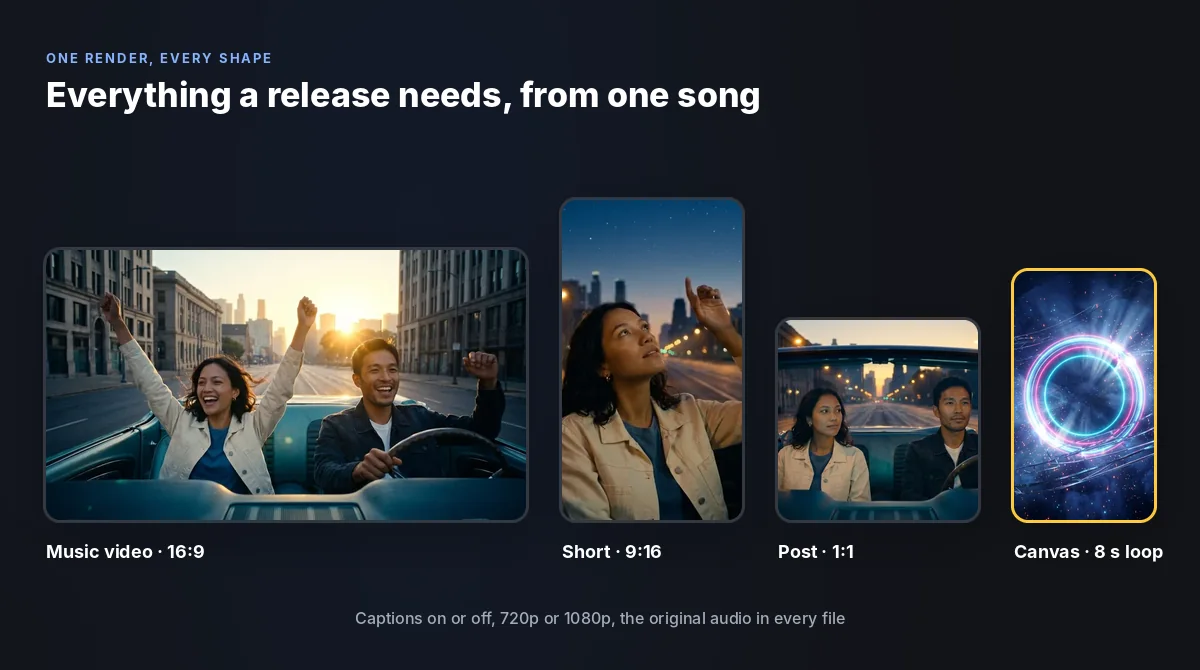
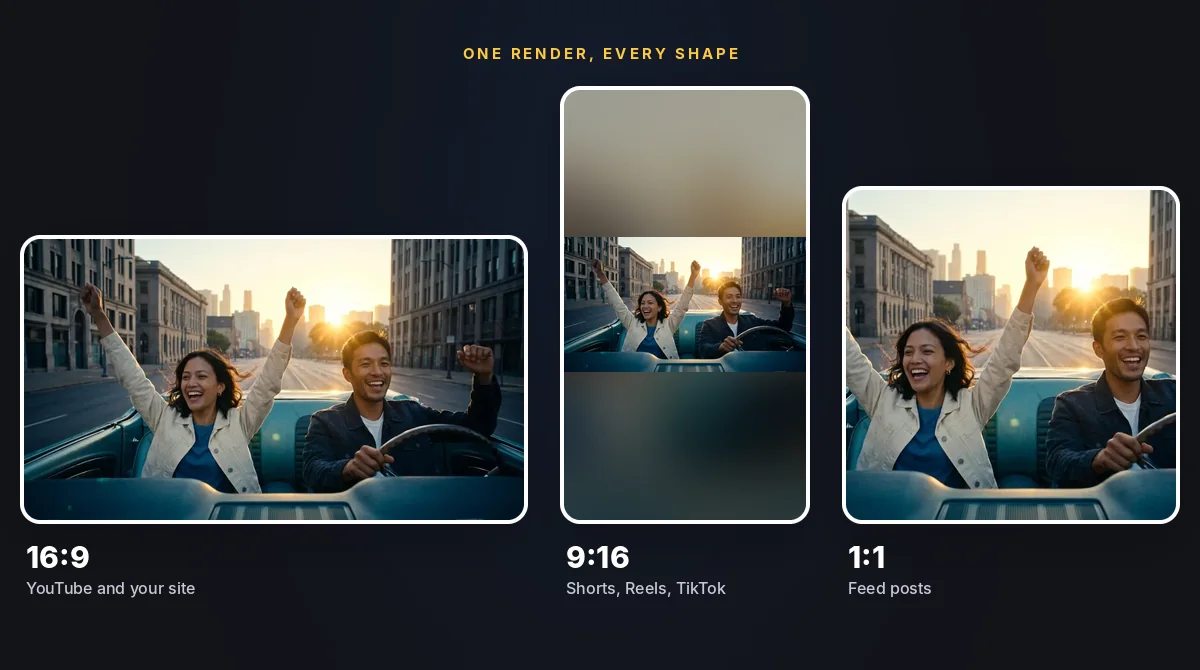
The music video does more work in a press release than any other link: a writer can embed it in the post, screenshot a frame for the header and judge the release before reading a word. If the single has no video yet, that's the gap to close before the release goes out. Muvora starts from the song: upload it, edit a storyboard planned on its beats for free, and render it once for the widescreen video plus vertical cuts and a Canvas loop for the same campaign.
Put a music video link in your press release
Upload the song and get a shot-by-shot storyboard timed to its beats, free to read and edit. Render once for the widescreen video, the vertical cuts and a Canvas loop, and see the price before you pay.
Who to send it to, and when
Send it to people who cover your kind of music: writers and blogs in your genre, local papers and radio near you and wherever you're touring, college and community radio, and newsletters that feature new releases. Find the person rather than the general inbox, read what they've covered lately, and say in the email's first line why this release suits them.
| When | What goes out | Why then |
|---|---|---|
| Six to eight weeks before | A short note to print magazines and long-lead outlets, if you're aiming at them | Print and monthly outlets often plan their pages weeks ahead |
| Three to four weeks before | The press release to blogs, writers and radio, often under an embargo | Time to listen, write and schedule a post for release day |
| Release day | The embargo lifts; send the release with live links to anyone new | Coverage lands while the song is new |
| A week after | One follow-up with something new, such as the video or a show | A second reason to write, not a reminder |
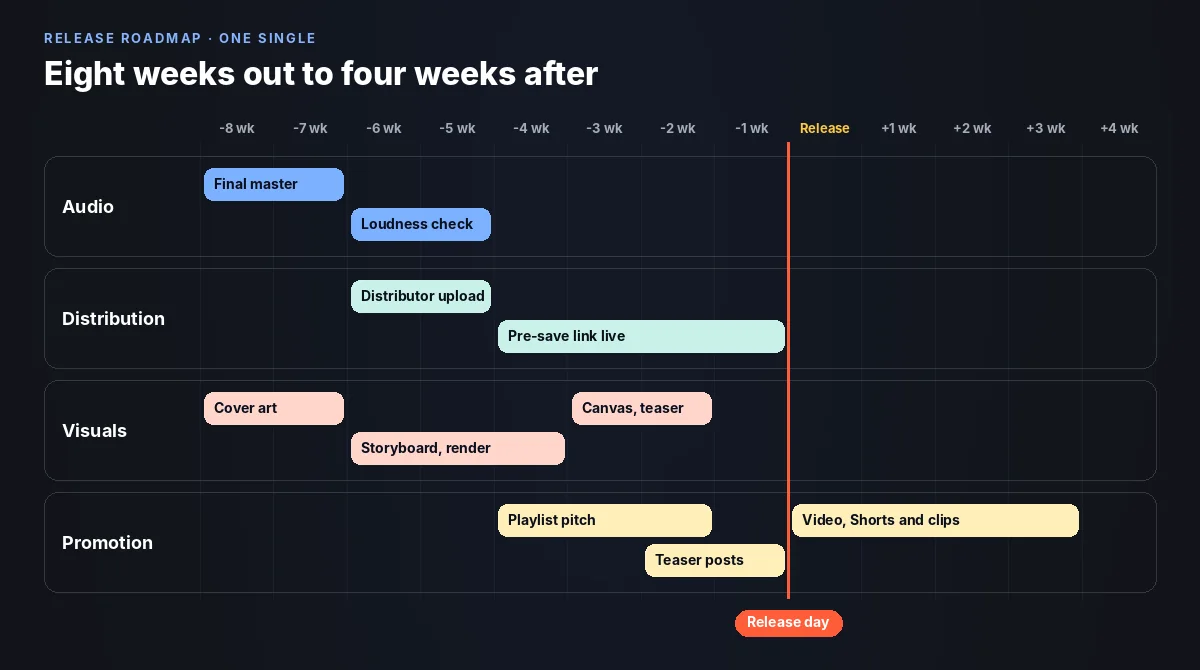
- 01
6 weeks out
- · Song mastered
- · Pick the visual idea
- · Storyboard drafted
- 02
4 weeks out
- · Pitch the song
- · Render the video
- · Cover art final
- 03
2 weeks out
- · Canvas uploaded
- · Vertical teasers cut
- · Lyric video ready
- 04
Release week
- · Premiere the video
- · Post a clip a day
- · Chapters and links set
The press release is one line in a longer plan. How to release music independently walks through the whole run from the master to the month after, and the release timeline planner turns a release date into dates for the press release, the video and the clips.
A sample music press release (for a fictional band)
Here is a complete press release for The Paper Moths, a made-up indie folk band, and their single “Paper Boats”. The names, people and links are invented, and the text is what the music press release generator writes from its example, dated three weeks before release day. Use it as a template: keep the order, replace every fact with your own.
| Part | Sample text |
|---|---|
| Release line | FOR IMMEDIATE RELEASE |
| Headline | The Paper Moths Announce New Single “Paper Boats,” Out February 12 |
| Hook | A winter ballad about letting go, with a music video set on a frozen river |
| Dateline and lead | GLASGOW, January 22, 2027 – Indie folk band The Paper Moths will release their new single, “Paper Boats,” on February 12, 2027. |
| Body | The band wrote “Paper Boats” over one January weekend in a rented cottage by a frozen lake, after a friend moved abroad. They recorded it live in the cottage's front room with two microphones, and kept the creak of the floorboards and the wind against the window. The music video follows the song's lead character, a woman in a mustard coat, as she sets small paper boats with candles in them onto a dark winter river and watches them drift out of sight. |
| Quote | “We wanted it to sound like the last cold morning before the thaw, so we left the room in the recording,” says singer Maya Ortiz. |
| Release details | Title: “Paper Boats” · Type: Single · Release date: February 12, 2027 · Genre: indie folk · Length: 3:52 · Self-released · The music video comes out the same day |
| Credits | Written by Maya Ortiz, Sam Reed and Theo Lin · Produced by Sam Reed · Mixed by Ana Ferro |
| Links | Pre-save, music video and press kit, each on its own line with its address |
| About The Paper Moths | The Paper Moths are an indie folk trio from Glasgow: Maya Ortiz (vocals, guitar), Sam Reed (bass) and Theo Lin (drums). They write slow, close-harmony songs about winter, water and leaving home. “Paper Boats” is the first single from their debut EP. |
| Press contact | Rory Banks · [email protected] |
| End | ### |

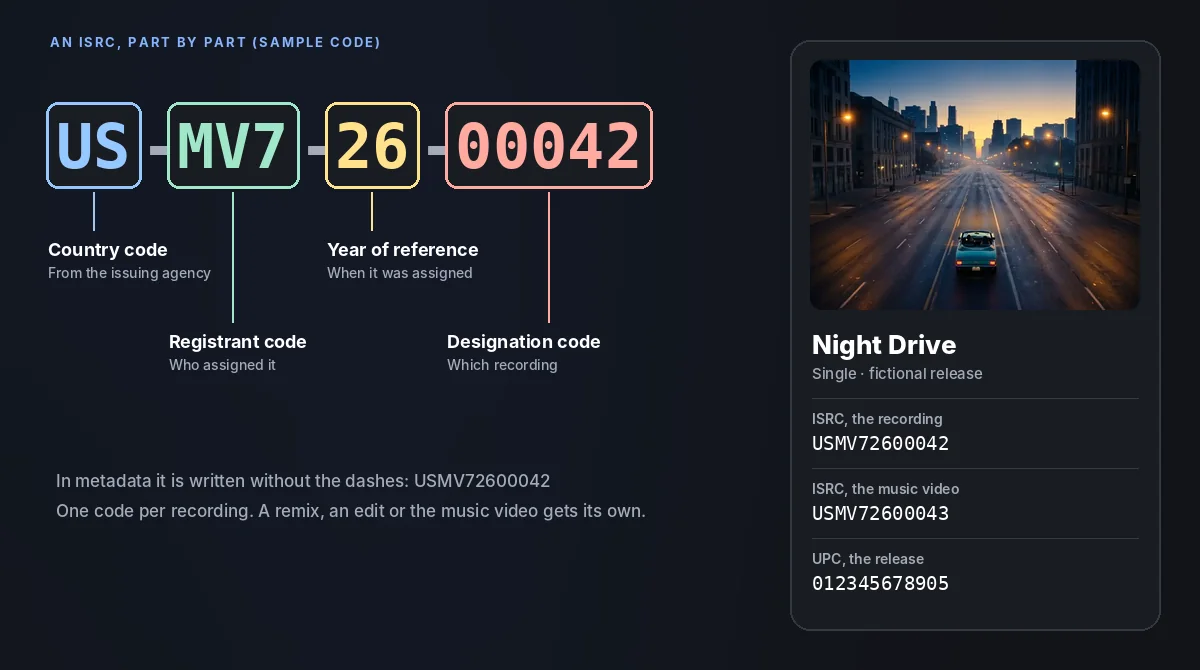
Notice what the sample leaves out. It has no adjectives about the song, no numbers that can't be checked and no codes a writer doesn't need: identifiers such as the ISRC go to your distributor, not to the press. Every sentence is a fact or the band's own words.
Mistakes that get a press release skipped
- Burying the news: three paragraphs of background before the title and the date appear.
- Praise instead of facts: “groundbreaking”, “genre-defying” and “a must-listen” read as filler to anyone who gets dozens of releases a day.
- Two pieces of news at once: a single, a tour and a merch drop in one release, so none of them gets a headline.
- Attachments: a WAV, a zip of photos or a PDF instead of text and links.
- Dead or private links: a stream that asks for a password nobody sent, or a video that isn't public yet without a private link.
- No contact: a writer with a question and nowhere to send it.
- A mass email: a hundred addresses in the To field, or “Dear blogger”.
- An embargo without a time zone: “until Friday” means different hours in Los Angeles and London.
Following up without being a nuisance
Follow up once, about a week after the first email, and only with something new: the music video is out, a date was added, the song made a playlist. A follow-up that only asks whether the first email arrived gives a writer no reason to answer; one with fresh news gives them a second chance to cover it.
- Reply in the same thread, so the original release is right there.
- Lead with the new thing in the first line, with its link.
- Keep it to three sentences and don't repeat the whole release.
- Stop after one follow-up. Try again with the next release, not the same one.
- Thank anyone who covers it, and share their post where your audience will see it.
Keep a simple list of who you sent it to, who replied and who covered it. The next release goes first to the people who wrote back, and the press kit gets their quotes, credited and linked.
Follow up with the music video
A finished video is the best follow-up there is. Upload your song for a free storyboard (the free plan includes 5 new storyboards a month), and choose the Performance style to lip-sync yourself into the video from one photo.
Written by the Muvora team. Last updated November 15, 2026. Spotted something out of date? Tell us at [email protected].