The short answer
A song is protected by copyright automatically once it is written down or recorded, in the US and in most other countries. In the US, registering it with the Copyright Office is what lets you sue for infringement and claim statutory damages and attorney's fees. Register online: pick the composition, the recording or both, fill in the claim, pay the filing fee and upload the song.
- Copyright starts when the song is fixed: a lyric sheet, a voice memo or a session file is enough.
- A recorded song is two works: the composition and the sound recording, often owned by different people.
- In the US, register before infringement starts (or within three months of publishing) to keep statutory damages and fees available.
- Mailing a song to yourself isn't registration, and neither is joining a PRO or getting an ISRC.
- Your music video is a work of its own; the song in it keeps its own copyrights.
On this page (10 sections)ShowHide
- 1.When a song is protected
- 2.The two works in a recorded song
- 3.Why US songwriters register
- 4.Which application fits your song
- 5.How to register a song, step by step
- 6.Outside the US: registration differs, and many countries have none
- 7.The poor man's copyright myth
- 8.The other paperwork: split sheets, PROs and ISRCs
- 9.Your music video's own copyright
- 10.A song copyright checklist
- Questions
When a song is protected
Copyright protects an original work from the moment it is fixed: put into a form that lasts long enough to be heard or read again. The US Copyright Office's page What is copyright? says protection begins as soon as an author fixes the work in a tangible form, and its Circular 1 adds that this happens automatically, with no registration or notice required. For a songwriter, fixed can mean a lyric sheet with the melody written out, a phone recording of you singing the hook, or a project file saved at the end of a session.
What isn't protected matters as much. A melody you hum and never record isn't fixed yet. A general idea (a breakup song set on a night bus) belongs to nobody. And the Office's FAQ on what copyright protects says names, titles, slogans and short phrases aren't covered, which is why two songs can share a title and why a band name is a trademark question, not a copyright one.
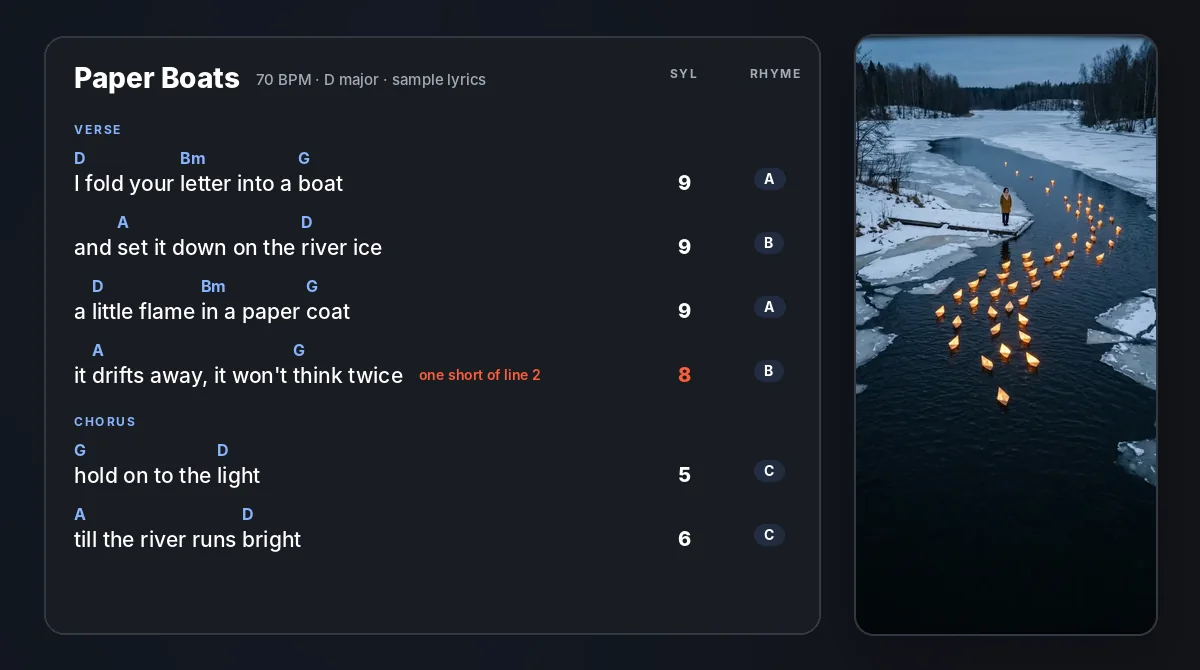
The two works in a recorded song
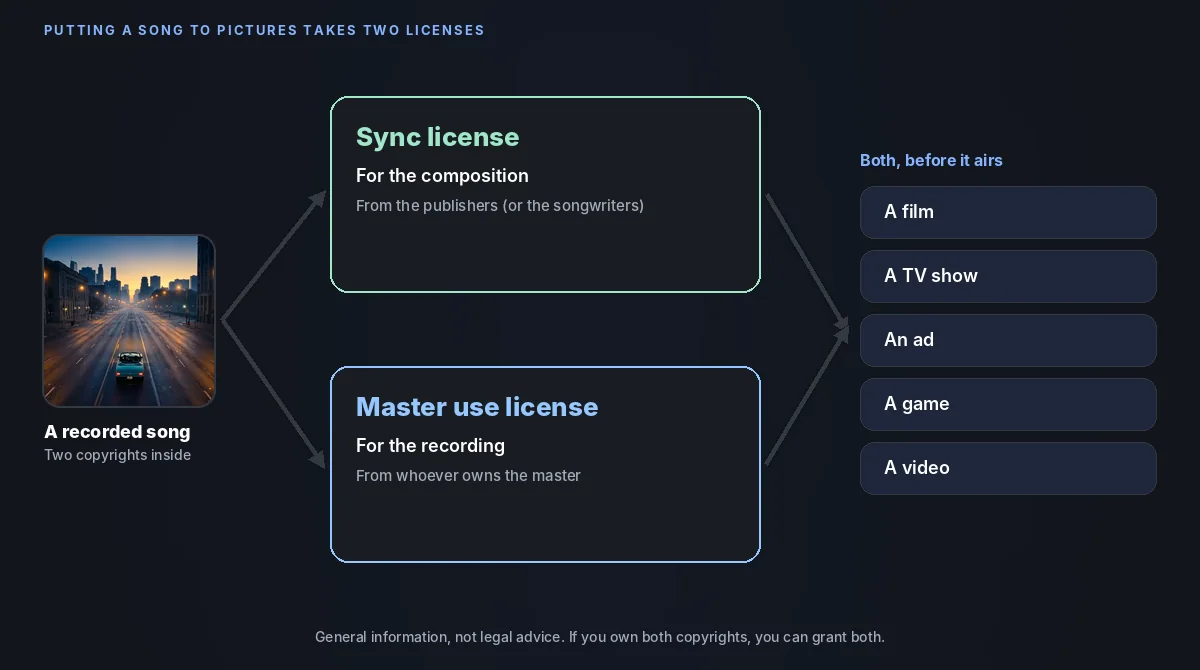
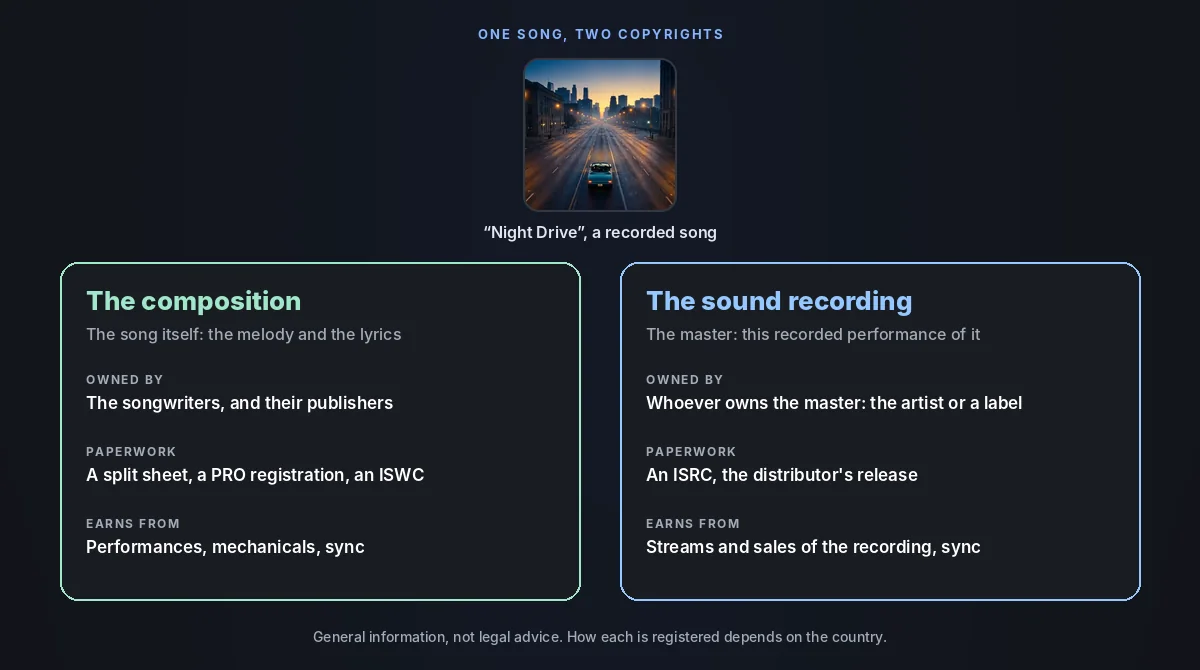
A finished track carries two copyrights at once. The musical work (the composition) is the song as written: its melody, its harmony and its lyrics. The sound recording (the master) is the particular performance captured in the file. The Copyright Office's Circular 56A treats them as separate works with separate owners, and they are registered, licensed and paid for separately.
| The composition | The sound recording | |
|---|---|---|
| What it covers | Melody, harmony as written, lyrics | One recorded performance of the song |
| Usually owned by | The songwriters, or their publisher if they signed one | Whoever made and paid for the recording: the artist, a producer or a label, by agreement |
| Notice symbol | ©, with the year and owner | ℗ (the phonogram symbol), with the year and owner |
| US registration type | A musical work (a work of the performing arts) | A sound recording |
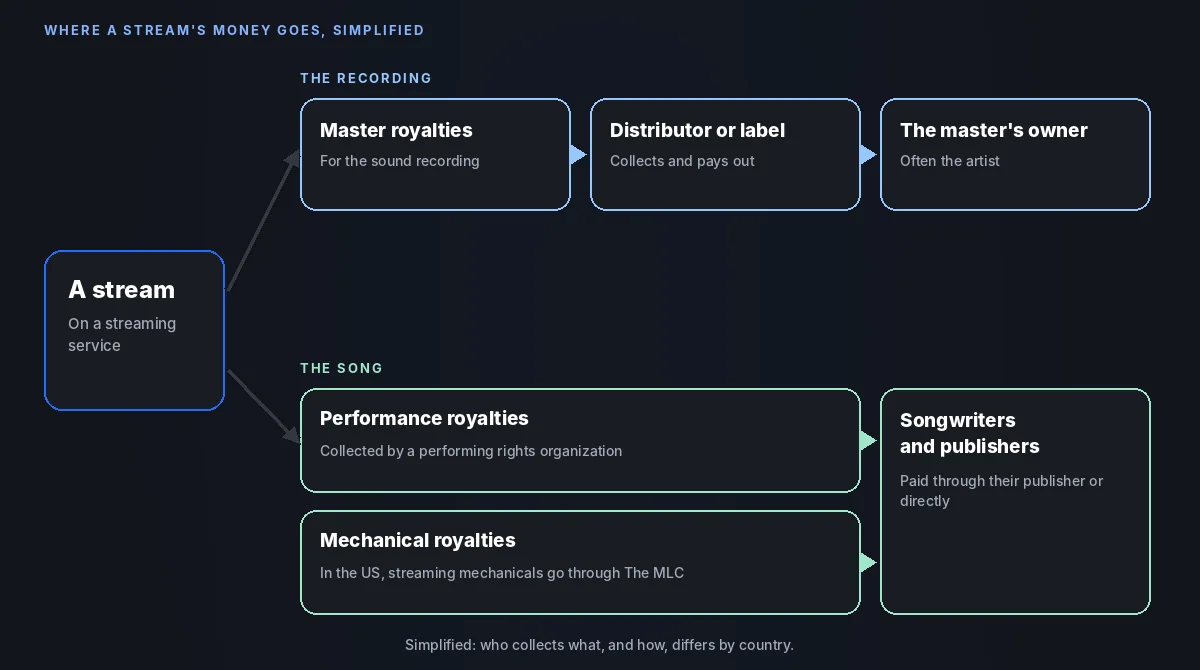
| Earns through | Performing rights organizations, mechanical royalties, sync licenses | Your distributor or label, and neighboring-rights collectors |
If you wrote the song alone and recorded it yourself, you own both. Most releases are messier: a co-writer owns part of the composition, a producer may own part of the recording under their agreement, and a label deal can move the master to the label. Write down who owns each side before you register anything, because the registration should name the same people your agreements do.
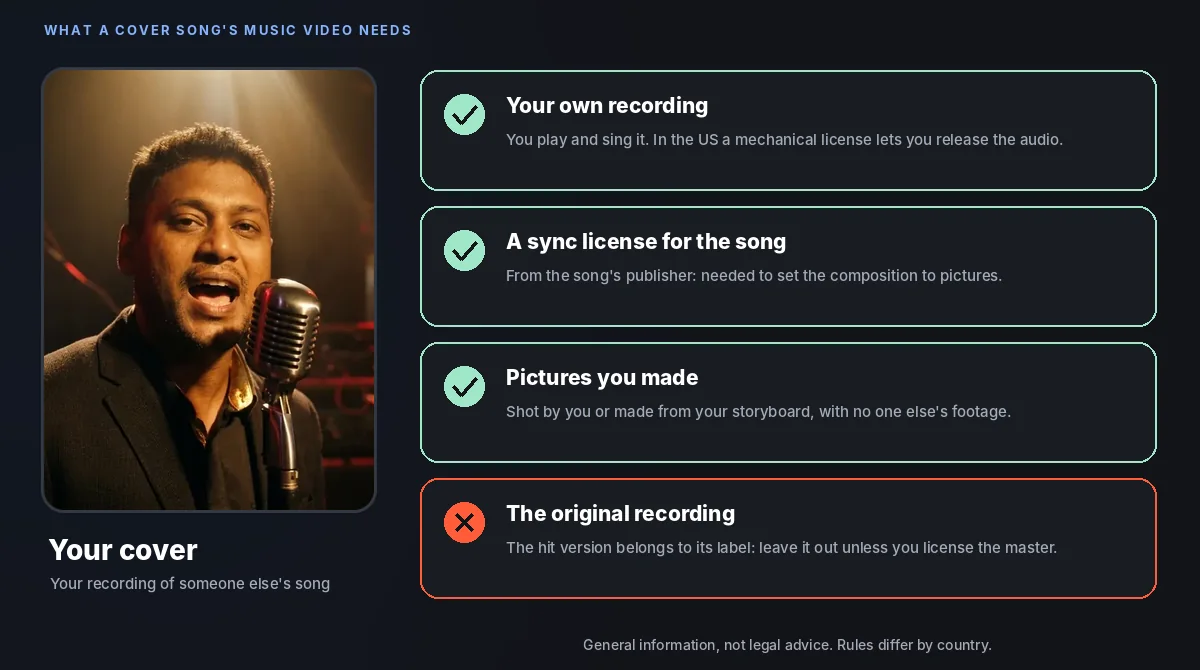
A cover shows the split clearly. Your recording of someone else's song gives you a sound recording of your own, but the composition stays with its writers, so you can't register their song as yours. What a cover, a sample or a leased beat needs before it goes in a video is covered in music video copyright.
Skip the blank page
Upload your song and Muvora's AI director plans a shot-by-shot storyboard on the beat. Edit every shot for free, and pay only if you render.
Why US songwriters register
Registration is optional: the song is protected either way. What registration changes is what you can do about copying. The Copyright Office's Circular 1 lists the benefits, and for a songwriter four of them carry the weight.
| Benefit | What it means for a song | Timing |
|---|---|---|
| You can sue | For a US work you generally need a registration, or the Office's refusal of one, before filing an infringement suit in federal court | Any time before you sue, though waiting costs you the next two rows |
| Statutory damages and attorney's fees | A court can award set damages and your legal costs without you proving exactly what the copying cost you | Only if the song was registered before the infringement began, or within three months of first publication |
| Evidence | The certificate counts as evidence that the copyright is valid and that its facts are true | If registered before, or within five years of, first publication |
| A public record | Anyone checking who owns the song can find your claim, your name and the year | From the effective date of registration |
The second row is why timing matters. Infringement cases are expensive, and statutory damages and fees are often what make one worth bringing for an independent writer. If someone copies an unregistered song, you can still register and sue afterwards for your actual damages and the copier's profits, but the statutory damages and fees for that copying are gone. Songs first published outside the US are treated differently under the rule about suing, so a writer abroad facing a US infringement should get advice there.
There's also a smaller venue. The Copyright Claims Board is the Office's small-claims tribunal, and the Office's registration toolkit notes that, unlike federal court, you can bring a claim there once you've registered the work or simply applied to.
Which application fits your song
The Copyright Office has several ways in, and choosing the right one decides both the filing fee and what the registration covers. Start from two questions: how many songs, and who owns the composition and the recording.
| Option | Fits | Limits |
|---|---|---|
| Single Application | One song written entirely by you, words and music, that you own outright | One work, one author who is also the only owner, not made for hire |
| Standard Application, musical work | A co-written song, or one owned by a publisher | One work; any number of authors and claimants |
| Standard Application, sound recording | A recording, or the recording and the song together | Both only if the same claimant owns both and they're on the same recording |
| Group of Unpublished Works | A batch of demos or unreleased songs | 2 to 10 unpublished works of the same kind, same author and claimant |
| Works on an Album of Music | The songs, or the recordings, of one released album | Up to 20 works published on the same album; compositions and recordings on separate applications |
The shortcut most self-releasing artists can use is in Circular 56A: when the same person or company owns both the composition and the recording, and both are embodied in the same recording, one application for the sound recording can register the two together, for one filing fee. If a co-writer owns part of the song but you own the master alone, the claimants differ, so the song and the recording go in separately.
The group options save money on a batch, with conditions. The Group of Unpublished Works takes unreleased material only, and its FAQ says you may also be able to include the songs embodied in up to ten recordings. The album option needs every work to come out on the same album. When in doubt, the Standard Application covers almost any single song.
How to register a song, step by step
- 01
Decide what you're registering
Choose the composition, the sound recording or both, and list who owns each side: every co-writer, any publisher, and whoever owns the master under your producer or label agreements.
- 02
Pick the application
Use the Single Application for a song you wrote and own entirely alone, a group option for a batch of unreleased songs or one album, and the Standard Application for anything else.
- 03
Sign in to the Copyright Office's online system
Start from the registration portal on copyright.gov and create an account. The Office is building a new system to replace its Electronic Copyright Office, so the screens may not match older tutorials.
- 04
Describe the work
Enter the title exactly as released, the year the song was finished, and whether and when it was published. If you aren't sure whether your release counts as publication, read the help text before you answer, since the date affects your benefits.
- 05
Name the authors, the claimant and what's excluded
List every author and what each contributed, name the owner as claimant, and exclude anything that isn't yours: a sample, an earlier version you already registered, or material an AI tool generated.
- 06
Pay the filing fee
Pay online with a card or a deposit account. The amount depends on the option you chose and is listed on the Office's fee page; the Single Application costs less than the Standard one.
- 07
Upload the deposit
Upload a complete copy of the song: the audio file for a recording, or a recording or score of the composition. Physical releases on CD or vinyl can need copies mailed instead, so follow what the application asks for.
- 08
Keep the case number and wait
Save the confirmation and case number with the song's master and split sheet. Answer any email from the examiner quickly, because a question pauses the claim until you reply.
On the deposit, the Office's circular on sound recordings strongly encourages a digital file uploaded online for recordings that are unpublished or were published only in digital form, which covers most streaming releases. Name the files clearly and upload the final master, not a rough mix.
How long it takes varies. The Office's annual report for fiscal 2025 put the average registration processing time at about two and a half months, and its processing times page says claims filed online are typically handled fastest, while ones that need correspondence take longer. The wait costs you less than it seems: the registration's effective date is the day the Office received your complete application, fee and deposit, not the day the certificate arrives.
Outside the US: registration differs, and many countries have none
Most countries belong to the Berne Convention, and WIPO's summary of the Convention lists "automatic" protection among its principles: protection can't depend on any formality. So a song written in Lagos, Manchester or Toronto is protected the same way, from the moment it's fixed. What differs is whether there's a register at all, and what it's worth.
- No register. The UK government's copyright guide says protection is automatic, that you don't apply or pay a fee, and that there is no register of copyright works in the UK. Many countries are the same.
- A voluntary register. Some countries keep one. The Canadian Intellectual Property Office runs a voluntary registration whose certificate counts as evidence that copyright exists and who owns it; it doesn't examine the claims it records. WIPO notes that voluntary registration systems are part of many national copyright laws, and they work differently from the US one.
- Collecting societies aren't registers. Registering a song with PRS, SOCAN, GEMA, APRA AMCOS or any performing rights organization tells it whom to pay when the song is played. It's essential paperwork, but it isn't a copyright registration and doesn't create or replace one.
- Private certificates. A website that sells a dated "copyright certificate" in a country with no register is selling a timestamped record of your file. That can help show when the song existed, but it isn't a government registration anywhere.
If your songs are mostly earned on and copied in the US, US registration can make sense even for a writer living elsewhere; if that's you, ask someone who knows both systems.
The poor man's copyright myth
The old advice goes: post yourself a copy of the song in a sealed envelope and never open it, and the postmark proves it's yours. The Copyright Office's general FAQ answers it directly: the copyright law has no provision for any such kind of protection, and it is not a substitute for registration.
An envelope can show that a copy existed on a date, if nobody questions how it was sealed. So can things you already have, and they're more convincing: the dated project file in your DAW, the voice memo on your phone, the email you sent a co-writer with the demo, and a split sheet signed on the day. Keep them. They help show when you wrote the song and who was in the room, but in the US none of them does what registration does in court.
The other paperwork: split sheets, PROs and ISRCs
Three other pieces of paperwork sit next to copyright in every release, and each does a job registration doesn't. None of them registers your copyright, and registration doesn't do their jobs either.
| Paperwork | What it does | Done with | A copyright registration? |
|---|---|---|---|
| Split sheet | Records each writer's share of the composition, adding up to 100% | Your co-writers, at the session | No, but your registration should match it |
| PRO registration | Tells the society whom to pay for performances of the song | ASCAP, BMI, PRS, SOCAN or your local society | No |
| The MLC (US) | Collects mechanical royalties from US streaming for songwriters | The MLC, or your publisher | No |
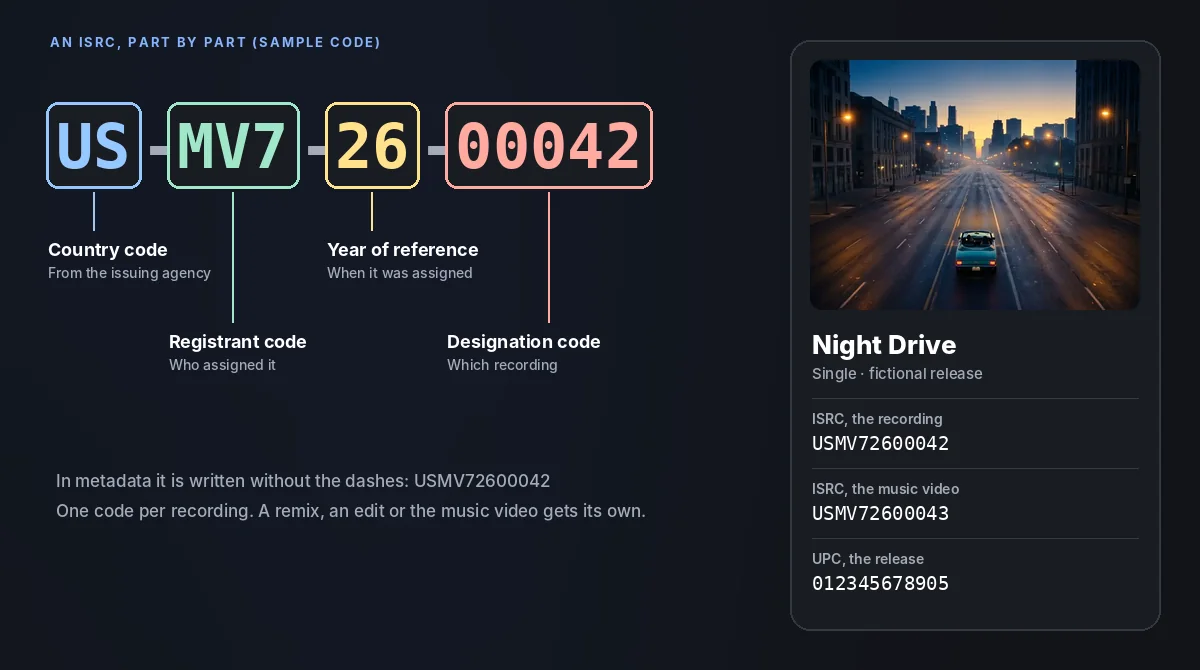
| ISRC | Identifies one recording so plays are counted against it | Your distributor, or a national ISRC agency | No |
| ℗ and © lines | State who owns the recording and the release on store pages | Your distributor's upload form | No, they're notices |
Do the split sheet first. A registration names the authors and the claimant, and a society pays by the shares it's given, so both should copy the signed sheet exactly. What is a split sheet explains how co-writers usually divide a song and register the shares, and what is an ISRC code covers the recording's identifier and when a remix or an edit needs a new one.
Split sheet generatorList every writer and their share until the total is exactly 100.00%, then print the sheet to sign. Register the song with the same names and shares.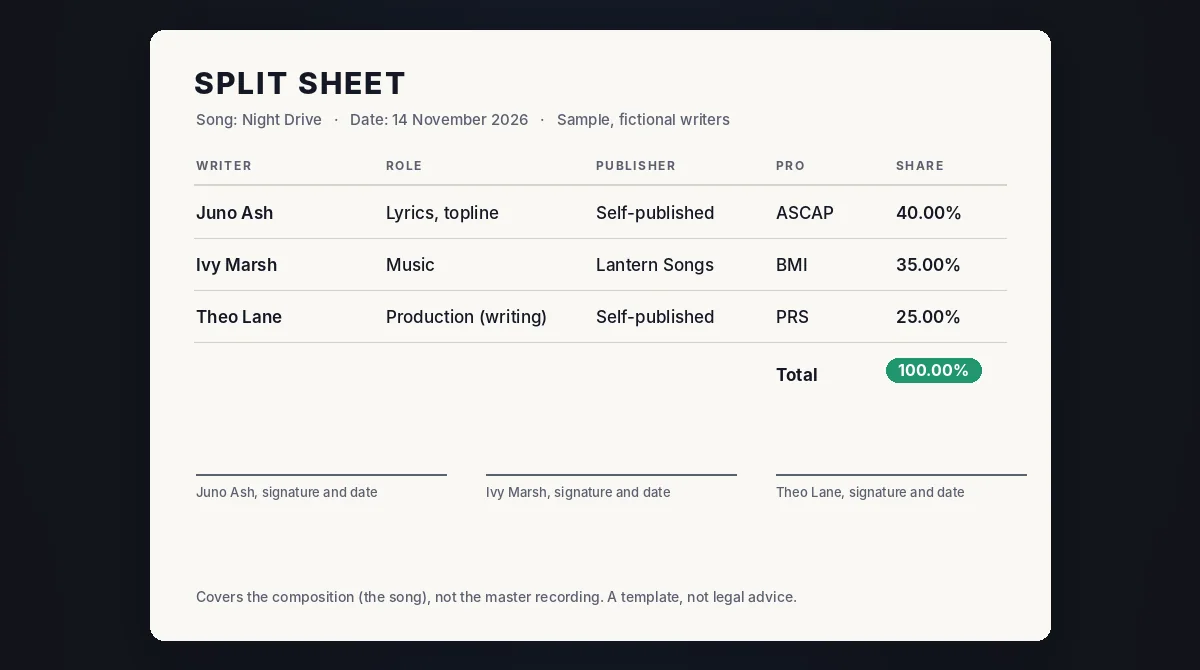
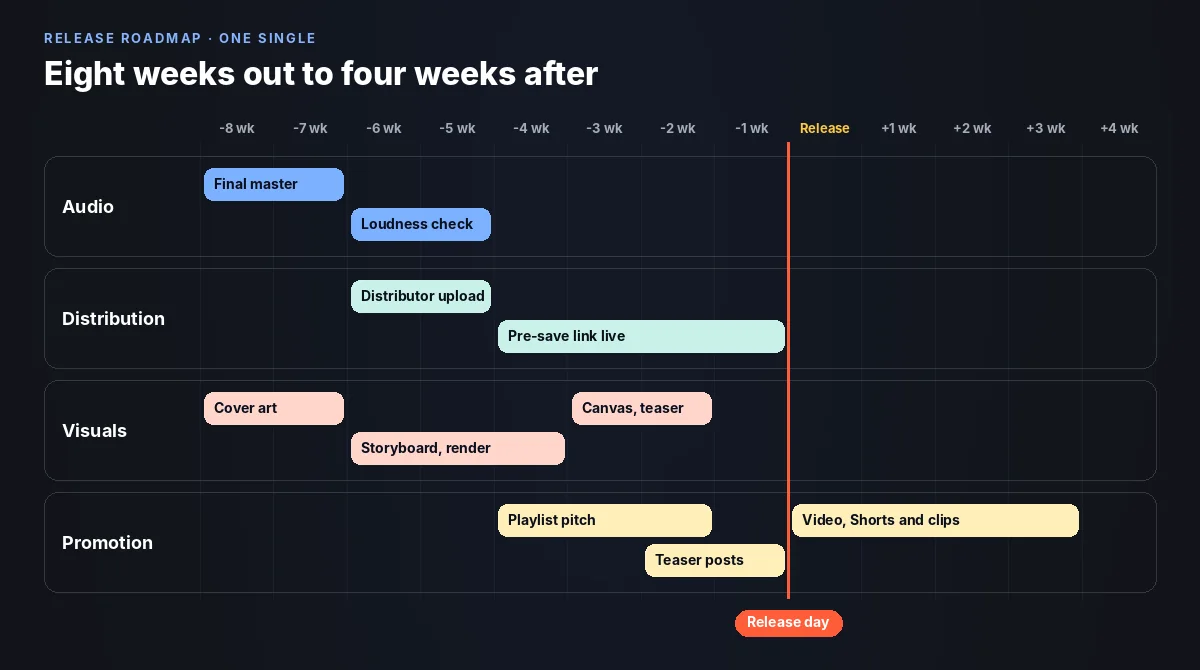
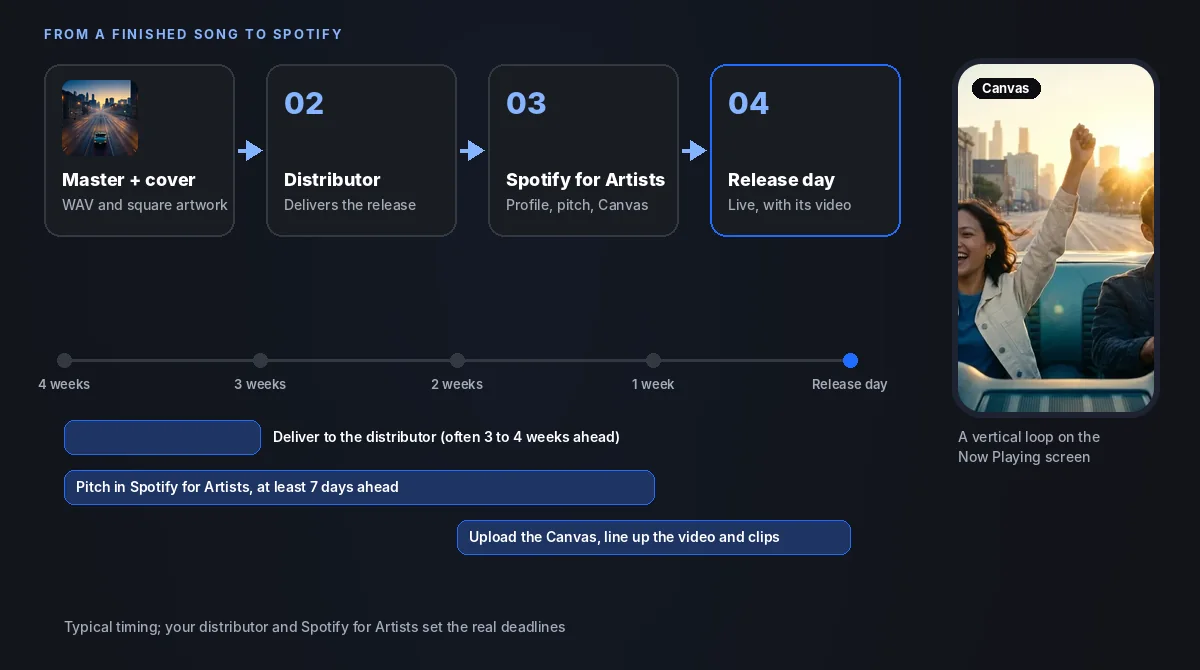
Where it all fits in a release, from the master to the distributor upload, is in how to release music independently; getting the song onto streaming services is in how to get your music on Spotify.
Song protected? Plan its video
Upload the final master and Muvora maps its beats, sections and drops, then writes a storyboard you can edit for free before rendering anything. Tick the rights box at upload, the same promise you made to your distributor.
Your music video's own copyright
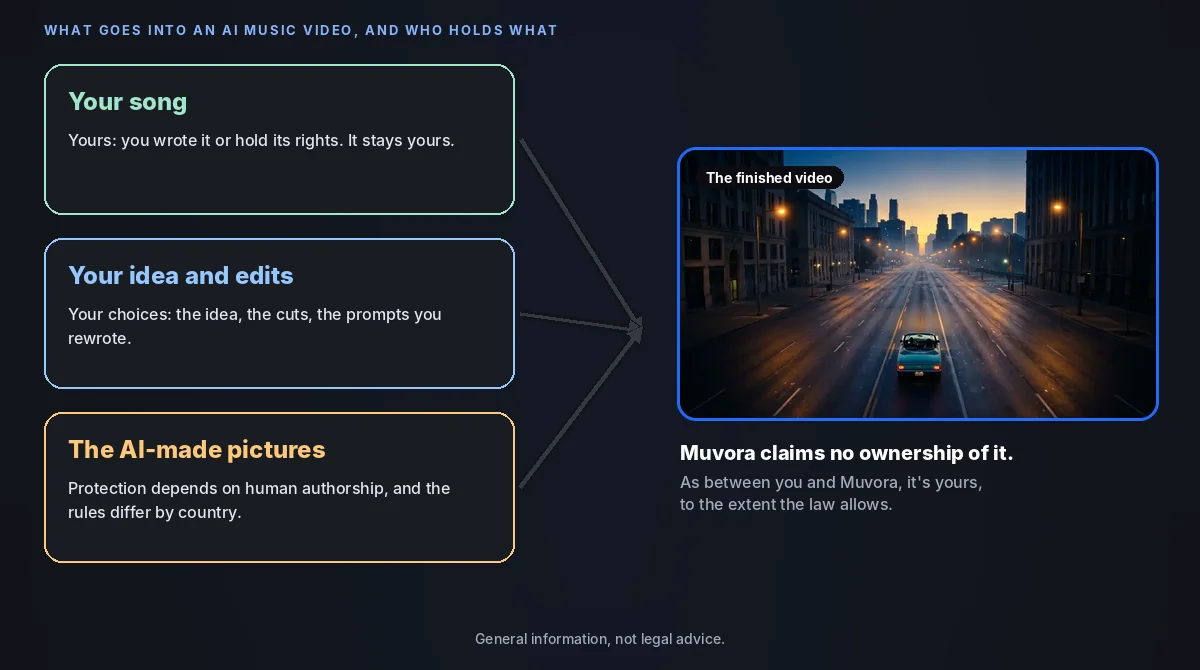
A music video is a separate work from the song in it: an audiovisual work with its own author and owner. Registering the song doesn't cover the video, and owning the video doesn't give anyone rights in the song. That matters most when they're owned by different people, such as a director who made the video for an artist's song.
For a video made in Muvora, Muvora's terms say Muvora claims no ownership of what you make: as between you and Muvora, the storyboards, images and videos are yours, and you can use them commercially, on YouTube with ads, as a Canvas or in a campaign, as long as you have the rights to the song and anything else you uploaded. The terms also say that in some countries material made by AI without enough human creative input can't be protected by copyright, so nobody may hold a copyright in the pictures themselves.
If you want to register a video with AI-made pictures in the US, the Copyright Office's 2023 registration guidance asks applicants to disclose AI-generated material, exclude it from the claim when it's more than a trivial amount, and briefly describe what the human author contributed. The song in the video stays protected by its own copyrights whatever the answer for the pictures. Which licenses a video needs for covers, samples and leased beats is in the music video copyright guide.
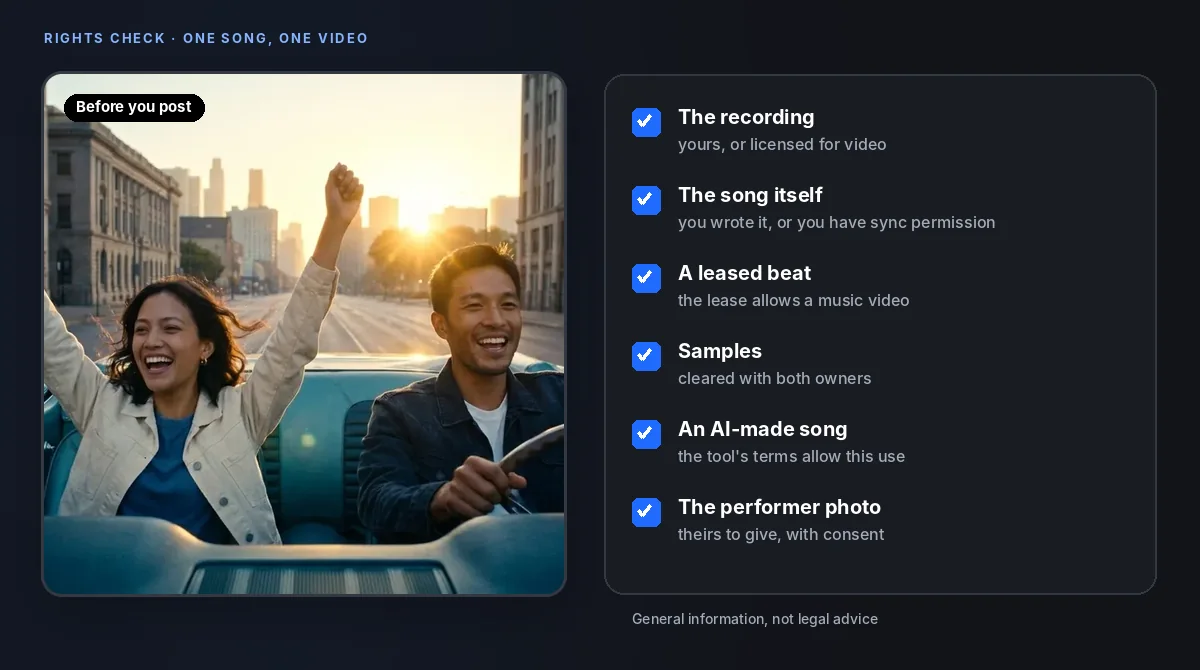
Make the video for a song you own
Upload the song, confirm the rights box and get a storyboard cut to its downbeats, with style frames that show the look before you pay. The free plan includes 5 new storyboards a month.
A song copyright checklist
Run through it when a song is finished, and again before release day.
- The song is fixed: a lyric sheet, a demo or a session file saved and dated
- Every writer and their share is on a signed split sheet
- I know who owns the sound recording under the producer, label or band agreements
- Samples, interpolations and beats are cleared, or excluded from my claim
- US songs: registered before release, or within three months of it, with the application that fits
- The registration names the same authors and claimant as the split sheet
- The confirmation, case number and certificate are saved with the master
- Each writer has registered the song with their PRO, and US mechanicals with The MLC
- The distributor has the ISRCs and the ℗ and © lines
- The music video's rights are clear, and its own ownership is written down
Written by the Muvora team. Last updated November 16, 2026. Spotted something out of date? Tell us at [email protected].